
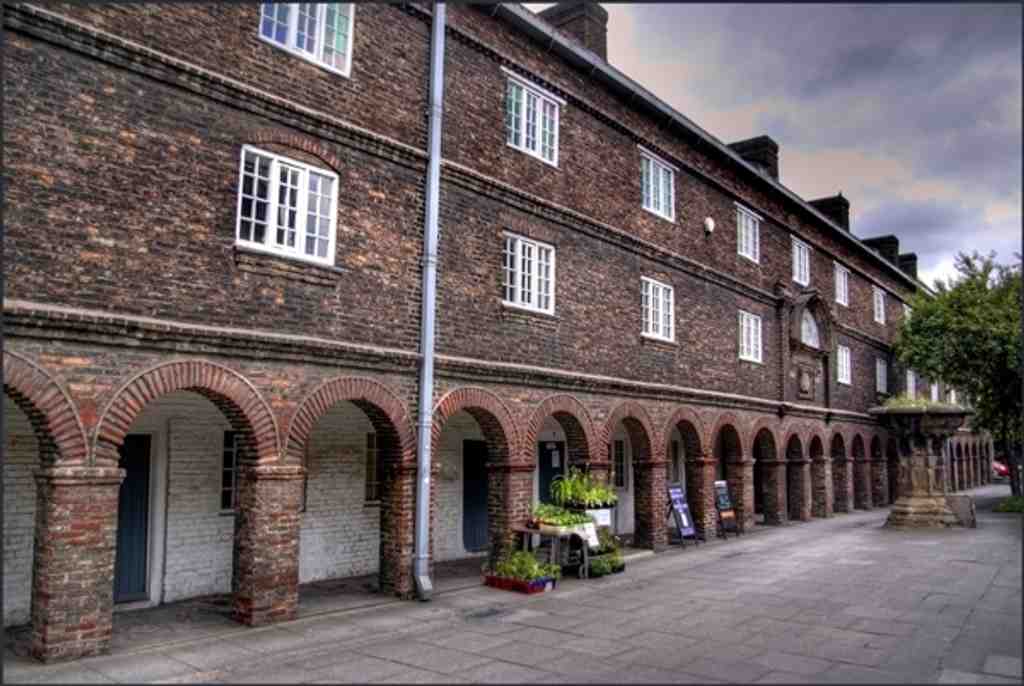
You’re nearly face-to-face with the Holy Jesus Hospital now! Look ahead for a long, dark brick building with a row of arches at the ground level, topped with pale window frames. The arches almost look like a covered walkway-a bit like something out of a medieval marketplace. There’s plenty of stone and a stoic, dignified air about the place, but you’ll spot some greenery in pots breaking up all that brick. You can’t miss it.
Now, picture yourself here hundreds of years ago. The smell of wood smoke and soup would drift through the air. This site has been helping people in Newcastle for more than seven centuries. That’s older than most jokes, and definitely older than the internet. First, it hosted black-clad Augustinian friars, shuffling about, offering prayers, healing-and maybe, if you were lucky, good advice on a rainy day.
Back in the 1200s, Newcastle was bustling but overcrowded. Priests didn’t just heal souls, they patched up wounds and treated fevers. There were so many people in need that the friars had to run like a medieval A&E-without the vending machines. Imagine the clang of horseshoes in the street and the difficult job of keeping the priory clean-especially after the town got in trouble for dumping garbage near the monks’ house. The king himself had to tell people to stop throwing “filth and excrements” near the friary. Hardly the sort of welcome you’d want, right?
Centuries rolled by, and this place transformed. It sheltered retired freemen, then became a soup kitchen, always looking after those in need. But don’t let its caring history fool you-this hospital once hosted royalty! When King Edward I stopped by in 1299, the friars got an extra bit of pocket money. Maybe they used it for better candles. Or more soup.
The building itself is a time capsule: stand here and you’re looking at bricks from the 1600s, a 14th-century stone wall, and a chunky old tower that once heard all the secrets of the King’s Council. There aren’t many buildings left in Newcastle with this much history in their bones.
These days, it’s an office and the base for the National Trust’s Inner City Project. Who knows-if you peek inside, you might just hear echoes of ancient chants or the laughter of young volunteers heading out for a countryside adventure. Or maybe, just the creak of those old brick arches, holding up centuries of stories.
Ready to sneak off to the next bit of Newcastle’s past? Let’s move before a friar asks you help peel some soup potatoes!
Yearning to grasp further insights on the augustinian priory (1291-1539), dissolution of the monasteries (1539) or the private ownership (1605-1646)? Dive into the chat section below and ask away.




