
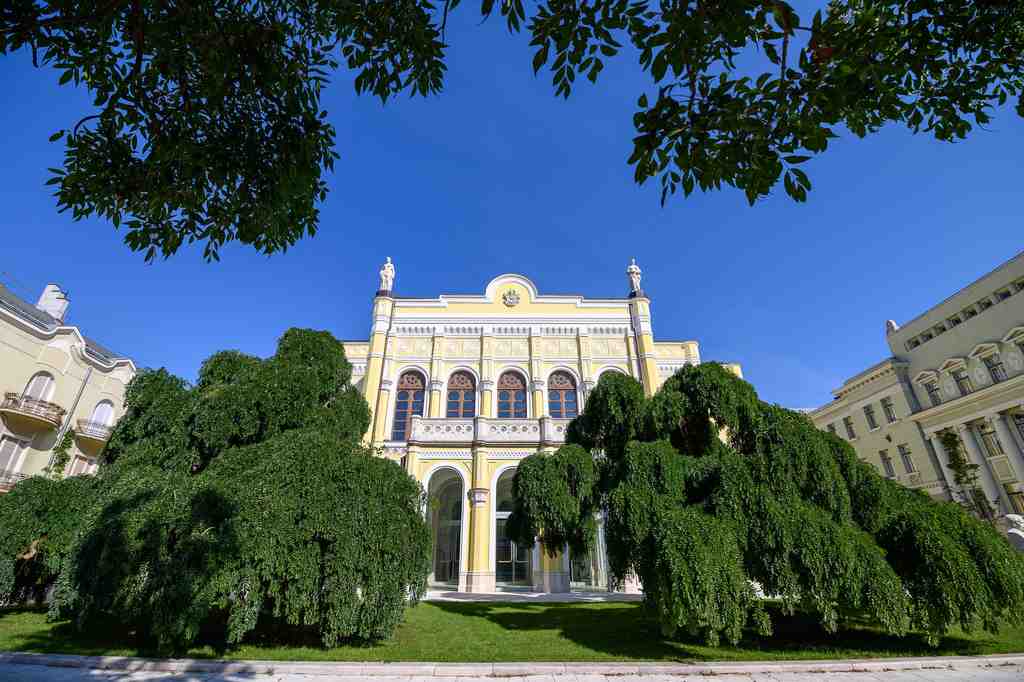
Right in front of you, the Csokonai National Theatre stands proudly with its grand yellow façade, arched windows, decorative statues on the roof, and lush green trees framing the entrance-just glance beyond the branches for this eye-catching landmark.
Now, let’s take a step back in time and imagine Debrecen, long before the days of spotlights and stage curtains. Picture a town alive with curiosity, where the very first theatre performance happened not in a fancy building, but in a converted barn behind an inn called the White Horse-imagine dusty floors, candlelight wavering, and excited whispers as people squeezed together to see something brand new. This was 1798, and the entire city seemed to catch the theatre bug! Of course, in classic theatrical fashion, early venues like the “comedians’ house” burned down not once, but twice. You could say Debrecen’s love for drama started with a bit of drama itself!
Luckily, help was on the way-courtesy of a generous countess who donated her entire family theatre set, props and all. For years, makeshift stages popped up all over town: in barns filled with grain, at the corner of busy streets, and even in the old salt warehouse where winter performances were held. The people of Debrecen simply couldn’t get enough. The city hosted traveling actors, local stars, and legends of the Hungarian stage, including names like Déryné and Szentpéteri Zsigmond. Eventually, with all this enthusiasm, the city decided enough was enough-it was time for a real, permanent theatre of their own.
So, they called upon the famous architect Antal Szkalnitzky, who-after a few twists, turns, and a bit of confusion with the legendary Miklós Ybl-designed the elegant building in front of you. Construction began in 1861, replacing an old granary where even literary giants like Arany János and Petőfi Sándor had once performed. The costs were so high that the city even sold some of its meadows to fund the dream… talk about putting your money where your stage is!
At last, in 1865, the stunning theatre opened its doors with a performance of “Bánk bán,” led by a famous local tenor and featuring the dazzling Laborfalvi Róza. Imagine the gasps as people stepped inside: soaring ceilings, golden decorations, and a blend of Moorish and Byzantine designs that felt as magical as the performances themselves. Over the years, the Csokonai Theatre became the beating heart of Debrecen’s cultural life. Operas, comedies, tragedies-they were all at home here.
Famous actors like Mensáros László and Latinovits Zoltán began their glittering careers on this very stage, while legendary directors kept innovation and creativity alive-even during tough times. The building survived wars, financial crises, and (perhaps most dramatic of all!) endless renovations and upgrades. In the 20th century, the theatre faced everything from power struggles to a revolving door of managers, some of whom spent their own savings just to keep the lights on.
Ever since 1915, the theatre has proudly carried the name of Csokonai Vitéz Mihály, a poet beloved in Debrecen. Today, it’s more than just a building; it’s a living, breathing testament to the city’s passion for art. With a reputation as one of Hungary’s national theatres, it boasts multiple stages and a bustling company, along with youth programs and brand-new venues.
After a spectacular three-year renovation, the theatre reopened in 2023 with all the drama and excitement you’d expect from such an old star. If these walls could talk, they’d share more stories than even the best playwright could dream up: of raucous opening nights, actors battling nerves backstage, thunderous applause, and moments of silence when the magic on stage took everyone’s breath away.
So, as you look up at the grand yellow façade and fancy statues, remember: in Debrecen, the real magic isn’t just on the stage-it’s everywhere the city gathers to dream, laugh, and maybe, just maybe, shed a tear or two. And if you ever hear a little rustle in the trees on a quiet night, don’t worry… it’s probably just the ghosts of actors past, waiting for their next great part!
Want to explore the early theatrical life in debrecen, the theatre or the company of the csokonai theatre in more depth? Join me in the chat section for a detailed discussion.


