
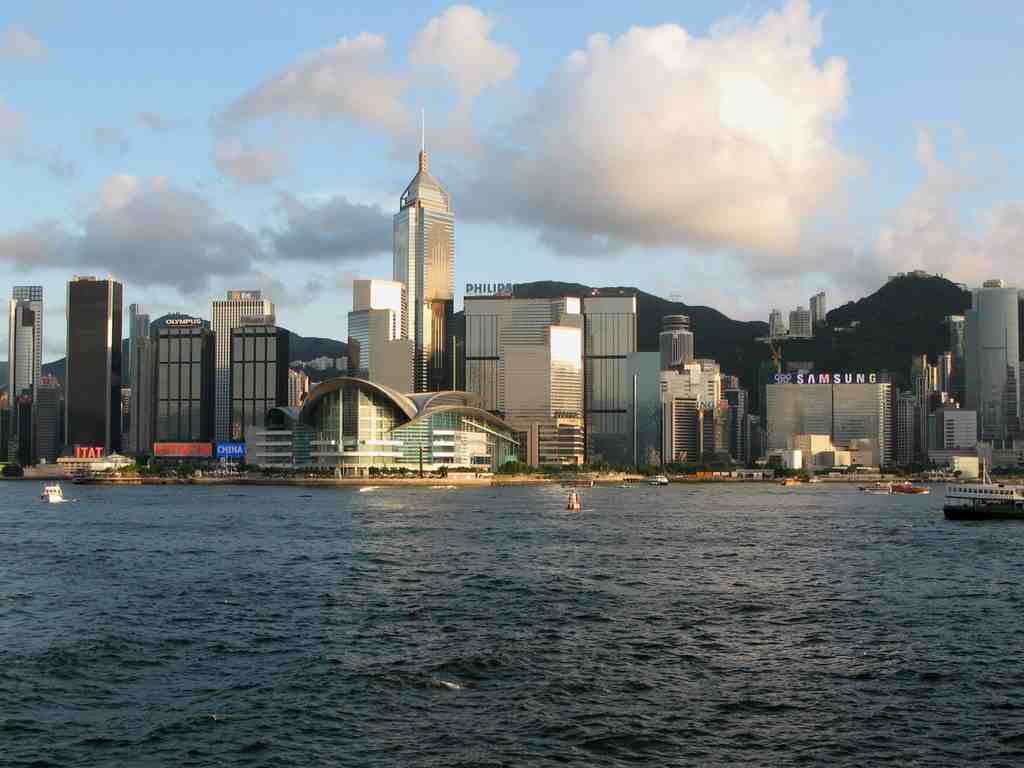
To spot Wan Chai, just look ahead to the waterfront - you’ll see a dramatic cluster of glass skyscrapers rising above the harbor, with the eye-catching curved roof of the Hong Kong Convention and Exhibition Centre right in front.
Welcome to Wan Chai! This district, bustling with life, is one of Hong Kong’s oldest and most colorful neighborhoods. Imagine you’re standing here in the early morning - the salty sea breeze in the air, sunlight bouncing off glass towers, ferries chugging by on the shimmering harbor, and the chaotic energy of Hong Kong swirling all around you. Even now, Wan Chai’s landscape is an action-packed mix of shiny new and charmingly old, making it feel like you’re standing at a crossroads of time.
But before there were glass towers, there was the original village. Back in the days when Wan Chai was just a sleepy cove - that’s what its name literally means! - local fishermen pulled up their nets near the small Hung Shing Temple. Legend says the fishermen trusted Hung Shing Ye, the God of the Sea, to keep them safe… and maybe to keep their boats from getting tangled like the headphones in your pocket.
When the British arrived in 1842, Wan Chai’s sleepy pace didn’t stand a chance. Coolies (laborers), sailors, and traders poured into the area, and streets like Queen’s Road East quickly filled with noisy markets, shipyards pounding with hammers, and the infamous Spring Gardens red-light district buzzing with excitement. In fact, Wan Chai was known as one of the “four rings” of early Hong Kong - alongside Central, Sheung Wan, and Sai Wan - each ring marking a stage of the city’s rapid growth.
By the 1850s, Chinese families and businesses flocked here, bringing with them house schools like Dunmei, where kids struggled through classical Chinese texts and Confucian teachings - so if you think your homework is tough, imagine reciting poetry for hours on end. Over on Hennessy Road, churches appeared, including the old Chinese Methodist Church (which got replaced by a 23-story building… because, well, this is Hong Kong, where even churches grow tall).
Wan Chai saw its fair share of hard times. During World War II, bombs rained down and desperate people struggled to survive the Japanese occupation. Starvation, hidden stories of courage, and secret resistance movements left scars that persist in the memories of today’s elders. The city’s heartbeat almost faded-but it came roaring back after the war, with Da Pai Dong street stalls serving up hot congee and bustling families reclaiming their city.
If you close your eyes, you can almost hear the clatters and laughter of the fabled 1960s: navy men and tourists flocked to Lockhart Road’s neon-lit bars, immortalized in movies like “The World of Suzie Wong.” You’d see shops jammed with sailors’ uniforms, street vendors hawking sweet-smelling herbal tea, and the mingling of cultures from all corners of the world-a little bit wild, a little bit glamorous, and always alive with possibility.
But Wan Chai isn’t just about nightlife: today it’s home to offices for both billion-dollar corporations and one-man bands (and both groups vie for the last egg tart in the cha chaan teng at lunch). The Hong Kong Academy for Performing Arts brings in musicians, actors, and dancers, while the Hong Kong Convention and Exhibition Centre hosts everything from book fairs to cosplay competitions-so one moment you might see a business conference, and the next a hundred Spider-Men.
This district is a true transportation hub: trams rattle down Johnston Road, MTR trains rush beneath your feet, and ferries zip over to Kowloon, their horns echoing out over the harbor. Wan Chai’s famous urban renewal projects are working to mix old and new-street-mapping the aroma of dumplings from Tai Yuen Street stalls with the soaring height of Central Plaza, the gleaming third-tallest tower in Hong Kong.
And on the spiritual side, temples and churches of nearly every faith stand shoulder to shoulder amongst the skyscrapers. The ancient ritual of “villain hitting,” practiced under the Canal Road Flyover, is said to bring luck-yes, it involves old ladies whacking paper figurines with shoes. Now that’s something you won’t find in your average travel guide!
So now, standing at the heart of Wan Chai, take a deep breath and look around. Every building, alley and skyline tells a story-of survival, celebration, and transformation. This district has seen it all, and with every sunrise over the glass towers, the story just keeps getting richer…and taller.
Curious about the names, community life or the tourism and landmarks? Don't hesitate to reach out in the chat section for additional details.


