
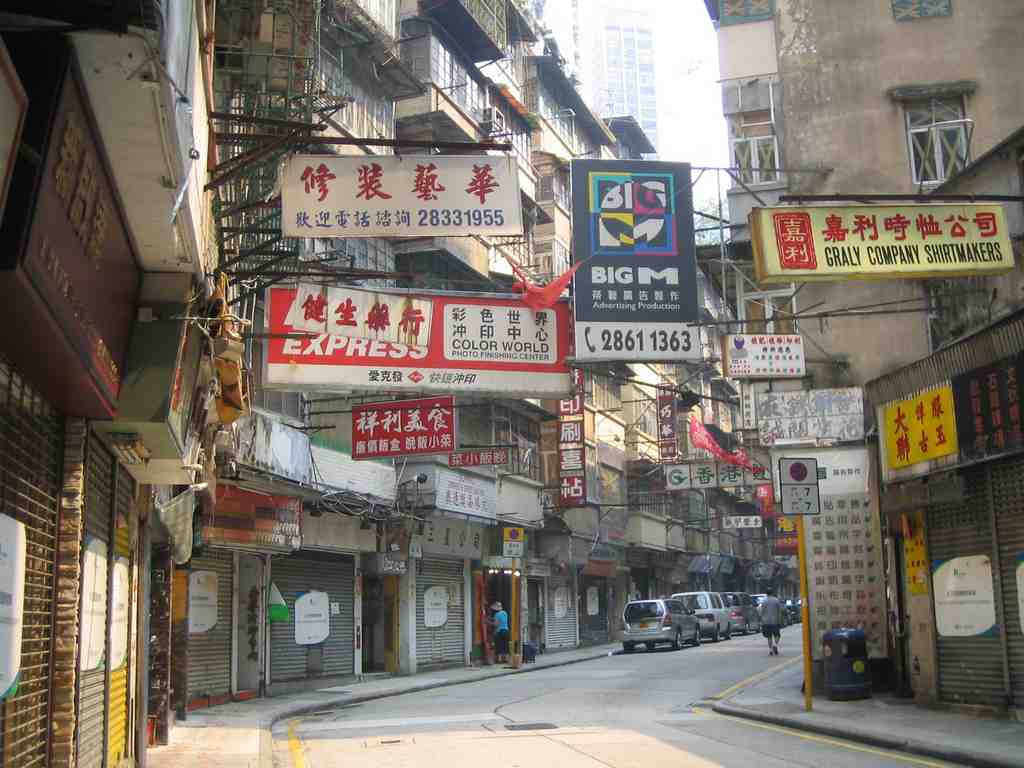
To spot Lee Tung Street, just look ahead for a narrow street with rows of old, colorful shop signs hanging above you, squeezed between mid-rise buildings-it's impossible to miss those cheerful signboards cluttering the air!
Welcome to Lee Tung Street, once known far and wide as “Wedding Card Street”-yes, that’s right, this was Hong Kong’s go-to spot for soon-to-be-wed couples eager for the most beautiful wedding invitations imaginable. Imagine the street as it was in the 1970s: a lively ribbon of shopfronts, each glowing with red and gold paper samples, wedding cards stacked from the floor to the ceiling, and the constant hum of printers working overtime. Back then, the air here was thick with the smell of fresh ink, and the shopkeepers’ banter bounced between the buildings, echoing above the rattle of trams and taxis rolling down Johnston Road.
But Lee Tung Street tells a story that’s more than just paper and printer’s ink. In the 1950s, the government encouraged the print shops to gather in this strip, making it easy to keep an eye on any not-so-legal publications, or so the rumors go. By day, it was all about business and wedding joy, but by night, you might imagine a touch of mystery-a poet scribbling verses by lamplight, or underground meeting spots hidden behind the stacks of red envelopes that filled every window.
As the decades rolled forward, the wedding invitation trade here exploded; by the 1980s, Hong Kongers from every district made pilgrimages here just to pick out their perfect invitations or New Year’s goodies. There were stories of couples queuing up for hours, bargaining for the most auspicious designs, and arguing over fonts with a seriousness usually reserved for picking out the family’s dinner menu!
However, the winds of change were howling. In 1998, the government decided that this bustling slice of life needed a face-lift, one that would sweep away the old, squeeze out the small family businesses, and erect modern towers in their place. Years of debate, planning, and surveys followed-then, despite fierce protests and even a hunger strike by a beloved shop owner, the street fell silent. By December 2007, the old buildings came tumbling down. People watched, heartbroken, as the shops-once so full of life-were replaced with dust and debris, their memories scattering like confetti at a wedding parade.
Developers had promised a new “Wedding City,” but what rose was luxury apartments and boutiques with rents so high that almost none of the original shopkeepers could return. One shop owner, Mr. Luk, bravely tried to keep his printing business going elsewhere-only to watch his business plummet, losing the loyal community that made this street special. Another, Ms. Chan, saw nearly half her income disappear after her relocation. Compensation was given, but many said it was just a drop compared to what new apartments would fetch on the market years later.
Still, the ghost of old Lee Tung Street lingers. Locals mourned what was lost and made their feelings known-in the charts, no less. In 2008, Kay Tse’s song “Wedding Card Street” shot to number one, acting like a love letter to this lost community, and still hits Hong Kong hearts today. Meanwhile, activists and community groups used Lee Tung Street’s story to campaign for better urban renewal, arguing that a neighborhood’s spirit should be as valued as its real estate. They called for “flat-for-flat” and “shop-for-shop” compensation, fighting to keep communities from vanishing with every construction crane.
So as you stand here, picture all of that-the buzz of old printers, the glint of gold foil on red paper, the laughter of newlyweds, and the bittersweet notes of a city saying goodbye. Lee Tung Street may look new on the surface, but its heart is a complex, layered love story between old traditions, new ambitions, and the community that once called this place home. Now, isn’t that a plot twist worthy of a wedding invitation?
Seeking more information about the redevelopment, controversy or the lee tung avenue? Ask away in the chat section and I'll fill you in.


