
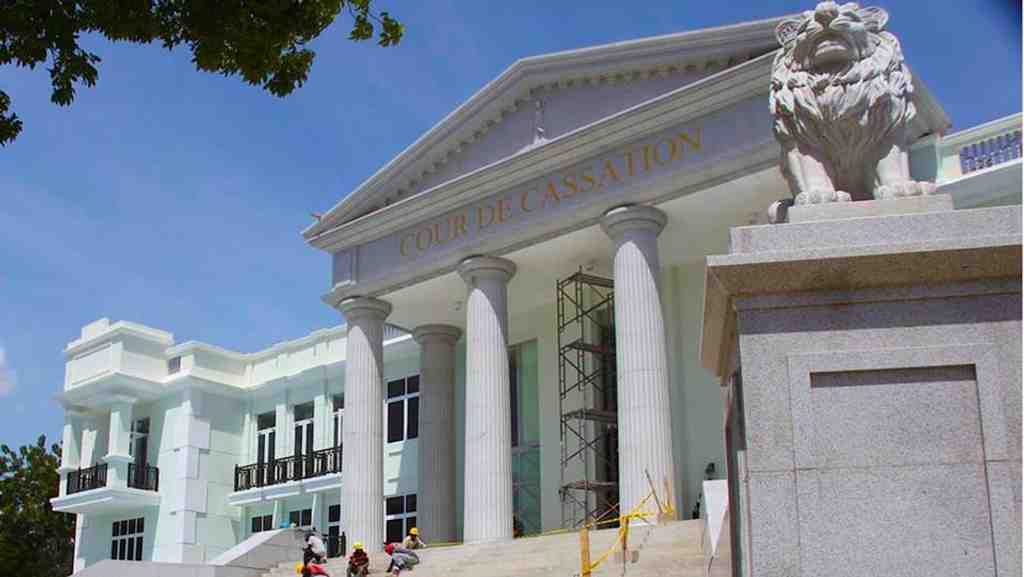
In front of you, look for a grand white building with tall columns and a lion statue perched on the right side-if you spot the words “Cour de Cassation” above the entrance, you’ve found it!
Now, imagine the air buzzing with the anticipation of justice-because you’re standing before the highest court in Haiti! The Court of Cassation is like the referee in a football match, only the stakes are much higher and the uniforms are fancier. Here’s where the toughest legal battles reach their final whistle, where twelve judges-each chosen by the president but only from a shortlist crafted by the Senate-sit for ten-year terms. They’re not easy to move or remove; once appointed, these judges are as solid as the building’s stone pillars. If they ever leave, it’s usually because of serious misbehavior or ill health, so you can picture them almost glued to their seats, robes and all!
But justice here wasn’t always delivered within these pale walls. The devastating earthquake of 2010 tore down the court’s old building in downtown Port-au-Prince, leaving nothing but rubble and shattered gavels behind. For a while, the judges set up shop at the National School for Magistrates-imagine the honking of school bells mixing with the solemn silence of court-until the new courthouse rose like a phoenix with a little help from friends in Taiwan. In 2015, trumpets blasted-okay, maybe just in my imagination-and the new Court of Cassation was inaugurated at Champ-de-Mars.
This court reviews the very last word on legal matters, checking if other courts played by the rules. If they find a foul, they send the case back for a replay! The Court even helps sort out fights between courts and checks if laws fit the Haitian constitution. And fun fact: it’s part of a big French-speaking judicial club-so if you listen closely, on certain days you might almost catch the sound of judges discussing law over croissants… or maybe that’s just my hunger talking.
Fascinated by the composition, powers or the seat? Let's chat about it


