
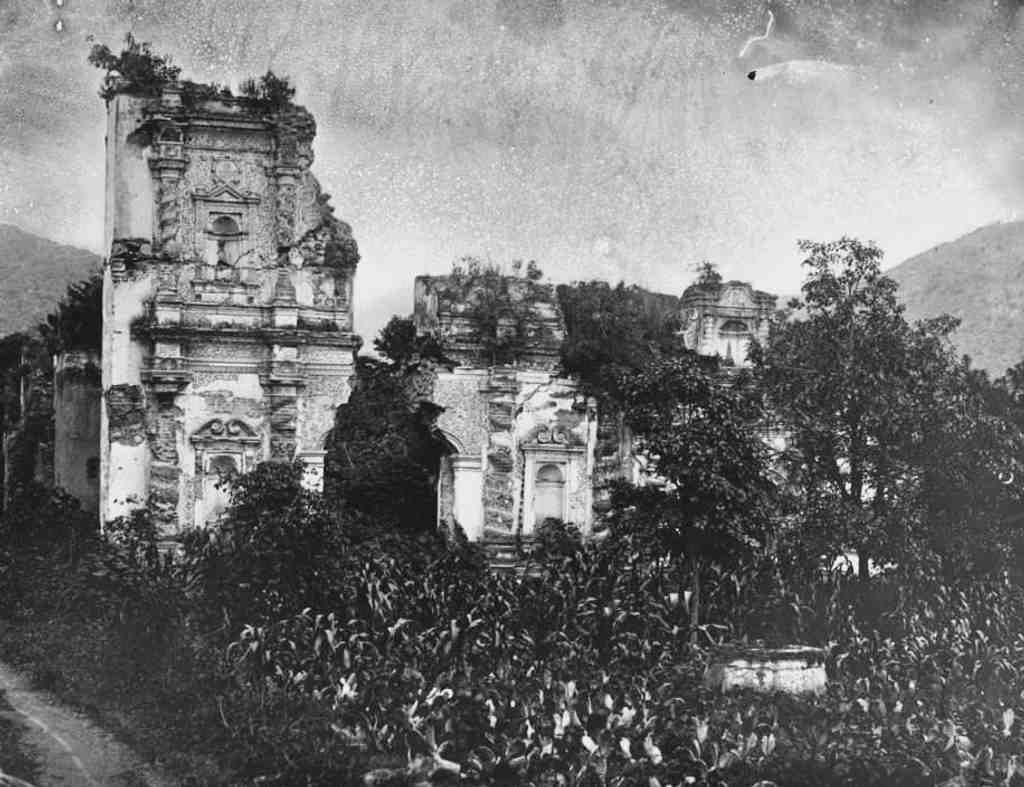
To spot the Church of Candelaria, look straight ahead for the tall, crumbling stone walls with ornate details peeking out from behind wild greenery-the ruins rise up dramatically, with broken arches and plants growing where a roof once was.
Now, let’s take an adventure back through the centuries as you stand before these haunting remains. Imagine the year is 1548: the city is alive with the buzz of villagers as Bishop Francisco Marroquín orders the construction of a humble hermitage on this very spot, right in the northwestern corner of old Santiago de los Caballeros. At first, people called it the “Hermita de los Dolores del Cerro,” but word spread quickly that something special was happening here. People traveled on dirt paths through the fields, eager to attend mass-sometimes even in the indigenous Pipil language, filling the air with harmony from voices that echoed through the wooden rafters. The little neighborhood around it, once called Santo Domingo or Málaga, was so influenced by the church that it soon became known as the Barrio de Nuestra Señora de La Candelaria.
Time marched on, and with the new century came repairs-and a bit of churchly bling, thanks to Captain General Peraza Ayala who, in 1615, ordered a brand new altar. But life here was never quiet for long. The Volcán de Fuego smoldered in 1717, and as the eruption rattled windows, the people of Antigua took to the streets, comforting each other and praying to the saints for safety. That’s when the earthquakes of San Miguel hit. The ground quaked so hard that neighbors stumbled out of their homes in a frenzy, yelling prayers and confessions into the early morning darkness. Inside the church, the shaking was unrelenting, and when the dawn came, Candelaria’s walls were rubble. Somehow, faith and a little bit of stubbornness refused to give in-thanks to friar Francisco Ximénez, the church was rebuilt with a dash of floral-stucco glamour and a sprinkle of mudéjar flair.
Just imagine this: the rebuilt church with spiral columns, leafy decorations, and stone walls so thick you’d think even an earthquake would hesitate. But as fate would have it, 1751 brought another shake, though this time, the sturdy old Candelaria survived with a few cracks and bruises. By 1754, the church was a full-fledged parish, bustling with ceremonies and celebrations.
Sadly, all good things must face a test, and in 1773, the infamous Santa Marta earthquakes didn’t just shake, they shattered. The beautiful barrio of Candelaria and the mighty convents nearby were battered so fiercely that by morning, the streets and walls were tangled together, mixed with the sorrow of the community’s loss. It was so bad that authorities finally decided: enough-let’s move the capital. So, the survivors gathered what sacred objects they could-like cherished paintings and miraculous statues-and set off on a journey to the shiny new city of Nueva Guatemala. It took them months, dodging mud and bandits, but when they arrived, bells rang in celebration.
Back in Antigua, the ruins stood silent-at least, until the next earthquakes came knocking, like uninvited guests. In 1874, the New York Times even covered the disaster, marveling at waves of earth lifting the ground, and crowds fleeing from toppled towns. Bandits tried to take advantage, but the police caught them and, let's just say, they didn't stick around for tea.
Yet, life in Antigua has a stubborn spark. By the late 1700s, the city-sometimes called “ruined Guatemala”-was officially resettled. Old, battered parishes like Candelaria were brought together under a new church. For a time, Candelaria’s holy relics, including a famous Señor del Descendimiento statue, found a new home and a new congregation.
As you stand here, try to see the centuries layered before you: the overgrown walls, the whisper of lost prayers, the memory of bells-and the stubborn hope of a community that, no matter how many times the ground shifted, refused to forget its roots. If you listen closely, maybe you’ll hear echoes of voices-ancient and persistent-reminding us that even among the ruins, a little faith and a few good stories can stand the test of time.


