
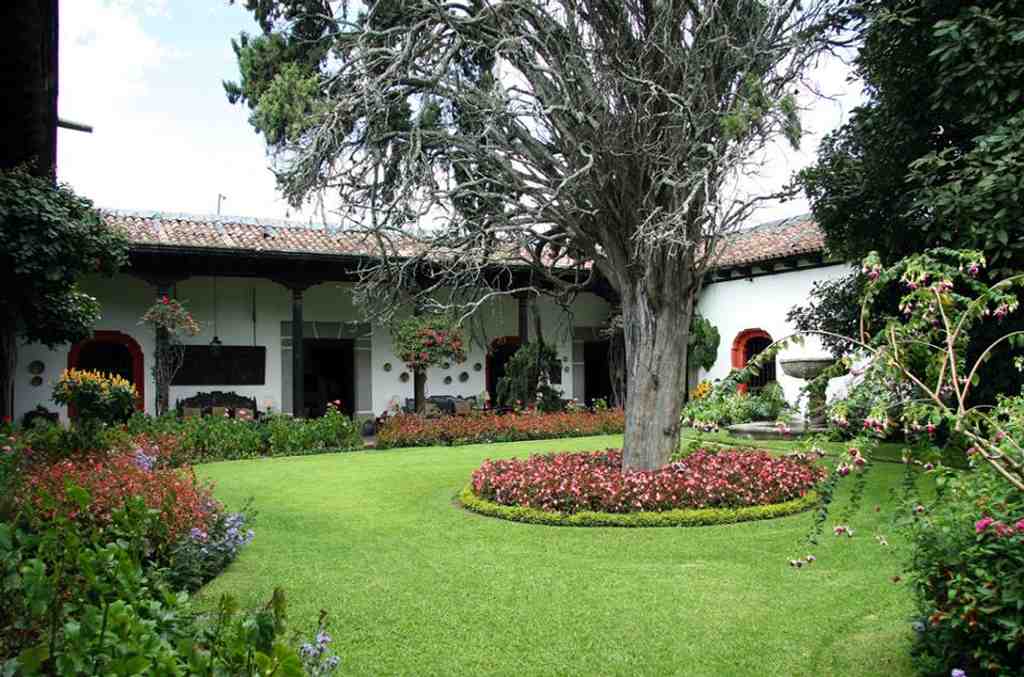
Look for a striking colonial house at the southwest corner of 1a Avenida Sur and 5a Calle Oriente, where a large cypress tree stands proudly at the center of a lush courtyard surrounded by bright flowers and a tiled roof.
Welcome to Casa Popenoe, a place that’s worn more hats than a fashionable chicken at a royal wedding! Imagine standing here in the 1500s-this corner belonged to Jacomé de Piña, a wealthy landowner who may have dreamt of turning dust into gold. Over a century, the property changed hands faster than a hot, fresh tortilla. By the late 1600s, the Estrada sisters lived here for decades; their story filled the air with everyday laughter and a touch of sadness when, after their passing, the home needed to be sold off-so they ordered that the profits fund prayers for their souls. Not a bad afterlife plan, eh?
Legend has it that after the devastating earthquake of 1717, houses in this neighborhood were a bit like wobbly jelly-cracked, battered, and in desperate need of care. Still, families kept buying, selling, and patching up the place. For a while, it was home to presbyters, doctors, capellans, and even the occasional wealthy widow, like Manuela de Ayala, who traded her cattle for these walls. Imagine the sound of bustling trade and market deals at this very corner.
Now, let’s step into the 18th century. In 1762, Venancia López, a woman who clearly believed “go big or go home,” decided to merge two tired houses into one grand residence. She and her husband, Andrés Guerra, literally stitched together centuries of history and gave this home its heart-the vast patio and those elegant arched hallways you might spot through the garden. The house became known for its unique mixtilinear arches, inspired by the nearby University of San Carlos, so it’s like this place was trying to keep up with the academic times. Venancia had a green thumb too, planting the cypress tree that still rules over the courtyard, silent and dignified-a living witness to all the whispered conversations and secret dreams.
But the earthquakes weren’t finished yet! In 1773, the land shook again-plates rattling and walls threatening to crumble as the city’s fate trembled. The family moved to new lands, leaving these walls to face the ravages of time, invaders, and even some sneaky squatters in the 19th century. Casa Popenoe was wounded but never truly broken.
Fast forward to the 20th century, and like a plot twist in a good telenovela, Frederick Wilson Popenoe, an American agronomist, bought the neglected house from Ciriaco Peralta in 1930. He and his first wife, Dorothy Hughes, poured sweat and heart into restoring the home’s original colors and soul. After Dorothy’s passing, his second wife, Helen Barsaloux, added the final touches. Together, they unearthed hidden secrets in faded tiles and crumbling walls-helped, of course, by that ever-watchful cypress. The home gained fame as the “Casa del Capuchino” because of a distinct cypress in its main patio. The place rang with new stories, family dinners, and the hum of restoration work-like history shaking off the dust for a grand reopening.
And just when you thought the story was over, in 2007, Marion Popenoe, Wilson’s daughter, gifted Casa Popenoe to the Universidad Francisco Marroquín. Now scholars, students, and travelers like you can marvel at its architecture and the echoes of all those who lived, loved, and sometimes lost within these walls.
Take a deep breath and imagine the centuries unfolding around you. This is not just a house; it’s a living museum of the shifting fortunes, wild hopes, and courageous rebuilds that shaped Antigua Guatemala’s heart. Funny enough, if these walls could talk, they’d probably ask you to mind your step-and maybe share a recipe or two for cypress tea!


