
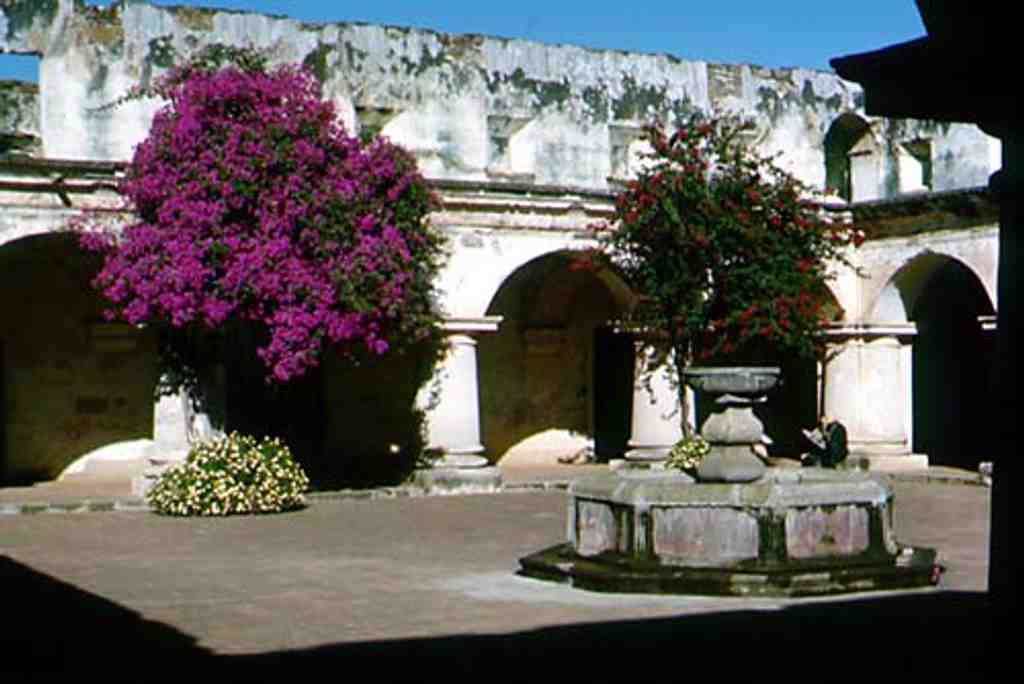
In front of you, you’ll see a weathered stone courtyard with an old fountain at its center, surrounded by faded arches and walls, some covered in vibrant, flowering bougainvillea-this is the entrance to the Iglesia y Convento de las Capuchinas.
Imagine yourself in Antigua Guatemala back in the early 1700s. Here, the Capuchin nuns arrived in a city bustling with anticipation, and the King of Spain himself-King Felipe V-gave his blessing to build this place. As you stand here, picture the thick walls freshly built, a sense of hopeful energy in the air, and the soft footsteps of women seeking a new life full of purpose and discipline.
Unlike the grand convents before it, Capuchinas was radical. For the first time, women without wealth could join; the doors opened to poor ladies who longed for spiritual service but couldn’t afford a dowry. Inside, life was strict and humbling: the nuns practiced poverty and penance, surviving only on the generosity of their town, with fasting and prayer shaping their days. Imagine the echo of prayers through stone corridors, the rhythm of life measured by bells and candlelight. There were two kinds of nuns here-urban and discalced; some walked barefoot as a sign of ultimate humility and devotion.
But fate wasn’t always kind. The earthquakes of 1751 and then the monstrous shake in 1773 left broken walls and crumbling towers. The convent’s heart was heavy when the Captain General ordered it abandoned, its halls suddenly silent, its gardens left to wild bloom.
Decades later, in 1920, a curious visitor-Prince Wilhelm of Sweden-marveled at the secrets this building held. Underneath your feet, hidden passages twist through old stone, connecting the monks’ cells in a perfect circle around a mysterious common chamber. Not a convent, but a maze of solitude and sisterhood, each cell watching over the other in silence.
Imagine the laughter, the discipline, the longing for the world outside-layered here among ruins, bougainvillea blooms, and the echo of ancient footsteps beneath the stones.


