
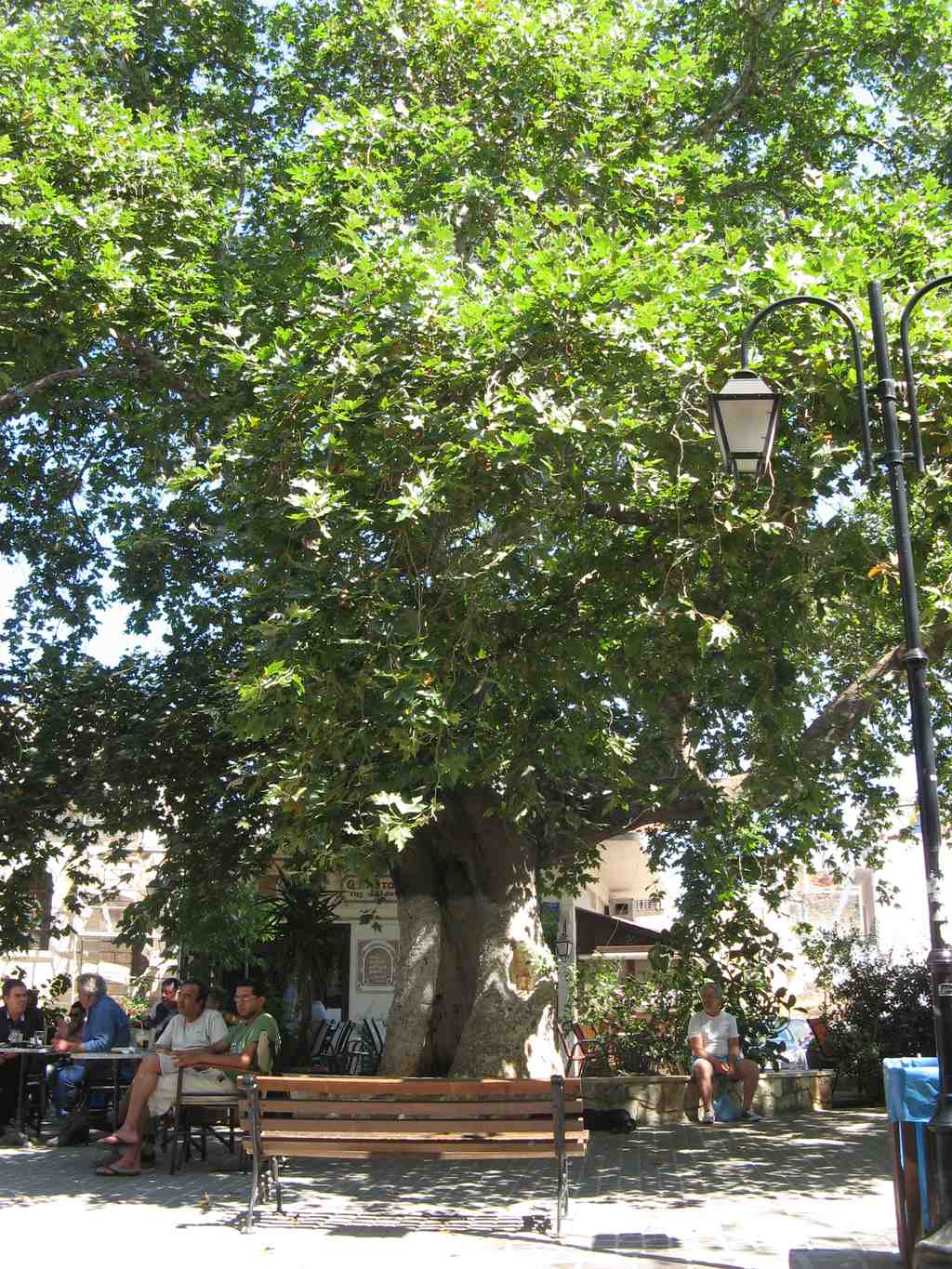
If you look ahead, you’ll spot Splantzia Square by its giant, leafy plane tree standing right in the center, surrounded by benches and a ring of bustling cafes-just look for that patch of deep shade and you’ve found it!
Now, close your eyes for a second and let’s travel back across the centuries-welcome to Splantzia Square, officially known as 1821 Square, where Chania’s old city pulses with stories! Picture this place during the days of Turkish rule: Splantzia was the heart of the city’s Muslim community, the largest quarter of all, filled with the hum of markets and prayers mingling in the air. Walk a few steps to your left and you’ll find the Church of Saint Roch, quietly perched in the northwest corner. Built way back in 1630, probably after a nasty plague swept through town, this church was a beacon of hope-Saint Roch was known as the city’s plague-buster, basically the medieval version of an emergency hotline!
Listen, can you imagine the military boots echoing here? During the Ottoman period, the church acted as a military post, and much later as a police station. Its long limestone walls have seen everything from whispered prayers to sharp orders.
Now, swing your attention to the east-the Church of Saint Nicholas awaits with an even twistier tale. Raised just before 1320 as a Dominican monastery during Venetian times, it changed hands after the Ottomans rolled in. Overnight, it went from chapel to mosque, its new name: Hünkar Mosque, honoring the Sultan himself. The minaret, with its two elaborate balconies, soared up-taller than most in town, and a show-off even by today’s standards! Inside the mosque, there was a legendary sword belonging to the first dervish who climbed the bell tower and spun the blade, declaring, “There is one God, and his prophet is Muhammad!” This sacred sword was so admired that people believed it could heal illnesses and ease difficult births-imagine the queue for that miracle blade! When the populations exchanged in 1923, the Muslims packed it away in a glittering gold case, never to return.
But the real king of the square is this-look up! This sprawling plane tree in the center, casting its shade like an enormous green umbrella. Underneath its leaves, Ottoman nobles once enjoyed their coffee in a fine octagonal kiosk. It was a place to see and be seen-unless you were a rebel. When revolution bubbled through Greece, the very tree above you became a place of both bravery and tragedy. Greek fighters met their fate here, and one day in 1821, Bishop Melchisedek of Kissamos was dragged under its boughs and hanged. His heavy death rope scraped against the wood as the city held its breath. A somber plaque now honors those lost lives.
Before you leave, peer between the church and the tree-there’s an underground chamber behind iron bars. Once, 26 steps below, a Venetian cistern hid beneath your feet, big enough to water the city for six months! Later, the Ottomans turned it into a sacred fountain for their rituals. Who knows what secrets still echo in its dark well?
Splantzia Square isn’t just a big shady plaza-it’s a living time machine, layered with tales of heroes, sultans, hidden waters, and maybe a few stray cats maintaining centuries-old traditions of sunbathing on a warm stone.


