
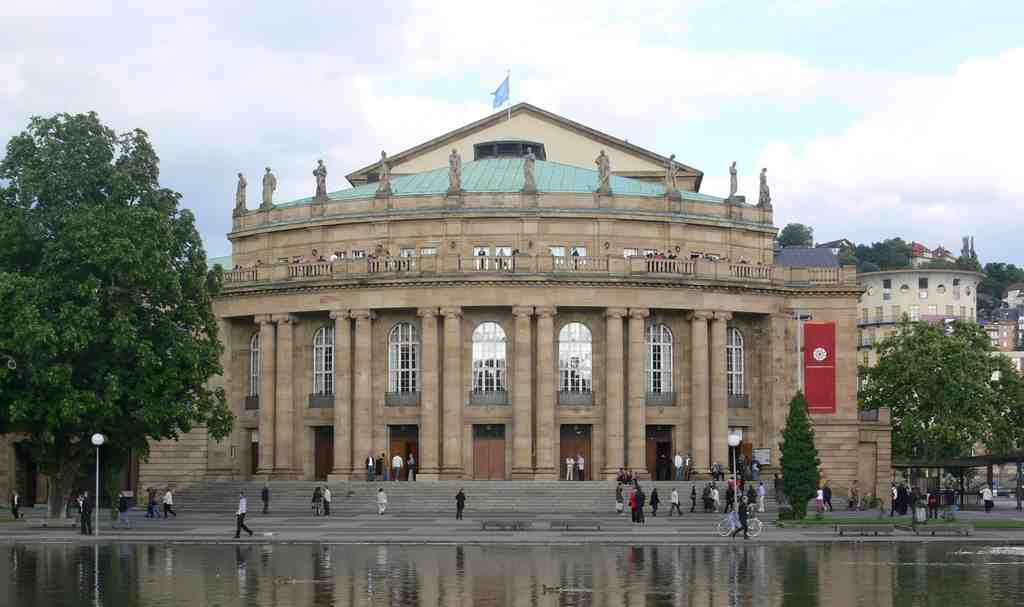
As you're approaching the Staatsoper Stuttgart, keep an eye to your left. Spot the large, imposing building with tall Corinthian columns and arched windows. Notice the statues perched on top, keeping watch over all the drama within. The building's light stone façade and the grand entrance with steps leading up to it will help you identify it easily. It’s right next to a peaceful pond, adding a serene touch to this bustling cultural hub.
Now, let’s dive into the fascinating history of the Staatsoper Stuttgart - which isn’t just about operas, it’s a full-fledged cultural saga! Opera, ballet, and plays have graced this area since the 17th century, starting in the hall of Neues Lusthaus. Picture this: in 1660, the first opera, a singspiel, was directed by Samuel Capricornus. Only four years later, a dedicated stage was set up.
Fast forward to 1750, and the building got a stylish makeover to become Stuttgart's opera house. By 1811, it was dubbed the Königliches Hoftheater, a royal touch fit for opera royalty! But alas, in 1902, a fire meant the opera had to find a temporary home. Fear not, for from 1909 to 1912, the current opera house was constructed under the direction of Munich architect Max Littmann. It stood proud with two halls: Großes Haus and Kleines Haus.
Post-monarchy in 1918, the theaters were renamed Württembergische Landestheater. The Kleines Haus saw the premiere of Ariadne auf Naxos by Richard Strauss but was later destroyed in WWII. Nowadays, the Staatsoper Stuttgart is part of the grand Staatstheater Stuttgart, which hosts not just opera, but also plays and ballet.
With 1,404 seats and drawing a crowd of around 250,000 each season, it’s a cultural powerhouse. Notable premieres, like Carl Orff’s operas, and collaborations with renowned figures such as Wieland Wagner and Philip Glass, have cemented its place in the annals of opera history. It’s a real gem, consistently winning the Opera House of the Year award and embracing modern works and new staging concepts.
So, enjoy this historic haven of high notes and dramatic flair. And remember: even the statues seem to be enjoying the show!


