
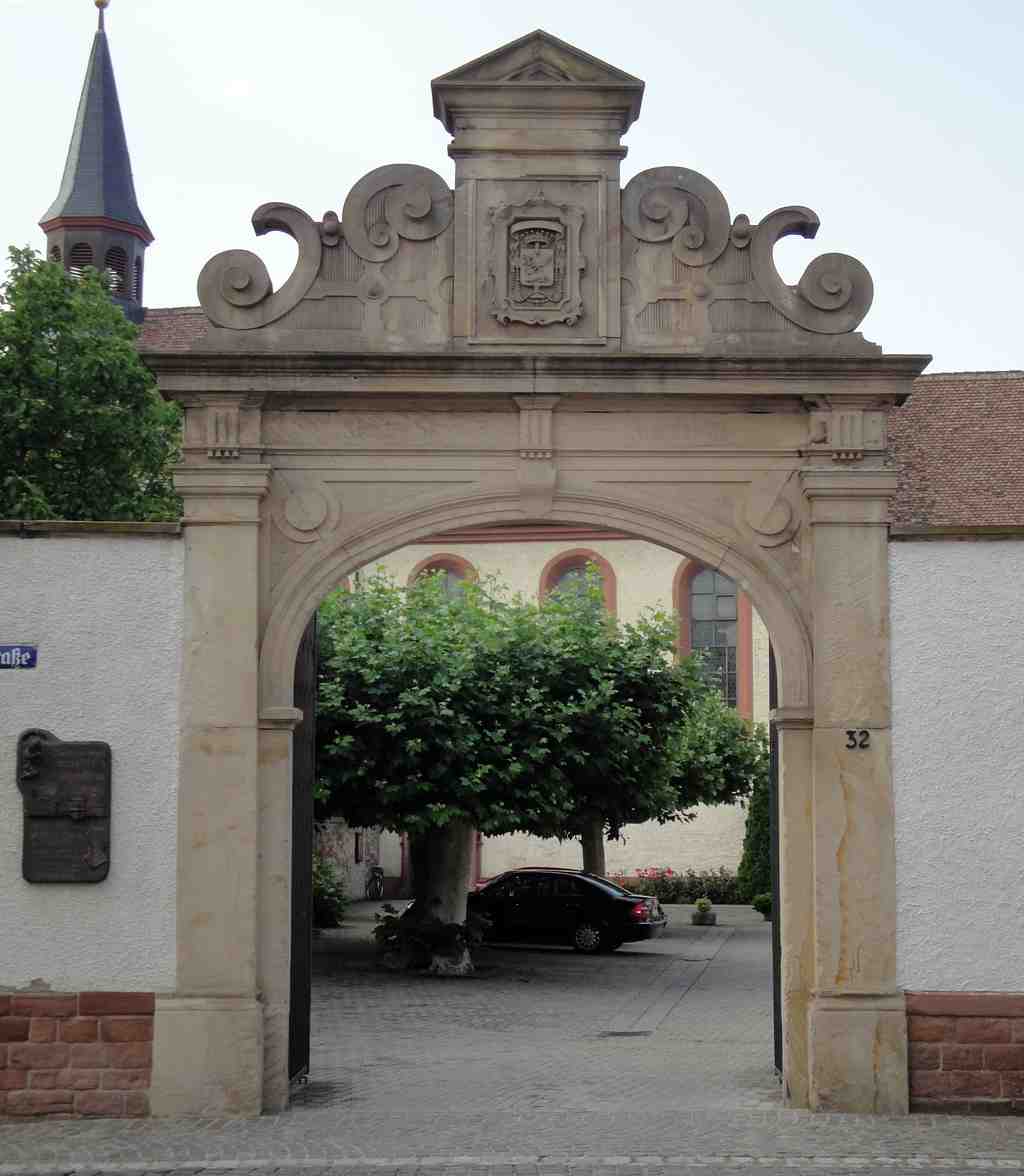
Look for a grand stone gateway with swirling decorations and a crest above the arch - just beyond it, you’ll see leafy trees and the soft yellow walls of the monastery, plus if you squint to the left, the pointy church spire is peeking out from behind the greenery.
Welcome to the St. Magdalena Monastery, an extraordinary place that’s been home to stories of hope, heartbreak, and a fair bit of perseverance. Imagine the air humming with secrets from centuries past. Step closer, and you can almost hear the gentle echoes of prayer inside those thick old walls.
Back in the early thirteenth century, a group of Reuerinnen-women who lived a life of repentance-settled across the Rhine, until one day in 1228, they packed up and moved to Speyer. It sounds a bit like a medieval moving day-imagine boxes labeled “candles,” “prayer books,” and, of course, “strict vows.” They set up shop right here, north of the great Speyer Cathedral. Their new home grew out of faith and determination, and with a little papal paperwork (let’s be honest, getting into the Dominican Order was probably as nerve-wracking as waiting for exam results), Pope Benedict XI officially welcomed them in 1304.
But peaceful days are like cats-never around when you need them. In 1689, the Palatinate succession war swept through, and the monastery, like almost the entire town, was left a smoking ruin. Picture the sisters fleeing through smoke and rubble, hearts heavy but undeterred. Ten years would pass before they returned, breathing life (and probably some laughter and singing) into these stones once again.
Fast-forward to the chaos after the French Revolution. Between 1792 and 1795, the sisters were forced to evacuate their beloved home not once but four times. It became a bit of a frustrating family vacation-pack up, leave, come back, repeat! Finally, in 1797, they dared to hope again, but within five years, secularization swept Europe and they were thrown out, the buildings sold. Yet, never underestimate determined nuns-and probably some very persuasive letters to family! By 1807, with generous help from relatives, they bought much of the ground back and continued their quiet community life-forbidden to wear their habits, they blended into the city, like secret saints in ordinary clothes.
In 1811, the rooms welcomed a new and unusual resident: Reichsgraf Damian Hugo Philipp von Lehrbach, a canon of Freising Cathedral, moved in quietly and spent his final years in humble peace. He grew so close to the sisters that he had a window cut from his little room straight into the church’s choir-an early VIP pass to the altar, if you will! His devotion was so inspiring that the monastery chronicle called him a “great example of piety.” At his death in 1815, he left behind not just memories, but his fortune (and a very special chalice) to support these women and the newly re-founded Diocese of Speyer.
For a while, the monastery church of St. Magdalena became the city’s main place of worship, with the majestic Dom almost collapsing nearby. By 1828, King Ludwig I gave the official green light for the monastery to be born anew-on one condition: they were to educate the city’s Catholic girls. (A nuns’ tale: first prayers, then algebra.)
Education flourished here, but not without setbacks. By the twentieth century, Nazi rule forced the closing of all monastery schools-some sisters journeyed bravely to Peru and Brazil, founding new schools across oceans, while those who remained carried on as best they could. After the war, the sisters brought schools back, teaching everything from music to practical trades-even opening today’s all-day elementary school with a musical twist in 2013. Just try humming a hymn as you walk by; the walls might just remember the melody.
Looking around, you’ll see hints of centuries everywhere: the stately gate from the late 1800s stands tall, topped with the word “Veritas”-Truth-like an ancient password to enter. Tucked against the historical city wall are gravestones from the eighteenth century, the memories of past sisters chiseled forever in stone. The church itself feels like something out of a Gothic fairy tale, with its oldest walls and columns still whispering their thirteenth-century origins. And don’t miss the left altar inside; it holds the patroness statue, “Patrona Spirensis,” a symbol of hope and rebirth rescued and remade after revolutionaries destroyed the original.
So as you stand before St. Magdalena’s, you’re not just seeing a monastery-you’re glimpsing a living chronicle, layered with courage, faith, and a relentless spirit of starting over. And let’s be honest: if these walls could talk, they’d have some pretty dramatic bedtime stories.


