
Alright, you should be seeing the Munich Residenz on your right. It’s a sprawling complex with a real mix of architectural styles - quite the eye-catcher! Look for a vast, ornate building with a combination of Renaissance, Baroque, Rococo, and Neo-Classical elements. It almost feels like you’re looking at the set of an architectural historical drama.
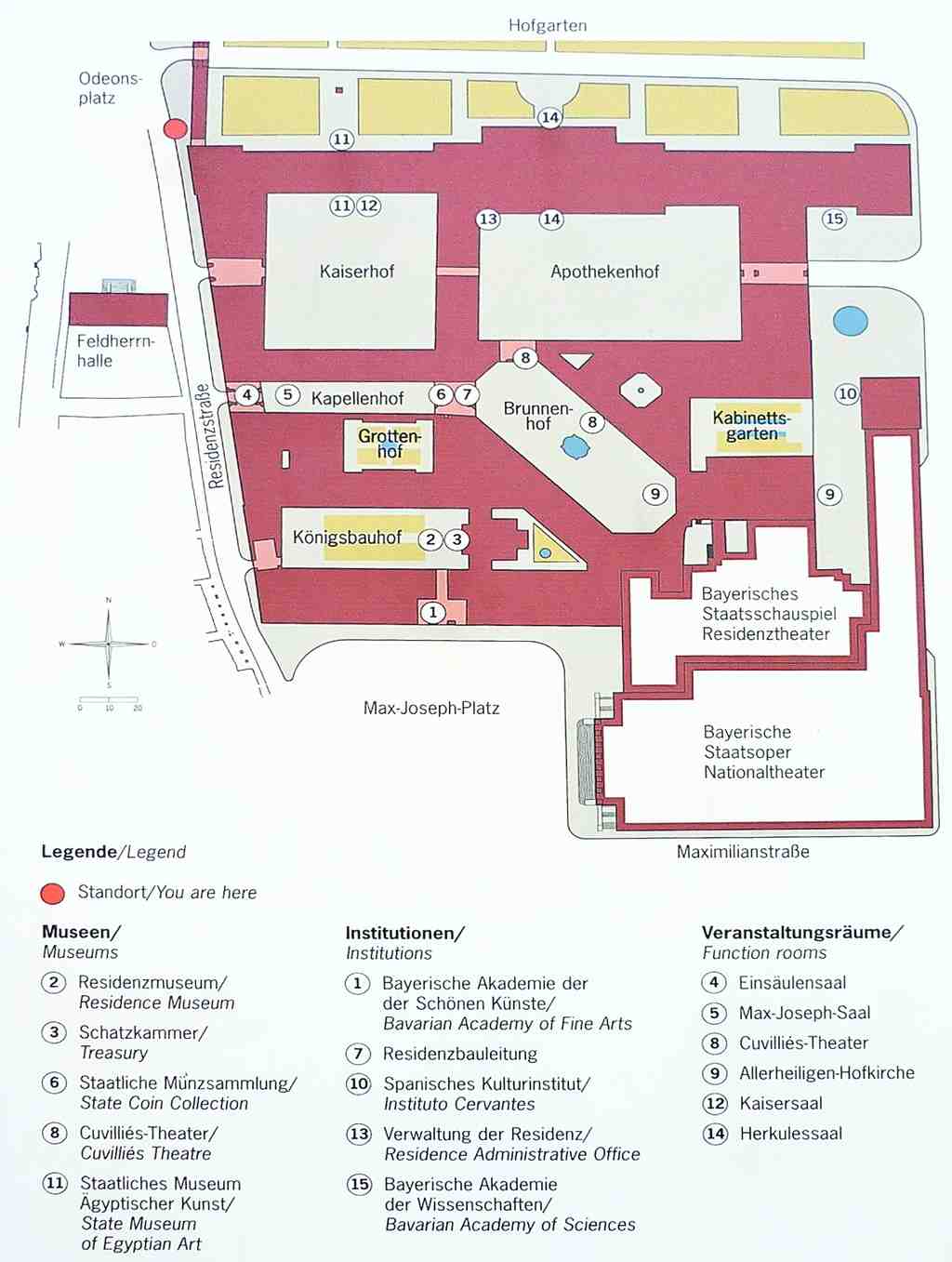
The Residenz, once the palace of the Wittelsbach monarchs of Bavaria, holds the record as the largest city palace in Germany. Imagine having a home with 130 rooms, 10 courtyards, and whole wings dedicated to concerts and plays! The Residenz is divided into three main parts:
1. **Königsbau**: Located near Max-Joseph-Platz. 2. **Alte Residenz (Old Residenz)**: Positioned towards Residenzstraße. 3. **Festsaalbau**: This part faces the Hofgarten.
Also part of this grand complex is the Cuvilliés Theatre, tucked into the Festsaalbau wing, which was lovingly reconstructed after World War II. And don't be surprised to find the Herkulessaal (Hercules Hall) here, known as the main concert venue for the Bavarian Radio Symphony Orchestra.
A fascinating tidbit: the first buildings here were built way back in 1385 as a defensive structure financed by Munich’s citizens after a botched uprising. Responding to the need for ultimate security, the Wittelsbachs started the Neuveste - a castle surrounded by moats and positioned to evade the city’s meddlesome alleyways directly. Over four centuries of development later, it practically absorbed an entire city quarter.
Fun fact: the Byzantine Court Church of All Saints peeks out on the east side of this massive complex, right by the former royal stables.
So while you’re standing here, imagine dukes and duchesses sauntering through these grand halls, their lives a blend of opulence and medieval intrigue. It’s a real slice of history standing right in front of you!
Ready to delve deeper into the history and architecture, inside the palace or the hofgarten? Join me in the chat section for an enriching discussion.


