
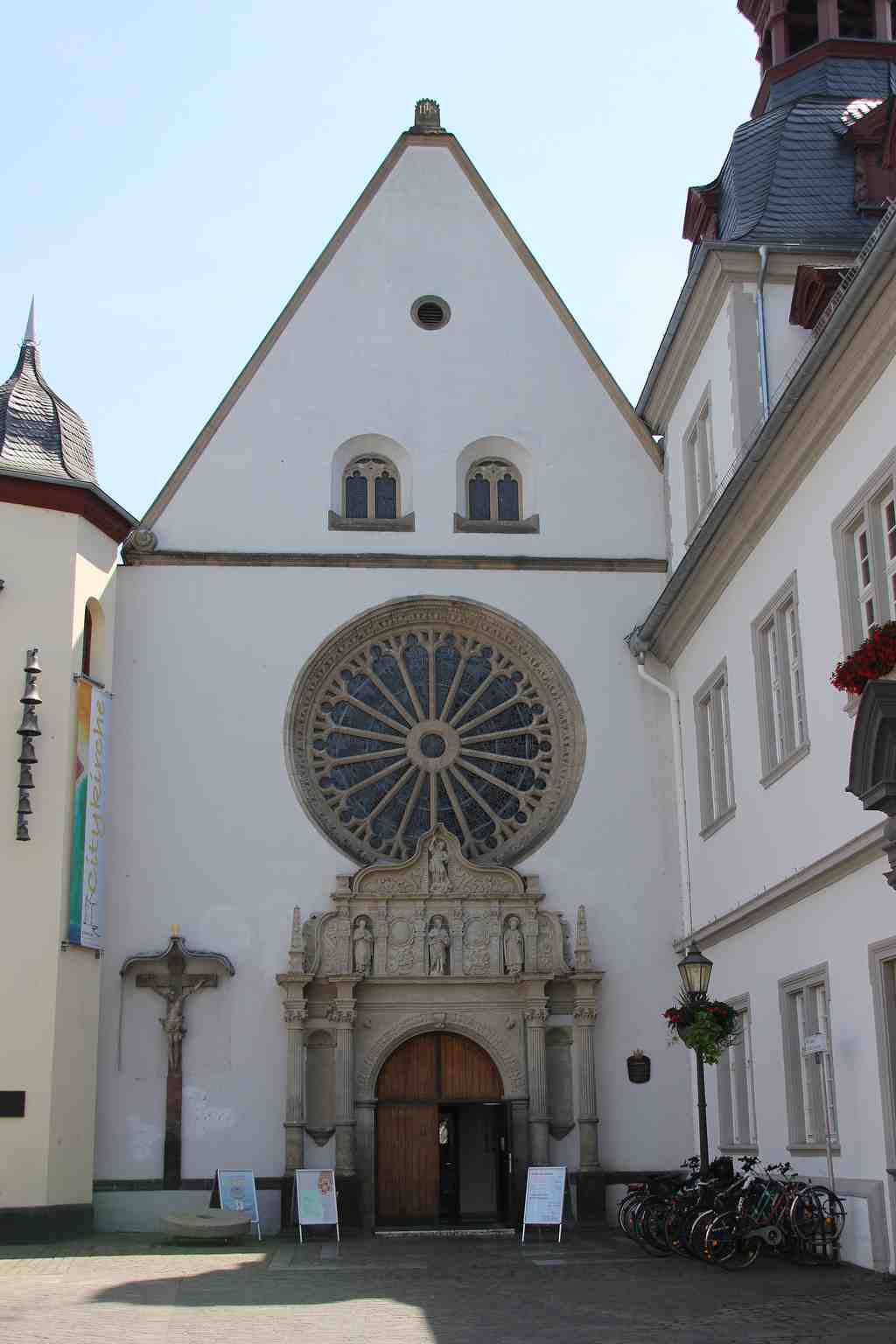
To spot the Jesuit Church, just look for the striking white triangular façade with a huge stone rose window and an elaborate stone-carved portal tucked between the neighboring buildings on Jesuitenplatz.
Alright, time to imagine yourself stepping into a lively square packed not with traffic, but with centuries of secrets! The Jesuit Church in front of you has more than one tale up its sleeve. If walls could talk, this one would be chattering in at least three different centuries and probably trying to sell you a history textbook. Don’t worry-I’ll be your much friendlier guide!
First, take a good look at that grand, round window-the famous rose window-resting above the richly decorated main portal. It’s a survivor, having watched the world outside change dramatically since 1617, when the original church was finished. In fact, this was one of the first homes in Koblenz for the Jesuits, a dedicated group sent here not just for their impressive debating skills, but because the Archbishop of Trier wanted to strengthen Catholic influence after the Reformation. The plan was simple: say goodbye to the Cistercian nuns who’d called this spot home since the 13th century, give the place to the Jesuits, and rebuild with a bit more Renaissance flair!
Picture the original church with its awe-inspiring Gothic star vaults and six lines of thick, proud columns-sun streaming through stained glass, echoing with the sound of prayers and lectures, and perhaps, the odd student sneaking a nap. Fast forward to the 19th century: the church finally gets a little tower on its back-after centuries of being enviously turmless-only for it to burn down in 1883, though it rises stubbornly from the ashes.
Now, here’s where the story takes a dramatic turn. World War II rolls in, and the church suffers terribly. Imagine the smoke, the rubble, and the debate in Koblenz: “Can we save the ruins?” In the end, a new church is built in 1958-59 from concrete and stone, keeping the west façade with its ornate entrance. If you look closely, you’ll spot figures of saints-John the Baptist, flanked by Ignatius of Loyola and Francis Xavier, and even the archangel Michael presiding at the top. The original door remains, its columns topped with empty niches where statues once stood. The only real complaint the church has these days is about its missing noses!
Step inside and let your senses take in the scents of old stone and wood. Salvaged treasures from the past hide within: a 15th-century Pietà, ornately carved sacristy doors, and even some chunky keystones that somehow dodged disaster. Walk around, and you’ll also see modern artistic touches-colorful glass from the 1960s and a brilliant rosary of sculptures and paintings.
Even if the Jesuits finally left in 2003-and the Arnsteiner Fathers waved goodbye as recently as 2023-this church still carries the spirit of all its residents. Today it stands not just as a place of worship, but as a monument-officially protected and part of the UNESCO World Heritage Upper Middle Rhine Valley. So, the next time you pass this humble yet heroic building, give it a wink. It’s seen enough history to appreciate the gesture. Ready for our next stop?




