
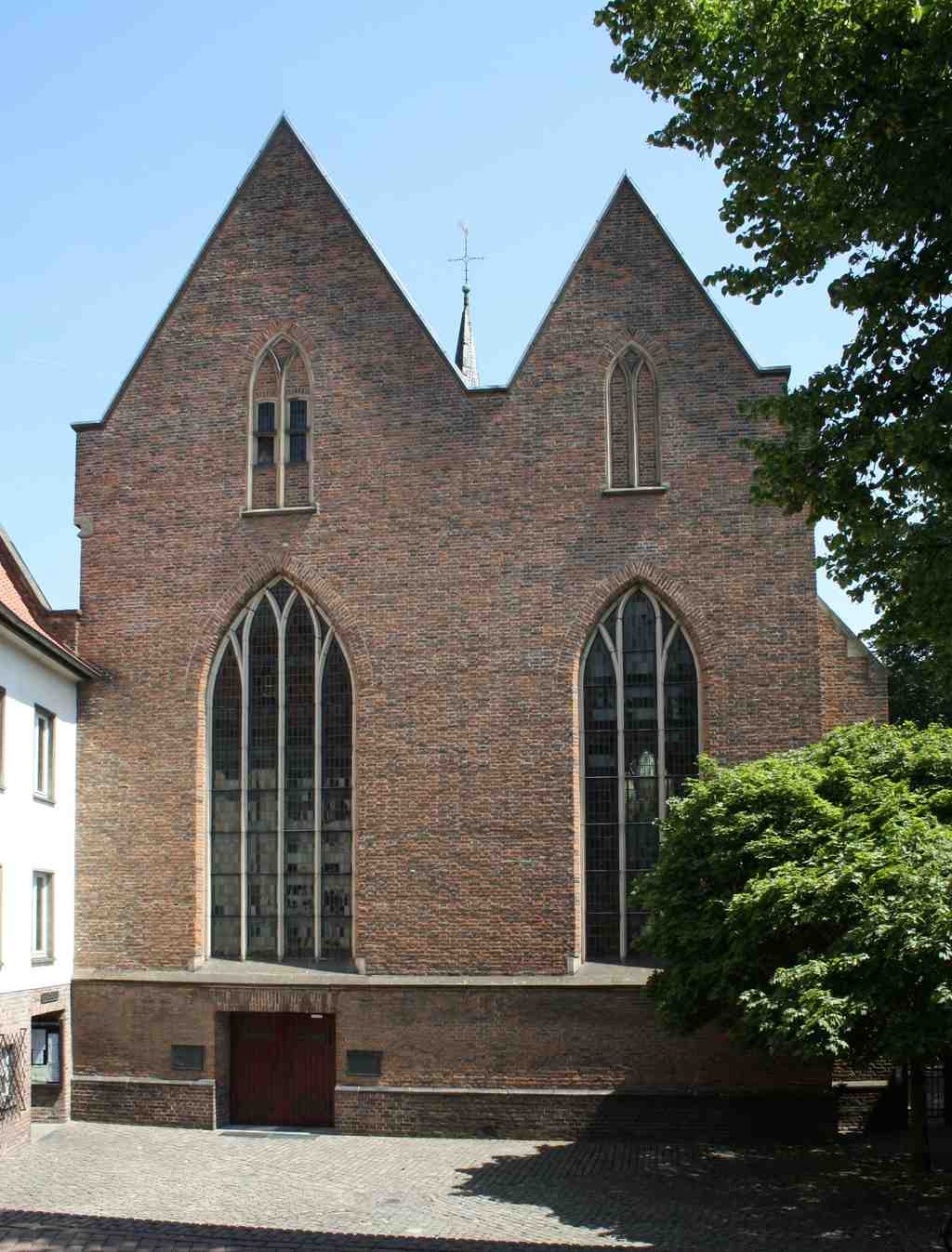
If you’re looking for St. Mary’s Immaculate Conception, just look for a simple, broad brick building with two distinct pointed gables and large, tall windows-tucked in quietly beside the trees.
Now, let’s turn back time and step into a world where cobblestones echoed with the soft shuffle of robes and bells chimed through the morning mist. You’re standing right where, back in 1285, the mighty Count Dietrich decided that this very spot would be home to a new monastery for the humble Minorite brothers. Imagine them, with sandals and tattered robes, arriving to a modest church-certainly less grand than what stands before you now! Over the next hundred and forty years, the place grew: these brothers rebuilt the complex in sturdy gothic style, crafting this very church as the southern wing of their cloister. Picture the clatter of chisels-- echoing through the medieval air as Arnt von Kalkar carved a magnificent wooden choir in 1474. You could say he put the “art” in Arnt, but let’s not chip away at his reputation!
Through storms of history, this church weathered some serious drama. During the Reformation, when neighboring chimes fell silent, this cloister survived. Imagine the Minorites-cloistered away-debating and praying as the world outside spun with tension, then suddenly, in 1698, a sumptuous Baroque pulpit arrived, all curls and gold leaf. It must have felt like a royal upgrade!
But, alas, not all stories are peaceful. In 1802, under French rule, the resilient monastery was abolished, its rooms repurposed and sold, and the once holy halls echoed with unfamiliar footsteps. Soon after, the convent turned into a hospital-a strange twist for a church, don’t you think? The building changed, grew, and shrank, especially after World War II, when bombing raids nearly wiped it off the map. Only a whisper of the original walls remained-. Yet, like a phoenix, it rose from the ashes, rebuilt to honor its original beauty.
Inside, treasures survived: that famous choir with both saints and cheeky grotesques, a Baroque pulpit, and even a fragment of St. Adalbert’s relics, rescued from Poland in WWII. And if you listen carefully, you might just catch the hum of an organ, installed in 1961, that fills these halls with rich, resonant music-. This church isn’t just bricks and mortar-it’s a survivor, a hospital, a haven, and a beacon of reconciliation. So next time you’re facing a tough day, remember: if St. Mary’s can come back from almost anything, surely we can all handle a little rain!


