
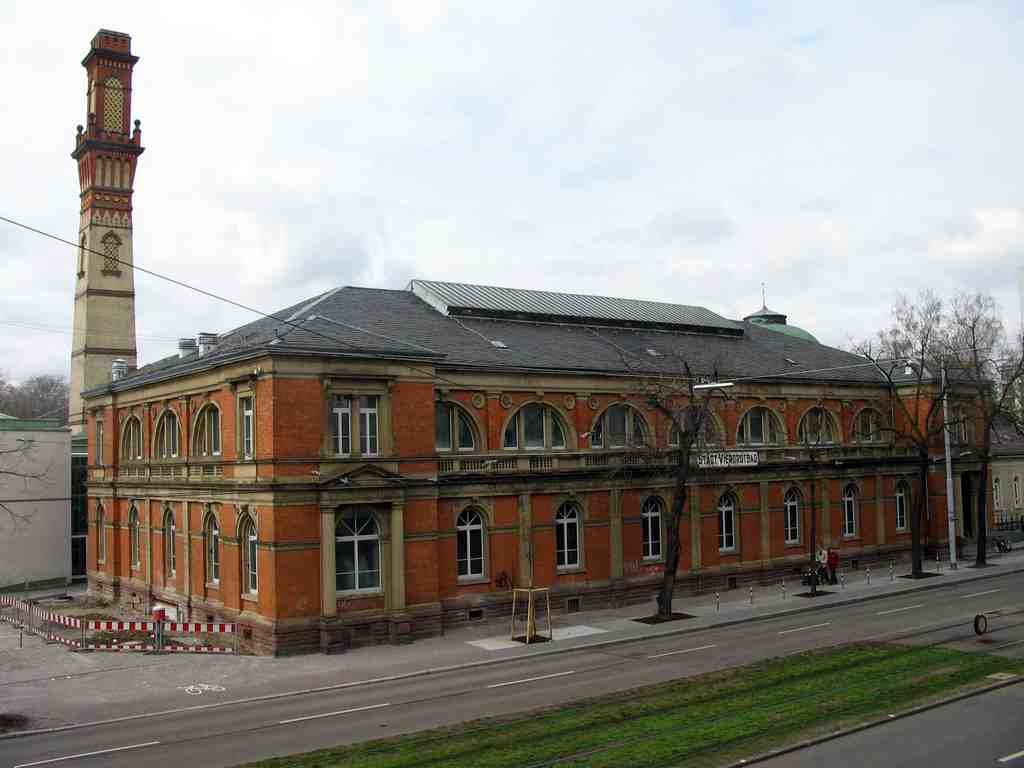
On your right is the Vierordtbad, a long, two-story structure of deep orange-red brick accented with arched windows and anchored by a striking, minaret-style chimney towering at the far end. It is a beautiful piece of architecture, but it was never supposed to be a bathhouse.
Heinrich Vierordt, a wealthy banker, left 60,000 Gulden to the city, a massive fortune at the time. He did not want a public bath. His grand ambition was to fund a massive, covered market hall. But the pragmatic, stubborn market women of Karlsruhe absolutely refused to move inside. They had sold their goods on the open streets for generations, and they saw a confined, indoor hall as a terrible business move, launching a fierce protest to kill the project.
If you were the city council sitting on a pile of donated cash for a project the locals actively hated, would you force it through or creatively repurpose the funds?
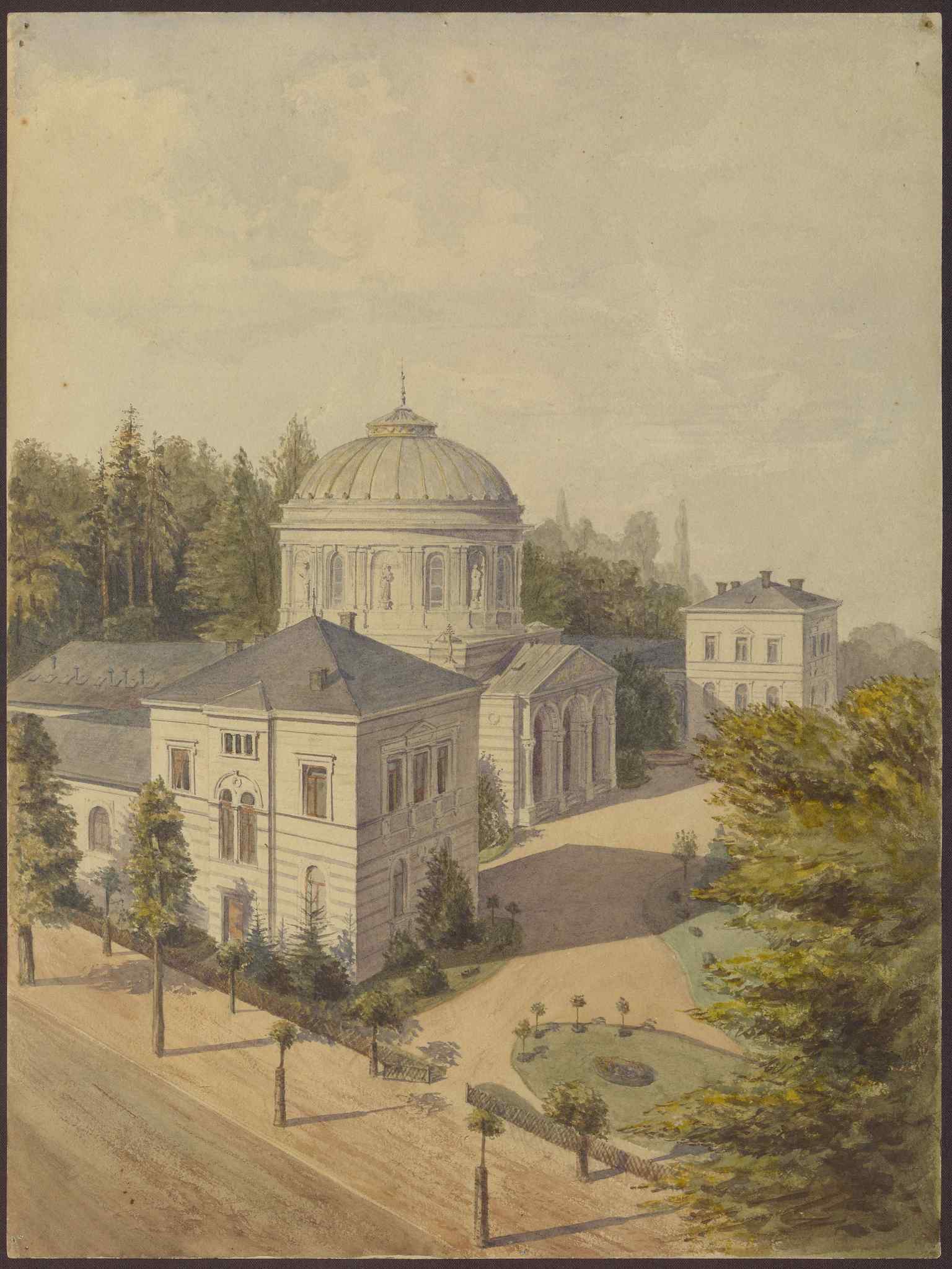
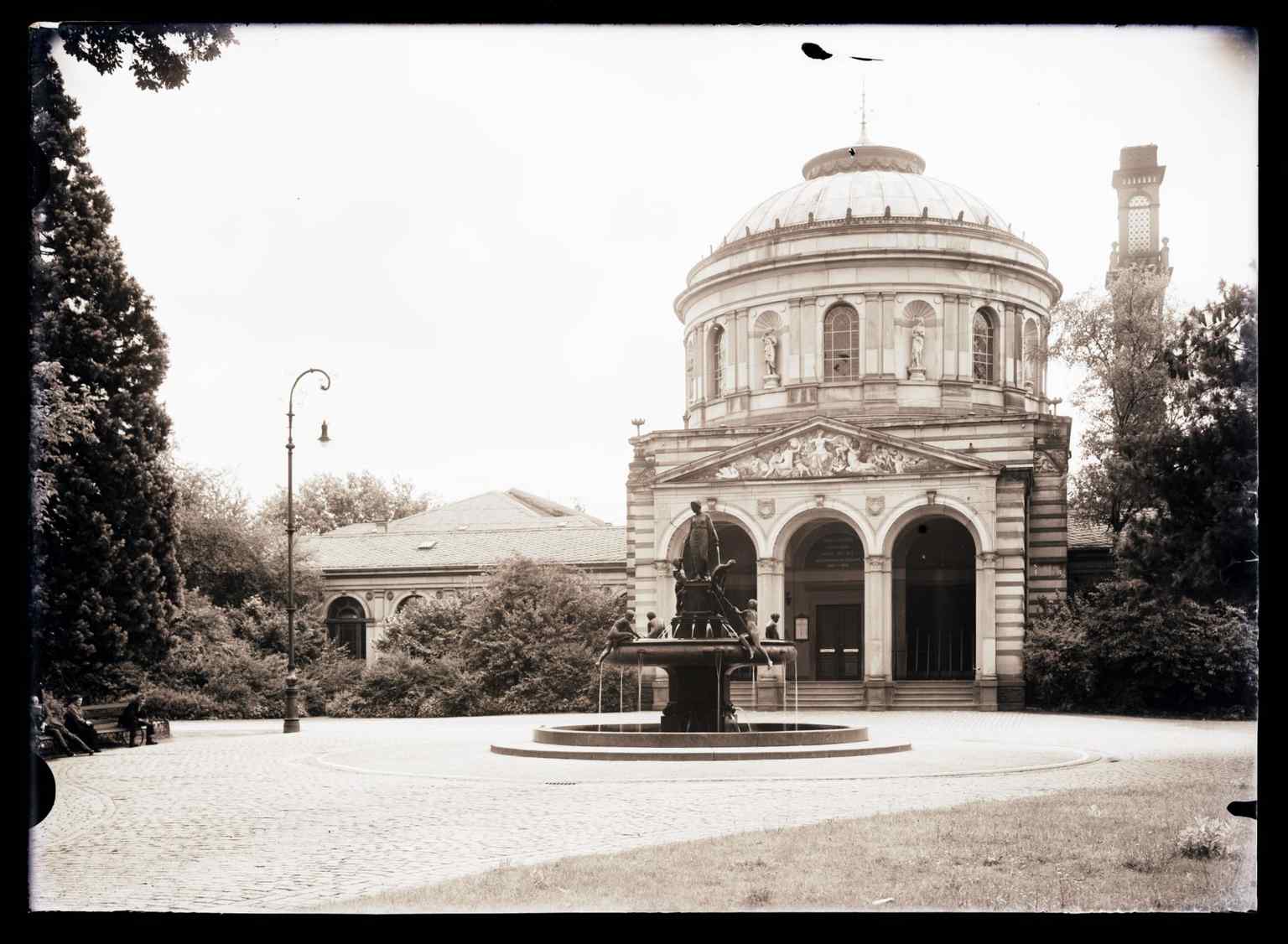
The city chose the latter. They took the banker's market hall money and built this public bathhouse instead. Opened in 1873, it was designed in the Neorenaissance style, an architectural movement that revived the symmetry and grandeur of classical European antiquity. Check your screen for a photo from its opening year to see exactly what that grand vision looked like back then.
The collision of an aristocratic banker's ambition with the stubborn reality of working-class market women resulted in something the city desperately needed. Around the turn of the century, most people did not have bathrooms at home. Saturdays became traditional wash days here, where entire families would often use the exact same tub water, one after another, just to be clean for Sunday.
It also has a history of quiet rebellion. In 1945, French troops requisitioned the bathhouse exclusively for allied forces. But a brave employee named Herbert Hasenfus secretly snuck members of the local water rescue association in once a week. They needed the water to keep up their life-saving training, and eventually, they convinced the military to officially legalize their presence.
The facility continued to modernize, eventually phasing out the old tub baths by 1981, largely because home plumbing had finally made them obsolete. Interestingly, the deputy director of the baths at the time actually used one of those retired bath cubicles as his daily office. Today, it remains a fully functioning health and wellness center, open most days from ten in the morning until eleven at night.
Let us keep moving toward the administrative center. Our next stop, the Badenwerk AG building, is about a six-minute walk away.






.jpg)