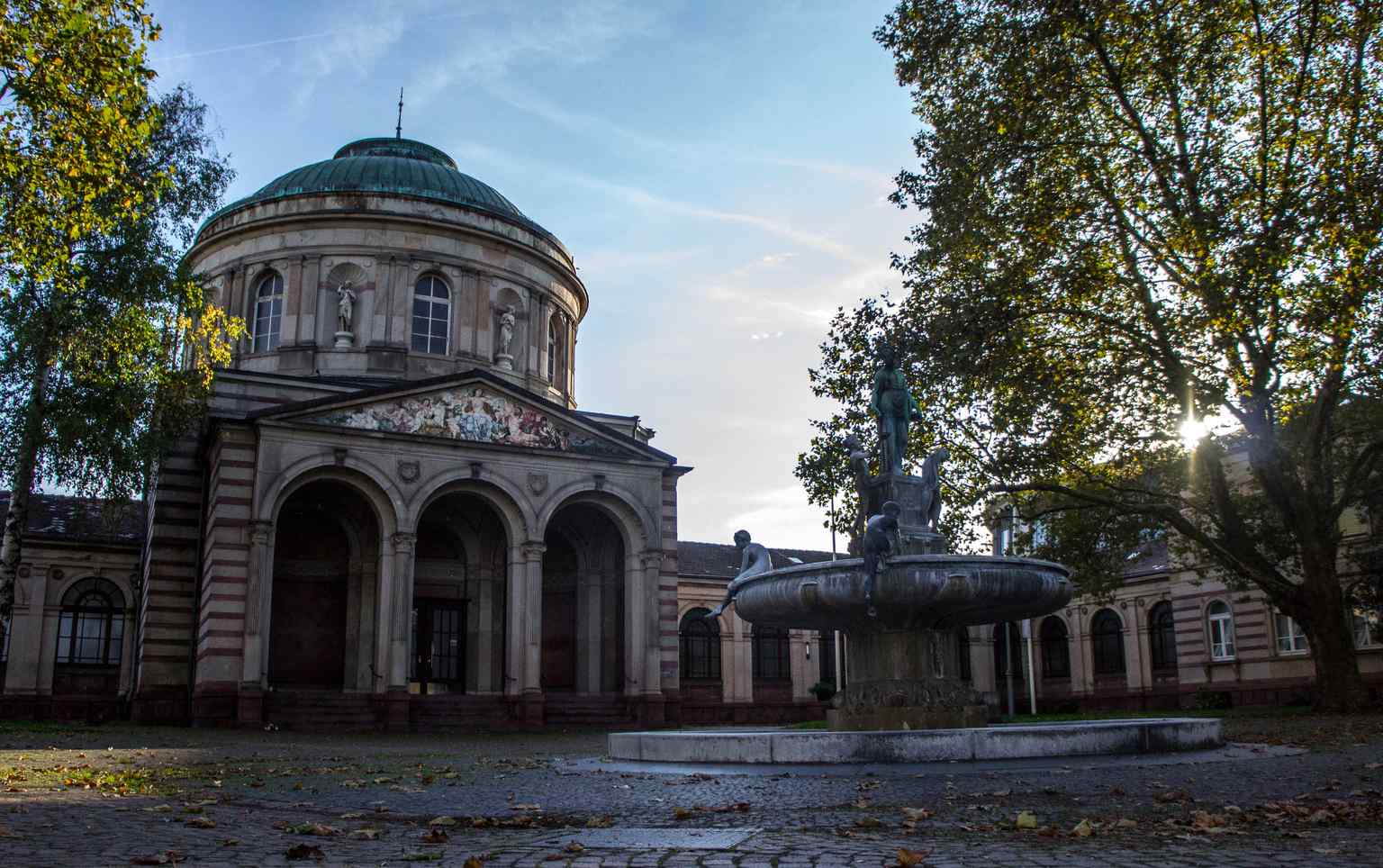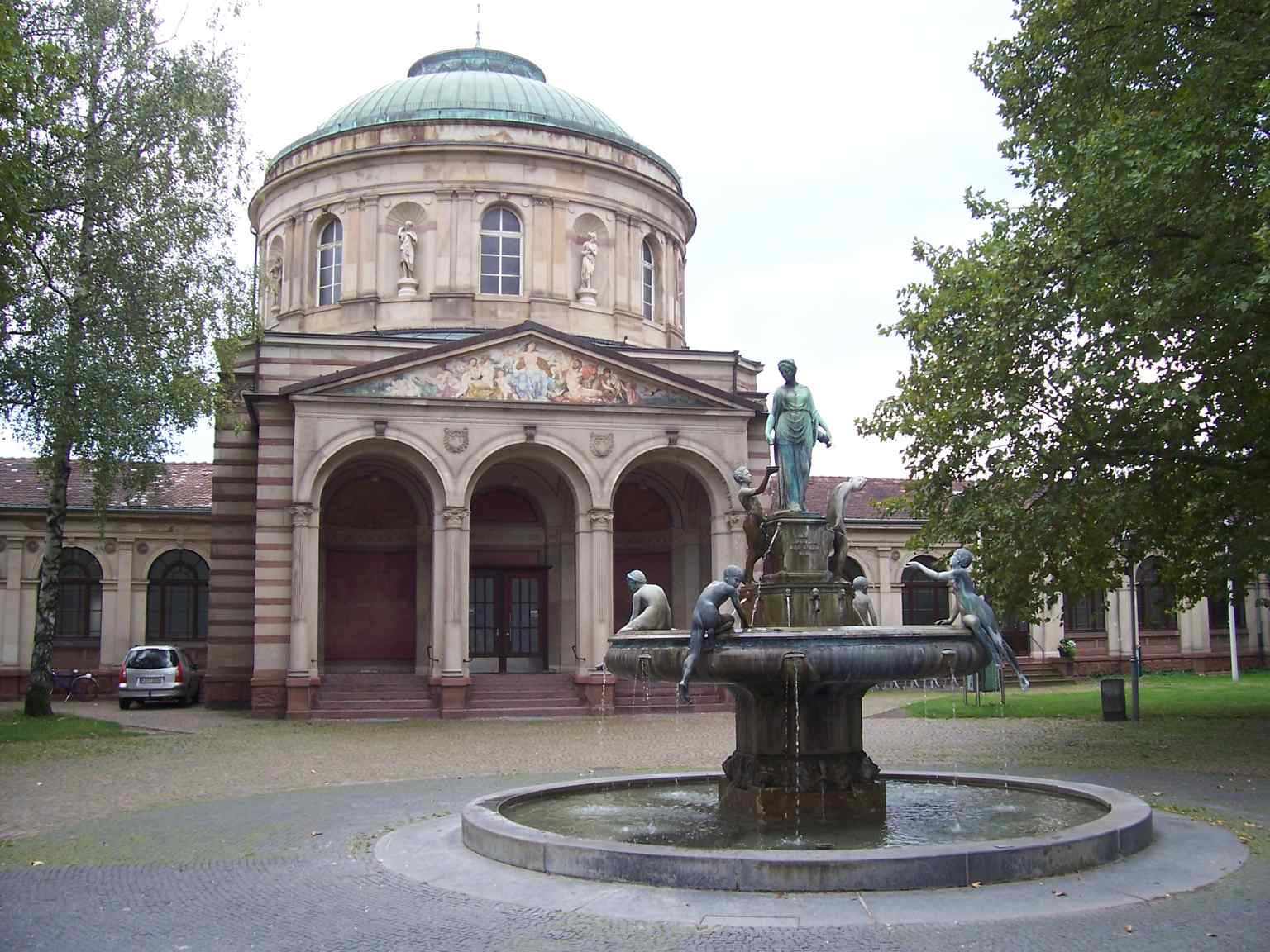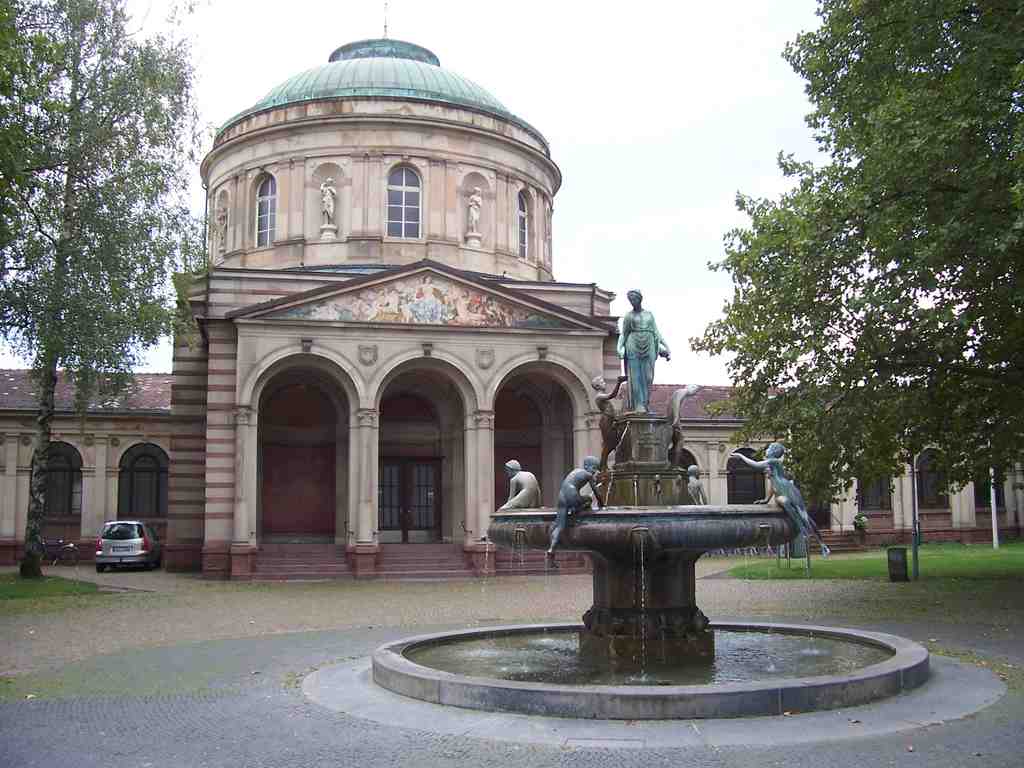
On your right, you will see a large, multi-tiered bronze fountain featuring a central statue of a robed woman standing above a wide circular basin, with smaller figures of children sitting around its rim.
Let's talk about Wilhelm Klose. He was a wealthy painter who inherited a considerable family fortune, and he knew exactly how to use his money to exert power. In 1905, he decided to gift this fountain to the city. But there was a catch. Klose dictated everything. He demanded the sculptor be Johannes Hirt, controlled the entire design, and forced the city to place it right here, squarely in front of what was then the main entrance to the grand bathhouse behind it. You could say it was generosity wrapped in a very rigid ego.
The central figure is Hygieia, the Greek goddess of health. The word hygiene actually comes from her name, making her perfectly fitting for a bathhouse. If you look at the app, you can see how her image was already featured up in the triangular gable, the classic peaked roof section, of the building directly behind the fountain.
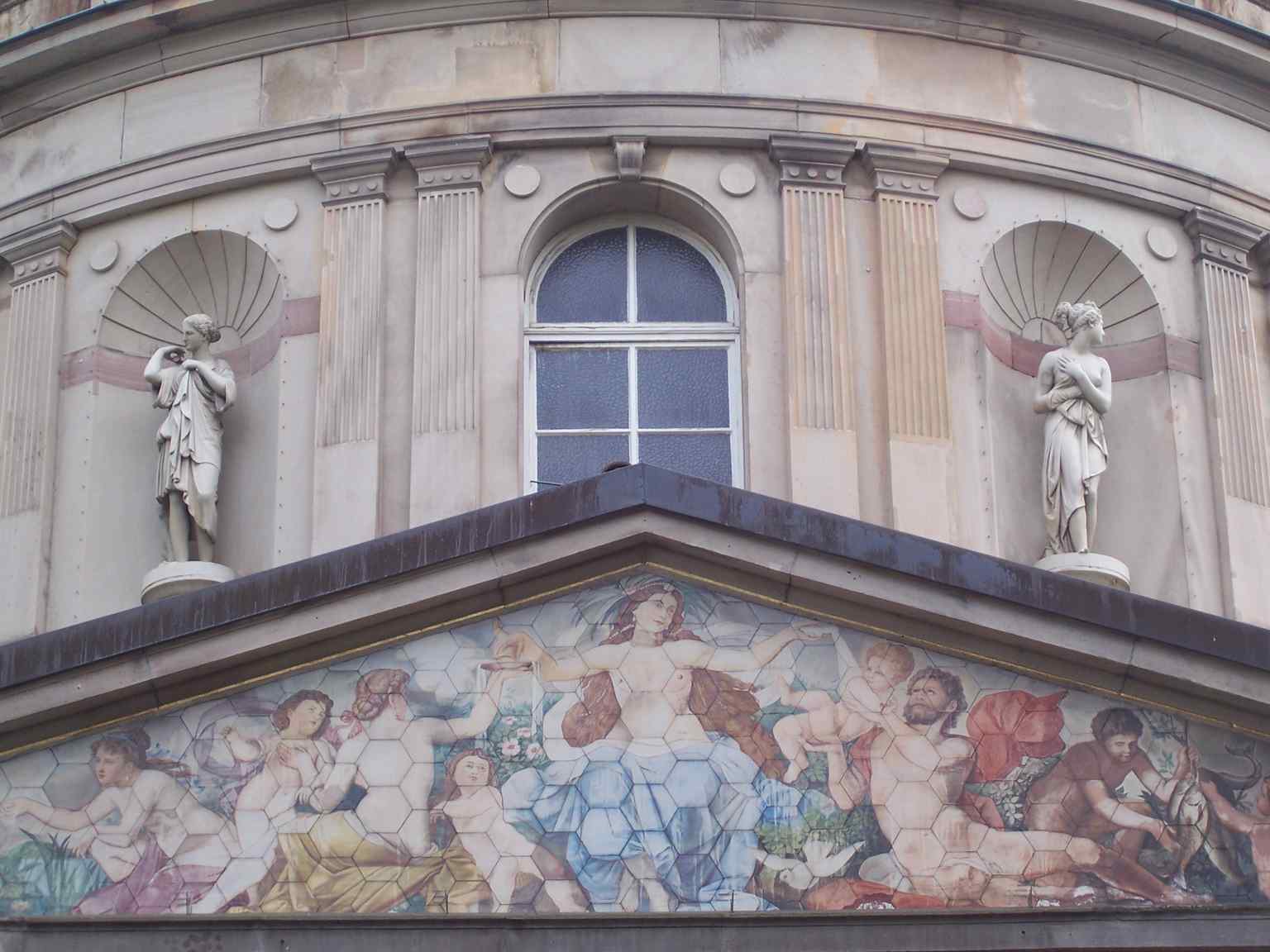
But getting this project approved required navigating intense local paranoia. A year earlier, another fountain in the city caused a massive moral scandal because it featured an unclothed female figure. The city council was terrified of another uproar. To force his vision through and prove the unclothed children on his fountain were purely symbolic and not an offense to public decency, Klose had a fully functioning, ninety centimeter tall scale model made from pure copper. It was an expensive, physical piece of evidence created just to calm the skeptics down.
Fast forward to 2013, and the fountain faced a much more literal problem. One of the bronze girls sitting on the rim was stolen. Thieves violently sawed off the forty kilogram figure, likely intending to sell her for scrap metal. But they realized it wasn't easy to fence recognizable stolen art, so they dumped her in a forest near the town of Bellheim.
Locals found her, had no idea where she came from, and simply set her up on a rock by their main road. They affectionately named her the Spiegelbach mermaid. It wasn't until a sharp-eyed citizen noticed the official logo of the Karlsruhe baths, which features this very fountain, that the mystery was solved. The missing figure was restored, the brutal saw marks were repaired, and she was brought back home in 2014.
Despite Klose's absolute insistence on placing his fountain at the center of attention, time ultimately had other plans. If you check your app, you can see how the old entrance used to frame it. Over the years, the plaza was redesigned, and the main bathhouse doors were moved. Klose's unavoidable welcome monument was quietly sidelined, left somewhat stranded at the edge of the square. Still, the fountain is freely accessible around the clock, twenty-four hours a day. Now, let's take a closer look at the bathhouse directly behind the fountain, revealing another hijacked donation, as we head over to the Vierordtbad, which is just a one minute walk away.