
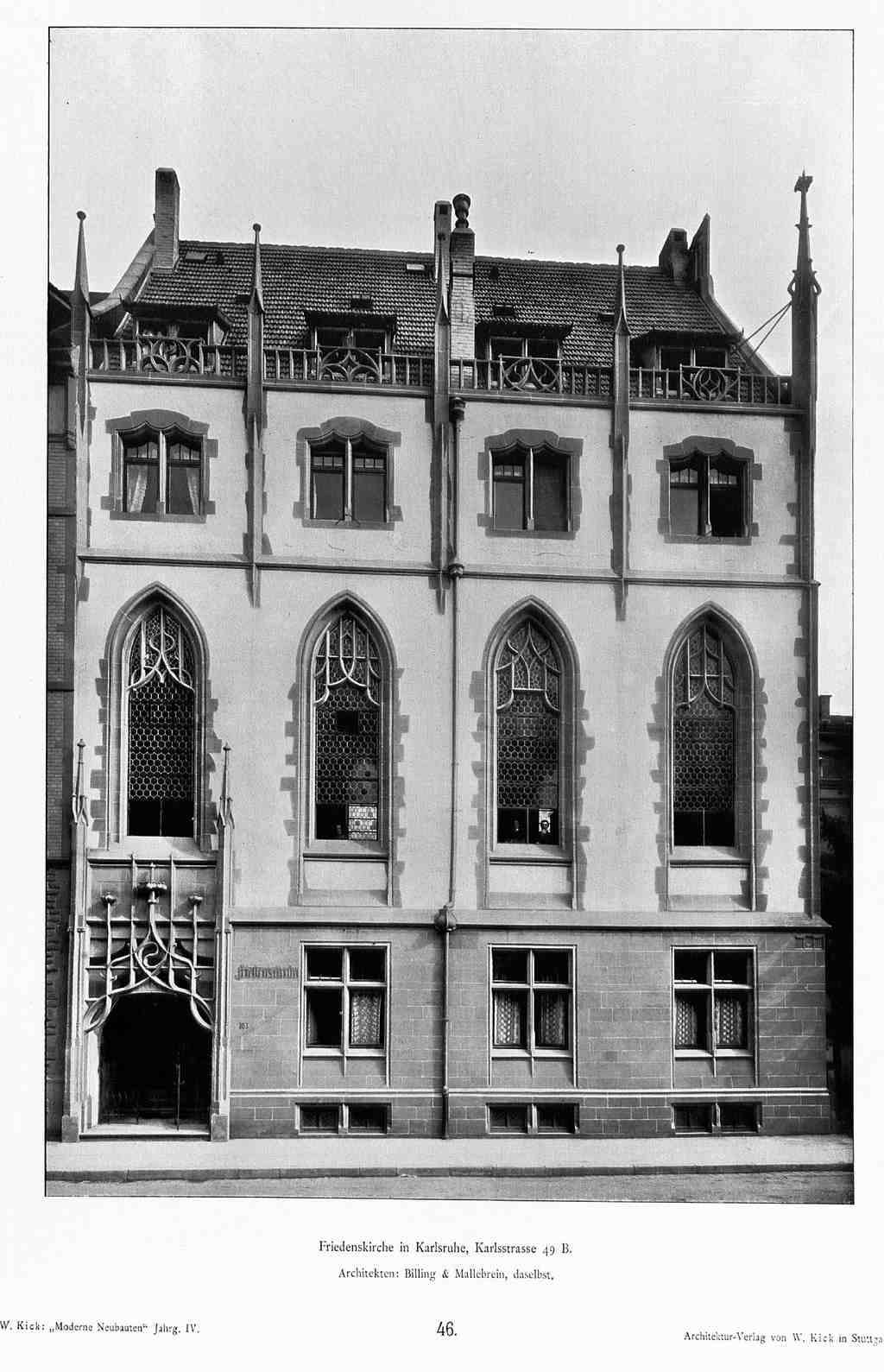
Check the app to spot the Church of Peace that once stood here, a striking structure featuring a solid sandstone base, towering pointed-arch windows, and an intricate gothic entrance portal. In the late nineteenth century, the German Methodist community had a problem. Surrounded by massive state religions, independent congregations were often dismissed as obscure sects. To fight this prejudice, they needed to project permanence.
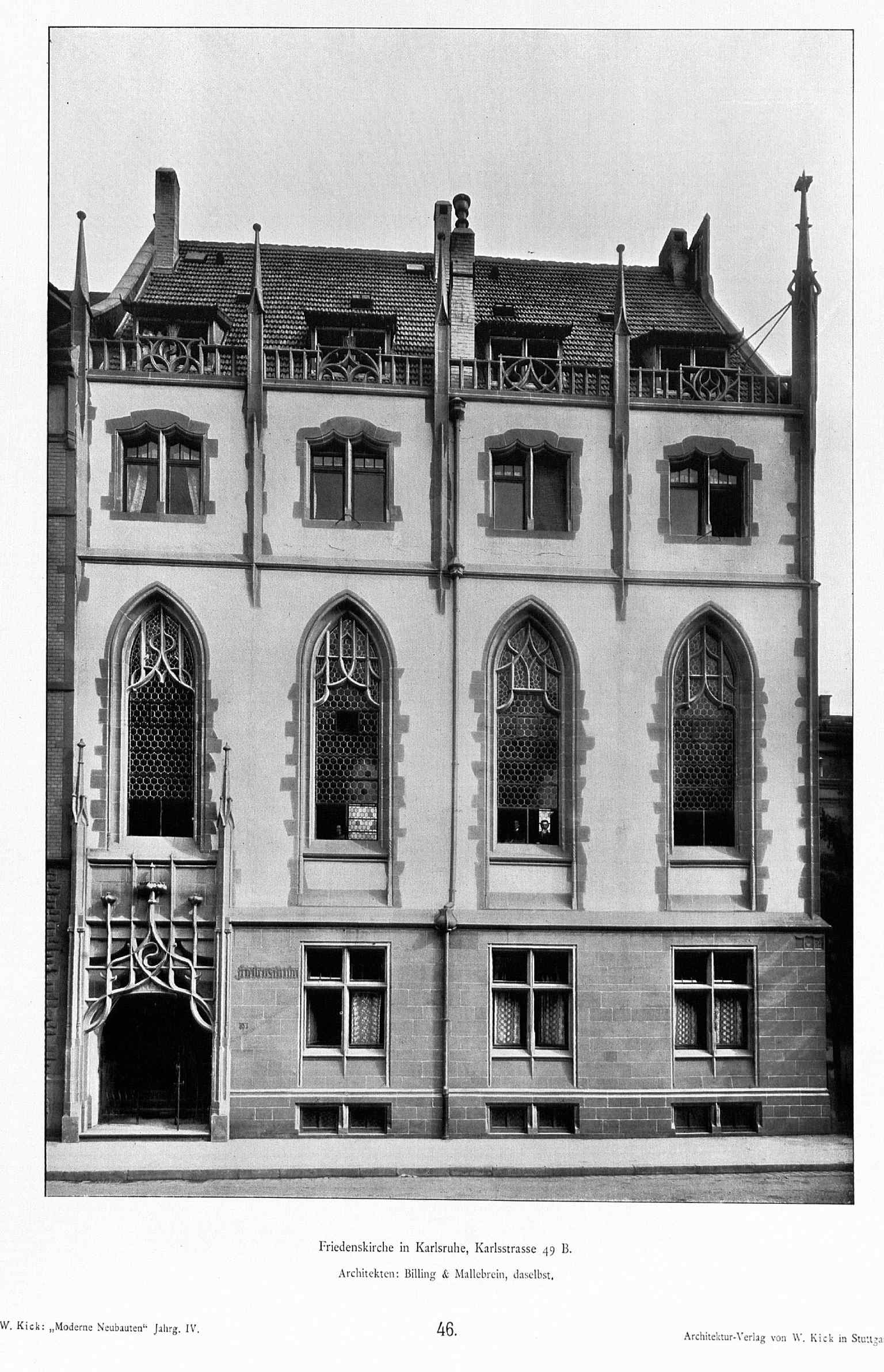
So, they commissioned an imposing, late-Gothic fortress. And who did they hire to design this bastion of respectability? A young architect named Hermann Billing. It was a fascinating choice, as Billing was an unpredictable pioneer of Art Nouveau, a decorative architectural style inspired by natural forms. He would soon scandalize the city by covering public fountains with naked nymphs and provocative caricatures. Yet, for 80,000 Marks, a substantial sum, Billing gave the Methodists the solemn sanctuary they desperately wanted.
The congregation loved it so much that after it was bombed in World War Two, they rebuilt it with their own hands. But grand survival stories often meet incredibly mundane ends. In 1968, the city bulldozed the church simply to widen the road for cars. The displaced congregation was forced to merge with another church nearby. In a perfect twist of fate, their new home was located at number eleven Hermann-Billing Street, named after the very architect whose unpredictable reputation they once ignored.
If you want to visit, their new church is open on weekends from nine to one. Now, let us walk toward the highest legal authority in the country, the Federal Prosecutor General at the Federal Court of Justice.





