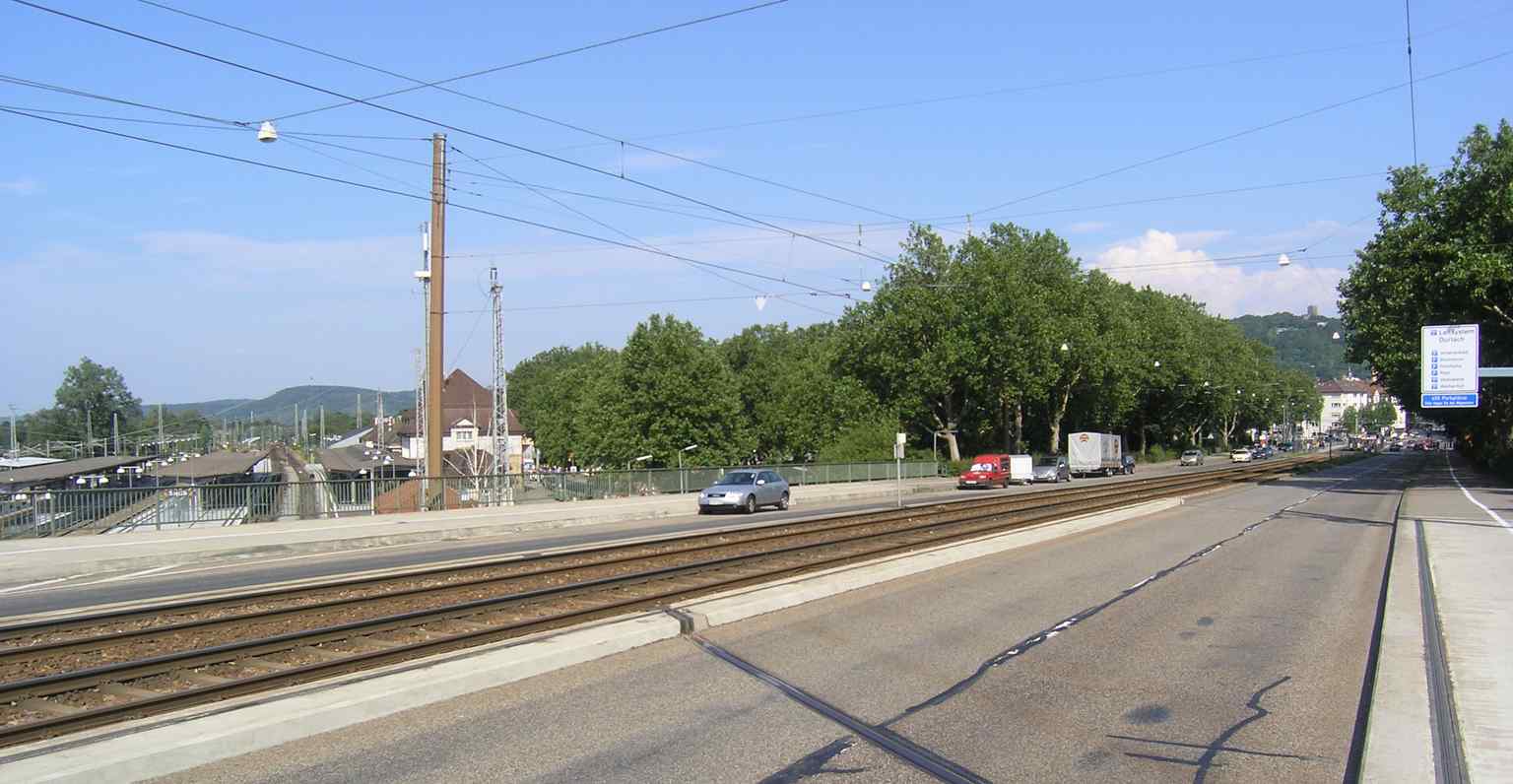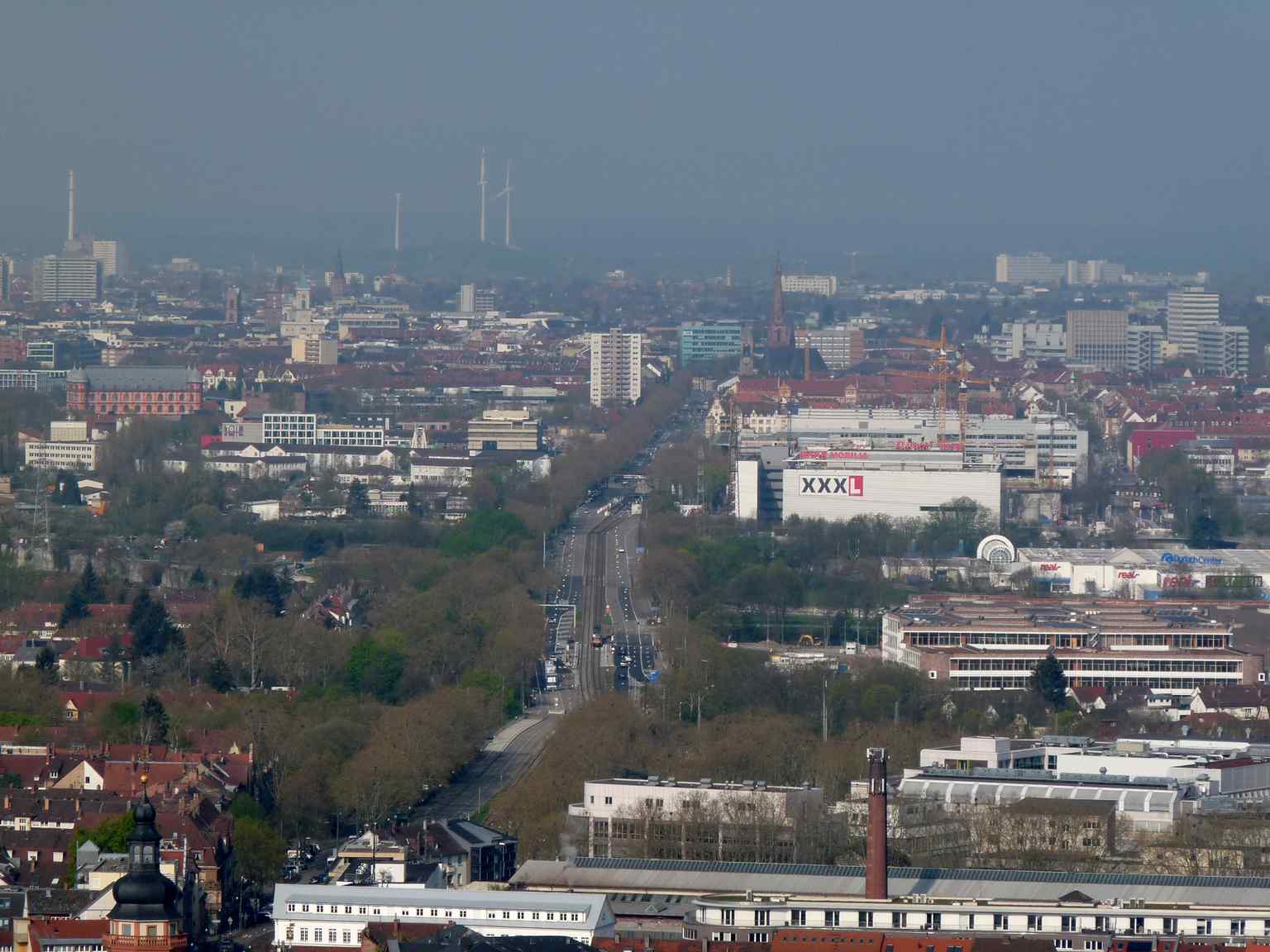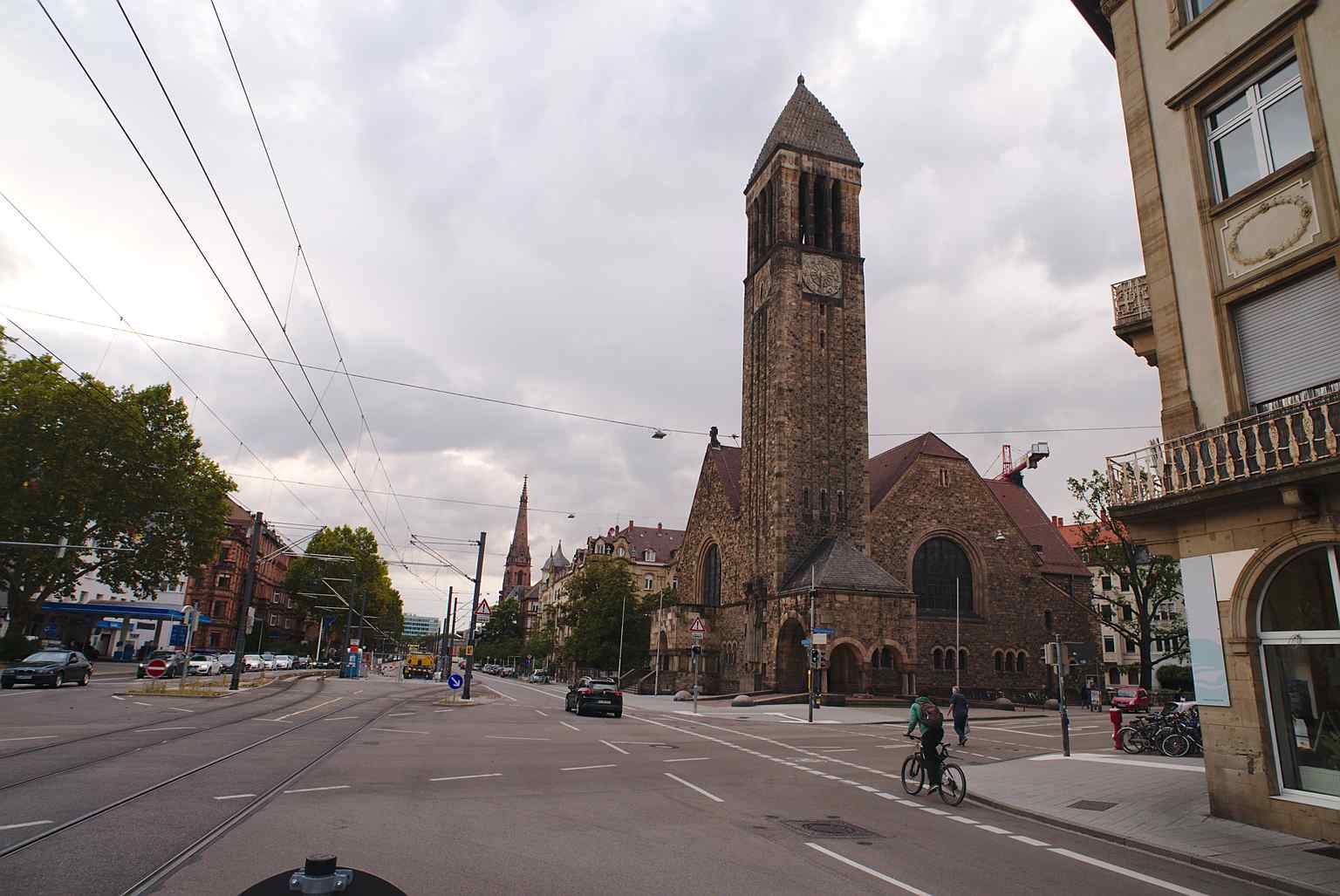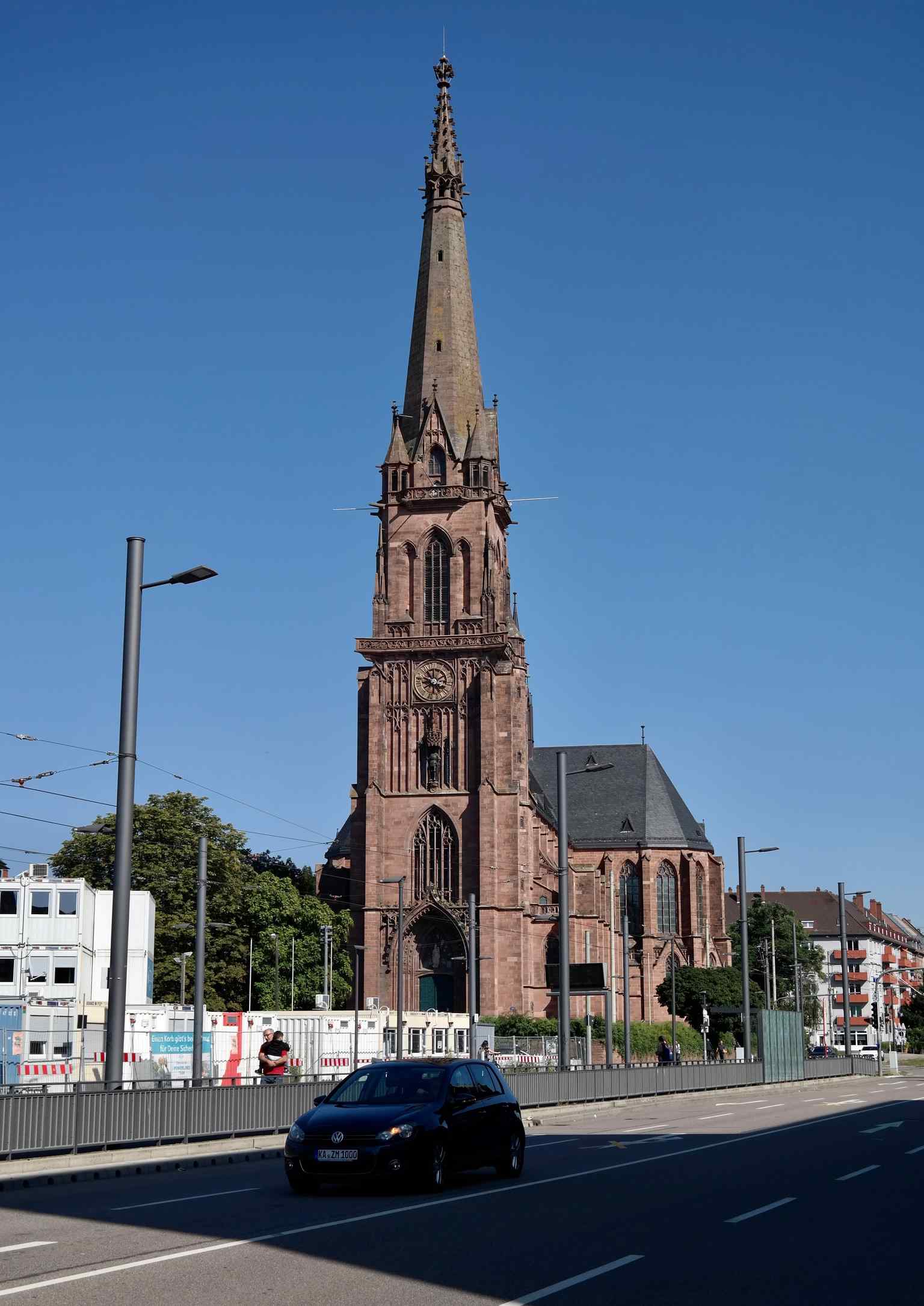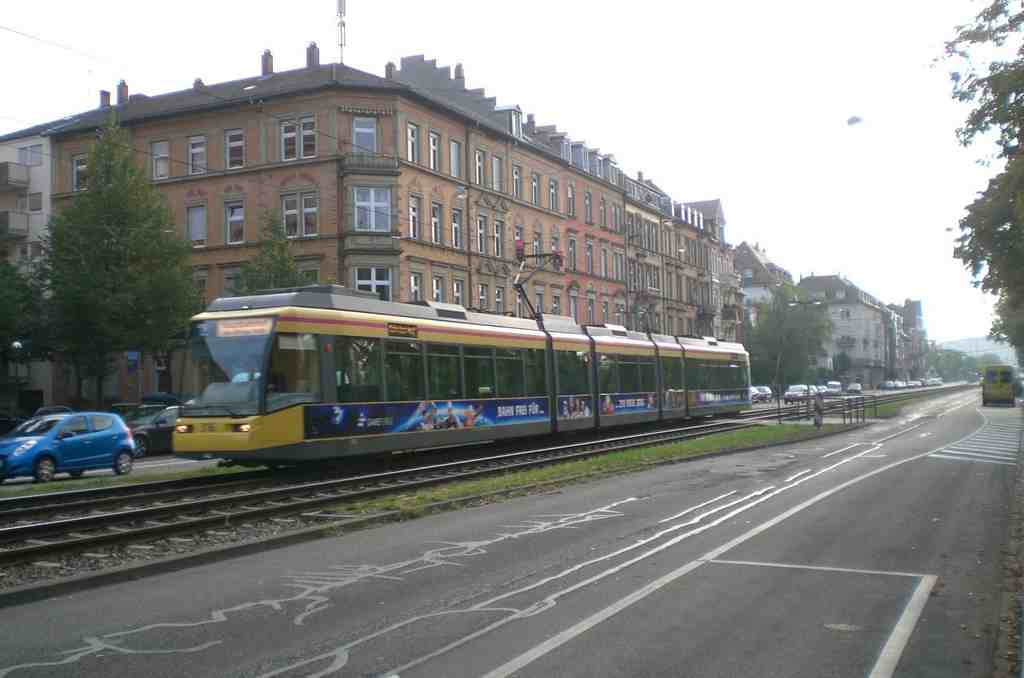
You are standing before a broad asphalt thoroughfare split by a dedicated tram track in its grassy median, flanked by imposing multi story brick buildings with neat rows of dormer windows. This is the Durlacher Allee. If you think back to our very first stop, you might recall the colossal Luther statue. Well, this massive avenue begins right under his watchful stone gaze at the Durlacher Tor, running eastward like a long concrete spine that connects the historic city center to the Durlach district.
For centuries, this area was nothing but kitchen gardens and cemeteries. But a city cannot evolve from a rigid, traditional layout into an industrial powerhouse without a major artery to pump life into it. The origins of this road are surprisingly humble. In 1588, a drainage trench called the Landgraben was dug here to manage water for a nearby castle. By 1768, that muddy ditch was extended to transport stone and building materials into the rapidly expanding city.
Once they built the road, things accelerated quickly. In 1877, the city opened its first horse drawn tram line right here. Four years later, they upgraded to steam, and by 1900, the whole system was electric. Check your phone for a moment. This photo shows a tram gliding down the dedicated tracks that still run through the center of the avenue, a modern evolution of those early transit lines.
With reliable transport came the visionaries and the factories. In 1891, a local soap and perfume manufacturer called Wolff and Sohn set up shop here. Their famous Kaloderma cosmetics line became a massive global success. In a brilliant piece of modern irony, that former perfume factory is now the local tax office. To honor the site's history, a conceptual artist designed a custom perfume for the building's lobby that smells exactly like freshly printed money. I suppose the scent of taxes is just as intoxicating to some.
But the Durlacher Allee has also seen profound darkness. In 1933, the street was renamed Robert Wagner Allee, after the local Nazi Party leader. Wagner orchestrated the brutal persecution of political opponents and the deportation of local Jewish citizens. Right after the Second World War in 1945, his honorary citizenship was revoked, and the street took back its historic name. During that same war, a massive air raid bunker was constructed directly underneath the asphalt you are looking at, serving as a desperate underground refuge while bombs fell above...
Today, this dual carriageway, a road with two lanes in each direction separated by a central divider, is the ultimate connective tissue of Oststadt. It bridges the gap between old royal domains and rapid urban modernization.
We have followed this artery of progress almost to its conclusion. For our final stop, we are heading to a place where sheer power and modern energy literally unite. Let us continue on a brief eight minute walk to the headquarters of EnBW Energie Baden Württemberg.