
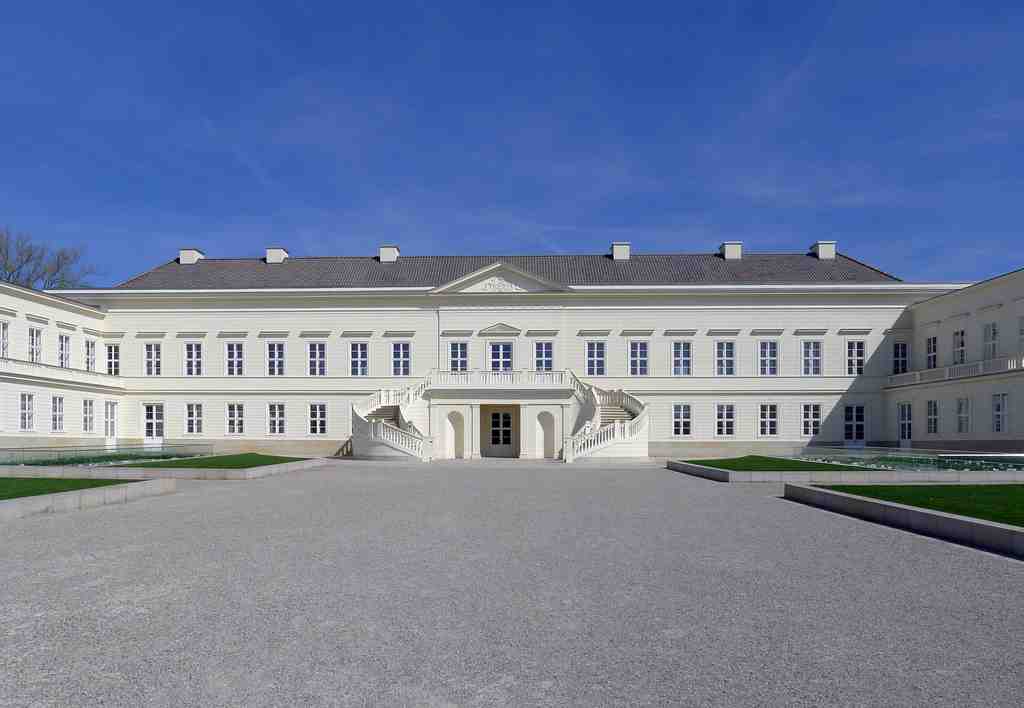
To spot Herrenhausen Castle, look straight ahead for an elegant, cream-colored, three-winged palace with a symmetrical facade, a central staircase climbing to a balcony, and neatly trimmed grounds in front.
Alright, time to step into the shoes-er, perhaps the buckled shoes!-of royalty because you’re now standing in front of one of Hanover’s most storied addresses. Imagine yourself, hundreds of years ago, under the open sky, looking at what was once the dazzling residence for the great Electors and Kings of Hanover. Herrenhausen Castle first sprang up in the 1600s, carefully transformed from a simple farmhouse to a playful manor fit for grand garden parties and royal mischief. By 1670, its distinctive three-wing layout was already wowing visitors, its impressive main building guarded by an ornate arched gate and a courtyard you could reach through the central axis-back then, showing up in anything less than your finest stockings just wasn’t done.
Not just a pretty facade, the castle’s wings once housed everything from the staff’s rooms to the stables and barns-because even kings need a good breakfast egg, right? In 1676, the whole place got an upgrade fit for summer, transformed into a luxurious palace by Marinus Cadart, who made sure the central hall became the beating heart of courtly life. If you had been invited to one of those lavish parties, you’d stand beneath Venetian-inspired architecture and look out over the “growing garden”-a real symbol of power (and one-upmanship over your noble neighbors).
Herrenhausen Castle played host to history, quite literally, because in 1683, the future King George II of Britain was born right here. It must’ve been quite the place for highbrow hide-and-seek! Around 1700, plans swirled for even grander constructions-the architects were inspired by Italian villas and the grand visions of Andrea Palladio. Though some dreams lay just on paper, the castle was continuously polished and adapted. Want your castle to look up-to-date? Just add some stylish window decorations, sandstones, and iron gates to keep the fancy in, and the riffraff out.
Now, here’s a fun twist: the wings were once filled not with royal pets, but with delicate plants overwintering in heated quarters. Yes, these were the first orangeries, and the flat roofs atop the wings made perfect terraces for a noble to gaze out over the gardens, planning the next majestic fountain or dazzling cascade. When the famous Great Garden was finished, the whole ensemble became even more breathtaking-just try to imagine the sound of water splashing from the fountains and the scent of blooming flowers on a summer’s day.
As time went on, the castle saw a parade of kings-some residents, some absentee landlords, like George III, who never even bothered to visit. The castle got a makeover in the early 1800s by architect Georg Ludwig Friedrich Laves, who gave it this very look: elegant classical lines, posh balconies, and, at King George IV’s command, even luxurious bathrooms and English teapots. I bet those parties had top-shelf tea!
Herrenhausen Castle enjoyed its role as a centerpiece for royal dinners, summer escapes, and grand balls until 1943, when, tragically, it was almost completely destroyed during a bombing raid in World War II. Imagine the flames crackling where music and laughter once rang out-it was a sad, silent moment in history. But Hanover never forgot its treasure. Many schemes were hatched for what to do with the ruins-a hotel, an art museum, even a platform called “Bella Vista.” Nothing quite stuck until the city and Volkswagen Foundation teamed up, and finally, from 2011 to 2013, this palace was painstakingly rebuilt.
Now, the castle is home to a modern conference center and museum, keeping its centuries-old spirit alive, and looking just as grand as it did for those kings and queens-and now, for you. So take another look: you’re standing where history has been born, lost, and reborn. If that isn’t reason enough to hold your head high and imagine a crown, I don’t know what is!


