
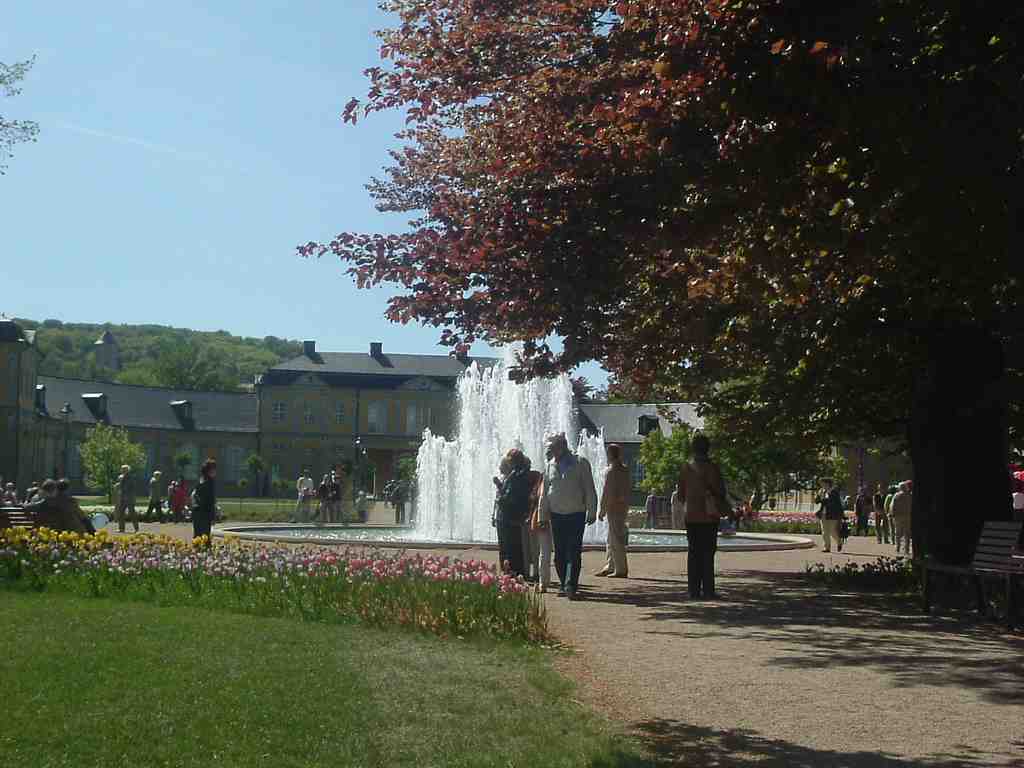
Right in front of you, you’ll spot the Kitchen Garden by its wide, sunlit lawns, blooming flower beds, and the refreshing fountain bubbling at the heart of elegant pathways flanked by grand yellow buildings-just look for the splashing water and the crowds gathered under shady trees.
Now, take a deep breath and listen closely as the hidden history of this vibrant park comes alive around you. Imagine yourself centuries back, in the 1600s, when this spot wasn’t filled with strolling visitors or playful children, but was instead the bustling kitchen garden for Schloss Osterstein-the grand residence of the Reuss lords. Back then, it wasn’t just carrots and cabbages sprouting here; the garden was designed to impress, right from the very beginning. Picture neatly trimmed hedges, artful flower beds, and a grand summer house where nobles cooled off after inspecting the vegetable harvest-because if you’re a baron in a wig, why not have your tomatoes with a side of style?
As you stroll closer to the fountain, let your mind’s eye drift to the early 1700s, when the impressive Orangerie appeared on the garden’s west side. Not only did citrus fruit and exotic plants grow here in glassy splendor, but there was even a tiny open-air theater in the north-imagine the whispers of secret plays and noble laughter drifting on the summer air.
Of course, life-and gardens-change. After a ferocious city fire in 1780, part of the park was redesigned like an English landscape garden, all flowing lines and natural beauty, while the other part stuck to the strict geometry of the baroque age. The 20th century brought more drama: after the world wars, the gates swung open for the everyday people of Gera, and its name, character, and even its monuments shifted with the times. Picture a massive Stalin bust presiding here in the 1950s-a little over-the-top for morning walks-and, later, memorials to victims of fascism, always giving this peaceful place new layers of meaning.
Fast forward to 2007-during the Bundesgartenschau, Gera’s big garden show splash! The Kitchen Garden was lovingly restored as a baroque pleasure garden, though not without critics muttering about the axed trees. A single entrance remained open for a while, to keep out rogue cyclists and muddy dogs, but the townsfolk weren’t having it-soon, more gates were unlocked, just as the garden has always opened up to change.
Today, with the flowers blooming, fountains playing, and laughter echoing, the Kitchen Garden wears its rich, tangled history with pride-the perfect place to let your imagination wander through centuries of stories, and maybe even spot a ghostly baron checking on his kale!


