
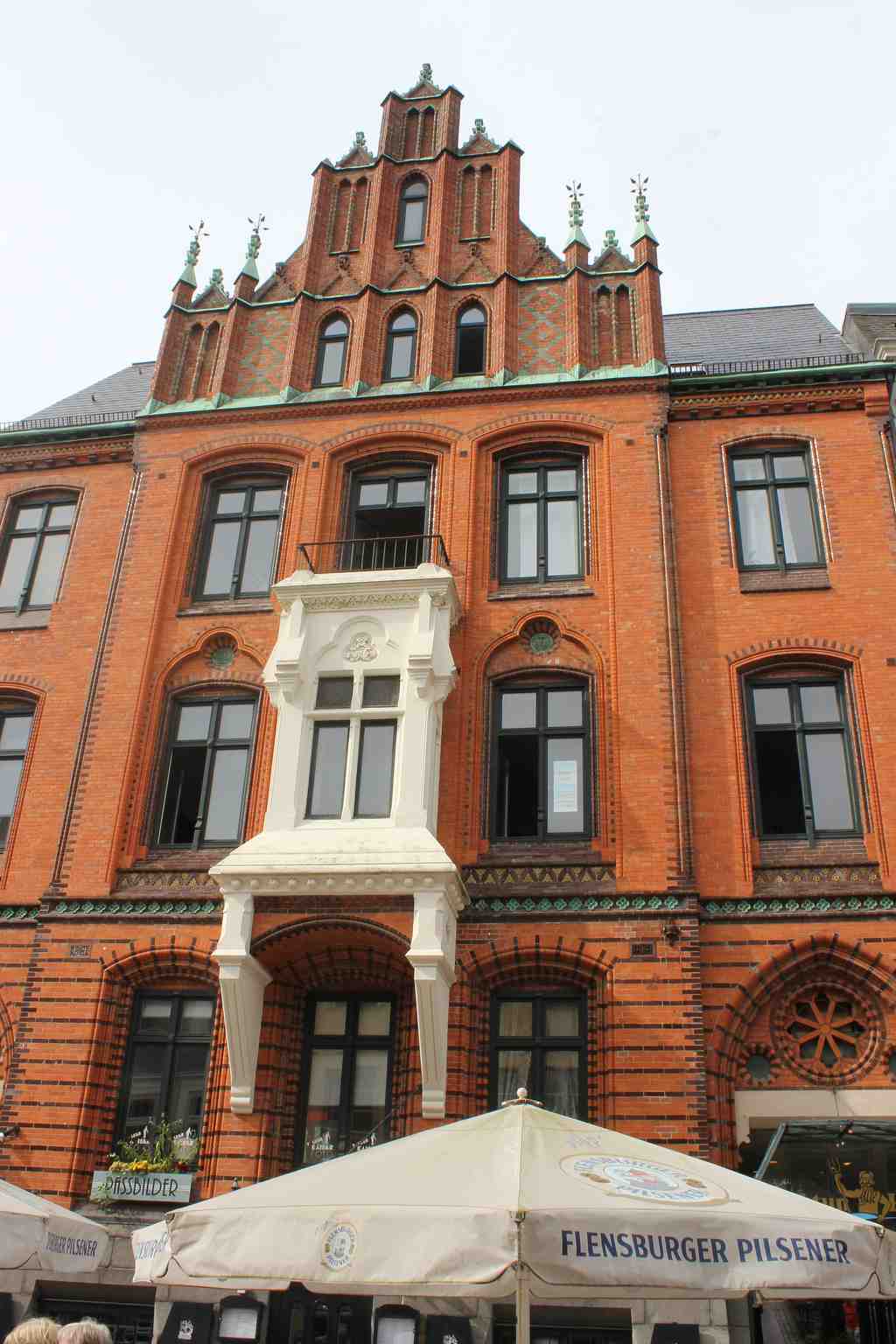
To spot the Kaufmannshaus Hansen, just look for a striking three-story building of red brick with dramatic pointed arches and quirky green accents, crowned by a row of tall, narrow windows and decorative spires-it towers boldly above the umbrellas in Nordermarkt.
Now, close your eyes for a second-well, not too long, or you might bump into a pigeon! Imagine it’s 1869, right after the Deutsch-Danish War. Flensburg’s architecture was changing faster than a summer thunderstorm. Suddenly, in the place of two old, humble gabled houses, Christian Cicolai Hansen-an ambitious merchant and mill owner-decided to make a statement. He asked architect Johannes Otzen to design his home and office-a palace fit for both business and family, built from honest brick with wild gothic windows that looked ready to leap into a fairy tale. Step inside in your imagination: below your feet is the Börsenkeller restaurant, still lively today, while above, people pose for photos in the upstairs studio and families live where merchants once plotted their next big deal.
But wait, the story gets even jollier at Christmas. Every year, children of Flensburg gather right out front as part of the city’s holiday market for the 'Waking of Santa Claus'-you can almost hear their laughter echoing through the brick corridors. This building marks a turning point for the city; Hansens' house inspired waves of brick Gothic buildings, like a fever that swept all the way to the grand Red Castle of Mürwik. And mystery lovers, here’s a secret: behind this building lies the hidden Neptunhof-one more layer to this urban onion.
Restoration started in 2013, peeling back years to reveal stunning old murals and reawakening the grand old dining hall upstairs. Standing here, you’re not just outside some walls and windows-you’re standing at the crossroad of Flensburg’s fortunes, where history gets a fresh coat of paint every day.




