
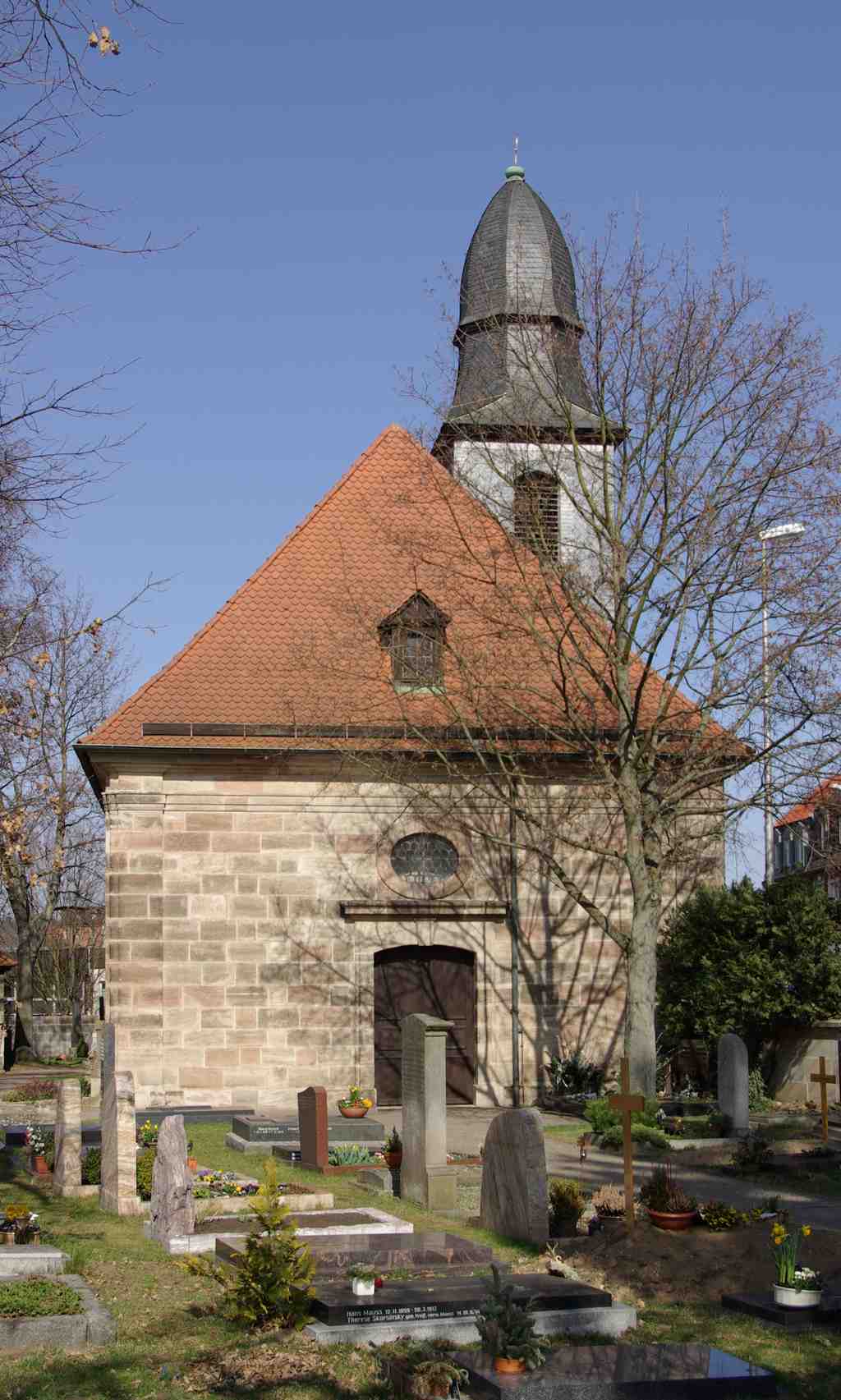
Right in front of you, look for a sturdy, rectangular stone building made of pale, unplastered sandstone blocks, topped with a steep red-tiled roof and a distinctive, two-tiered slate bell tower rising above the entrance-this is the Neustadt Cemetery Church.
Now, take a moment and imagine yourself standing here over two centuries ago. No church stood on this peaceful cemetery ground-only rows of graves and mourners at the mercy of blustery Bavarian weather. Funerals had to parade all the way from the distant Sophienkirche or the Neustadt Church, giving everyone a thorough tour of Erlangen, whether they wanted it or not. And when the rain came, as it often does, the only shelter in sight was an umbrella-if you had one!
But then, along came a certain Johann Gottfried Groß, a man with a soft spot for dry feet and dry ceremonies. He defied the damp with the ultimate power move-he built a roof over his family tomb, sparking the first spark of inspiration for a cemetery church. The grand vision kicked off, designs were made, but actual building didn’t start until some clever fundraising, handshakes with big donors, community collections, and even a sweet subsidy from the Margrave of Bayreuth himself made the dream possible.
So finally, between 1783 and 1787, a dedicated crew of carpenters and masons hammered, hauled, and heaved, raising these thick sandstone walls and that unmistakable hipped roof. The church became a beacon of comfort-quite literally-when, in 1827, the benefactress Anna Margarete Stock funded the elegant bell tower over the eastern portal. That tower, once half-timbered, would later be cloaked in slate, probably to stop the wind from whistling tunes through the beams. But fate loves drama, and in 1928 a lightning bolt shouted its arrival and the tower had to be rebuilt-no superhero origin story is complete without a little destruction, right?
Step inside with your imagination. Picture a bright, open hall divided by a cross-shaped aisle, sunlight slipping in through four big arched windows on each side. On three sides, a wooden gallery wraps around, holding a mighty organ that’s seen more upgrades than your favorite smartphone. The central showpiece is a stylish pulpit-altar, made back in 1787, surrounded by wooden rails and crowned with the image of the Risen Christ, freshly painted for the church’s facelift in 1908.
Beneath your feet, resting quietly, are generations of Erlangen residents, and above, echoes of joy, sorrow, and organ music fill the air-a place where history doesn’t just exist, it lingers. Thank you for exploring Erlangen’s layers of stories with me today!


