
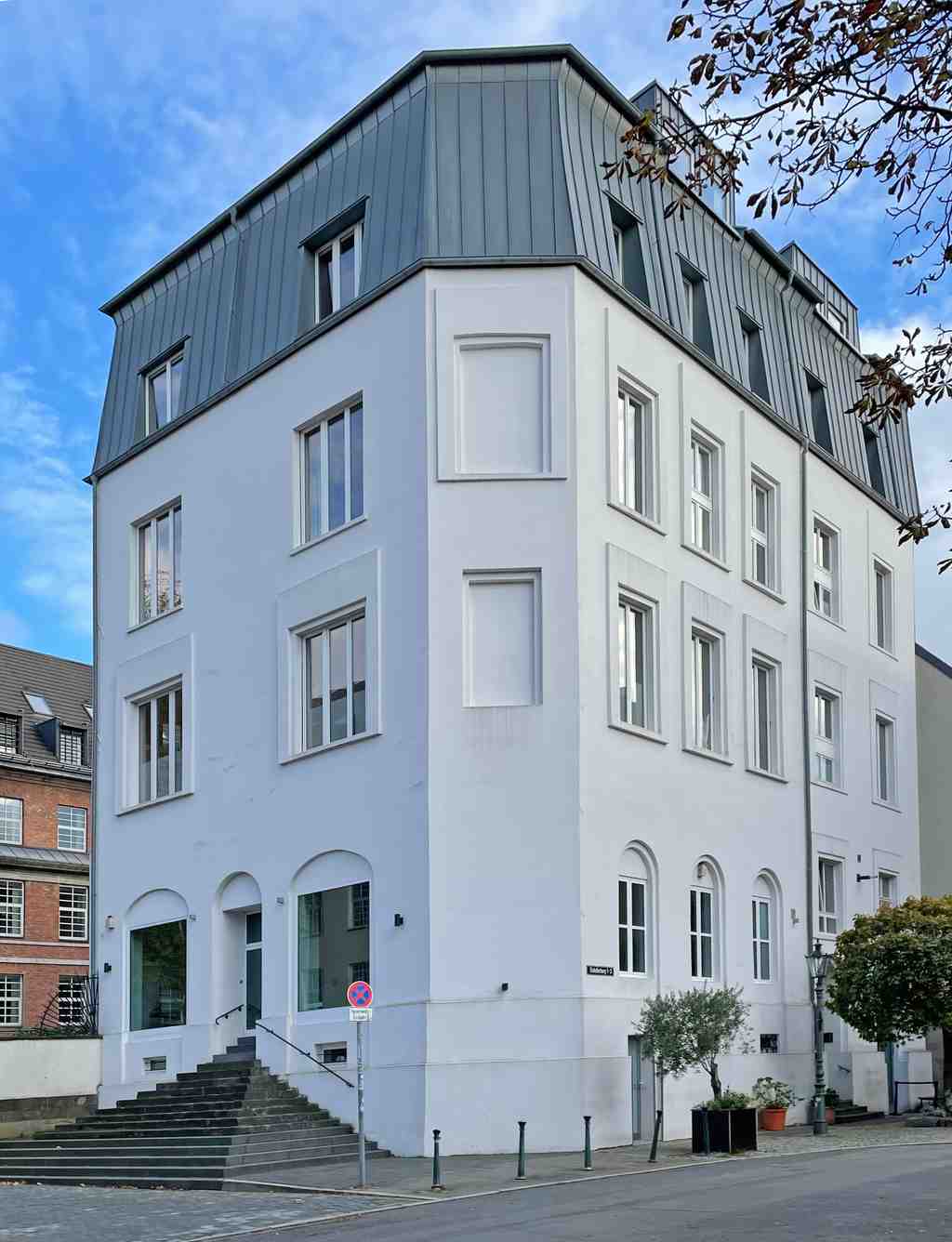
Look for a crisp, white, four-story building with a distinctive gray mansard roof and arched entrances-positioned right at the corner, it stands out at the edge of the old town, a little like a quiet giant watching over the intersection.
Now, take a deep breath and imagine yourself rewinding a few centuries, because you’re standing on one of Düsseldorf’s most storied spots-the Eiskellerberg. Strangely enough, there’s only one address here, but oh, what an address it is! Today, most people simply stroll past this corner, but long ago, this very site was a buzzing focal point-layered with tales of chilling winter labor, artist dreams, royal treats, lost trees, and a few hungry painters.
Picture the scene in the 16th century: this land you’re on was once a proud city bastion, thick with trees and overlooking the Rhine from its five-meter-high plateau. All was calm-until, as fate would have it, the French showed up between 1797 and 1799, fortifying Düsseldorf to the hilt and stripping away the peaceful groves. When the dust of these wars settled and peace returned by the early 1800s, the city’s old fortifications were torn down, and all those building stones and rumble piled up here, forming what people began to call the “Eiskellerberg.” Why such a cool name? Well, listen close, because buried underneath, in chilling darkness, lay a mighty ice cellar-the deep storage vaults where blocks of Rhine River ice were stacked, insulating the Düsseldorf court’s food and, more importantly, keeping the beer cold! In those days, it wasn’t unusual for the Rhine to freeze right over. Just imagine armies of workers sawing sheets of ice, dragging them up to these catacombs, and piling them so they’d last into the sunniest months.
The funny thing is, this natural “deep freeze” didn’t just keep noble treats fresh; soon, brewers were lining up for the same service. Düsseldorf’s famous Altbier needed its frosty guardian angels! Seasonal laborers would work hard in winter, cutting and carrying ice not only from the river but from local ponds and lakes. And after sweating through all that, wouldn’t you want a cold drink too? In the late 1800s, Eiskellerberg boasted a scenic summer beer garden above the underground vaults-run by men with names like Meyer and Ahmer-where your pint of Altbier was never lukewarm.
But the Berg’s tale doesn’t stop at ice and ale. In the late 19th and early 20th centuries, Eiskellerberg became an unexpected artistic sanctuary. A painter named Eduard Schoenfeld bought up some little houses here, even snagging a chunk of the city’s old ice cellar to turn into a freestanding studio building. This bizarre but exhilarating “Hungerturm,” or hunger tower, as locals nicknamed it, became a refuge for generations of artists-though mothers sometimes warned their children to hide the food if any “starving painters” came around! Imagine a grand old building, echoing with stories: there were studios flooded with northern light, a shop for art supplies, and plenty of dreamy, hungry painters working away. Some nights, the block must have echoed with laughter and the clink of beer glasses, other times, with the quiet concentration of artists turning blank canvases into color.
Through wars, renovations, and the passing decades, Eiskellerberg became a home and incubator for all sorts of creative souls-painters, sculptors, architects, even today’s galleries and internet TV projects. You can practically still smell a mix of fresh paint, cold brick, and just a hint of Altbier if you take a deep breath. And if you peek into the ground-floor bar-the Eiskeller Weinbar-the old brick vaults have been lovingly revived, echoing the frosty cellars below.
So here you are, standing where the past chills, cheers, and creates-all at once. Now, I can’t promise you’ll find any hidden ice blocks under your feet, but if you see a hungry artist wandering by, maybe offer them a sandwich. After all, it’s tradition!


