
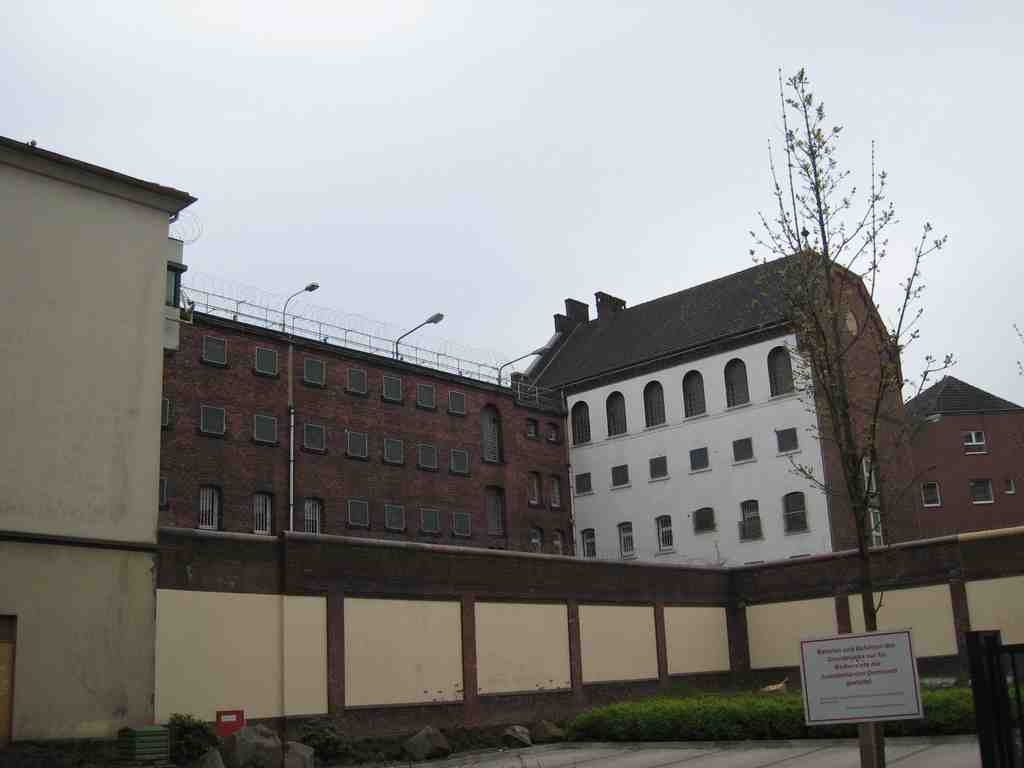
Look ahead and to your right for a tall brick-and-white building surrounded by high walls and rolls of barbed wire lining the rooftop-that’s the unmistakable silhouette of the Dortmund correctional facility.
Step a little closer-just don’t get too close to the wall, or you might set off more than curiosity! Now, take a deep breath and imagine it’s the year 1902. The air is thick and damp, and the new Dortmund prison, nicknamed “Lübecker Hof,” has just opened its doors-not for freedom, but for those waiting on the slow march of justice. For decades, this building has stood like a silent giant in the city’s heart, watching the world change around it.
In the early days, it was just an investigation prison. But the story soon thickened: imagine, in 1923, French authorities, boots echoing on cobblestones, requisitioned the prison during the Ruhr occupation, cramming its cells with political prisoners and resistance fighters-men and women whose only crime was hope. The walls here have heard secret whispers and muffled sobs, the drama of human defiance playing out in shadowy corridors.
Fast forward to World War II, and things take a haunting turn. In 1942, the prison became home to “Nacht-und-Nebel” prisoners-people snatched in the night and swallowed by darkness, mostly foreign resistance members. Imagine the anxiety in the corridors, the feeling of every heavy footstep possibly meaning your name was next. In 1943, a chilling sound joined the daily noises-a guillotine was set up here, becoming the center of regional executions. Over 300 people lost their lives within these walls: French priests like Jozef Raskin, brave members of the Résistance like Pierre Carpentier, and ordinary young citizens, including 19-year-old Ilse Mitze, who was executed for a petty theft during the chaos after an air raid.
The year 1944 saw even more tragedy. In September, workers from Bielefeld-mostly union men-were executed one after another. Each name still lingers in the air: Appelfelder, Brockmann, Giesselmann, and so many others. Another life lost was 18-year-old Oskar Aschoff, a Wehrmacht deserter who tried to escape to the Netherlands, only to find his journey cut short here by the guillotine. The last execution happened on January 5th, 1945. Just a few months later, when American soldiers rolled in, the guillotine itself was made unusable, a final act of closure to its grim legacy.
But the story doesn’t end with the Liberation. By the evening of April 30, 1945, operations resumed-life goes on, even in the most unlikely places! The British military government moved in, ordering yet another guillotine built, and about 50 more executions followed, most under British military justice. It’s a chilling thought, but one underscoring the long, difficult journey from war back to peace. By 1950, the justice minister himself ordered the dismantling and destruction of the execution device, hoping to leave that painful chapter firmly in the past.
In the decades since, the prison saw physical changes too. Laundry rooms destroyed by bombs were rebuilt, cell blocks were expanded, an underground sports hall appeared-imagine prisoners in striped uniforms trading sullen looks for a quick game of football.
Jump to more modern times, and you’ll notice something unexpected-art! In 2019, massive murals went up on the prison’s once-bleak facades: an Italian artist depicted the doubting Apostle Thomas, his painting echoing Caravaggio’s drama. Around the back, a Hopper-esque mural, by German artists Noah Kauertz and Oliver Hollatz, shows a young man reading a haunting letter-sadness painted as brightly as the sun. These artworks transform the prison’s cold face into a canvas of memory and hope.
Believe it or not, this place is also famous for its library-it once won “Prison Library of the Year.” And, if you’re a fan of German TV, the JVA Dortmund took the star role in a “Tatort” crime episode-although they filmed it in Magdeburg for extra mystery!
Today, this prison can house up to 404 inmates, divided between investigation and regular sentences, though sometimes it’s more crowded than a subway at rush hour. It’s still a place of strict routine, holding men on everything from short stints to sentences of several years. And yet, on anniversary walks, with scouts and city historians coming to remember, it’s also a place where the city’s memories gather-where laughter, sadness, defiance, and even hope echo against ancient, watchful walls.
And now, as you stand outside, you’re a witness to a story more winding than these old city streets-a place where history, horror, art, and even a dash of humor live side by side. Be sure not to miss the small plaque on the wall-a sobering reminder of those lost lives, and of a city that never stops remembering.


