
To spot the Concert House Dortmund, just look for a striking, modern building with a clear, glowing glass facade at the lively corner of Brückstraße and Ludwigstraße-the glass is etched and often lit up with LED lights, making the entrance hard to miss, especially in the evenings.
Now, as you stand in front of this dazzling building, let’s travel back in time-not too far, just a couple of decades ago. Picture Dortmund’s city center: a faded cinema, the Universum-Kino, standing right here, awaiting its final curtain call. The local dreamers-artists, business leaders, and music lovers-had a vision: to turn this aging spot into a beacon of music, something so grand it would make even Vienna’s famed Musikverein raise an eyebrow. As bulldozers rumbled in 1999, it took months to clear 45,000 cubic meters of debris from this compact city block-enough rubble to build a mountain of memories.
When the dust finally settled, master builder Ralf Schulte-Ladbeck rolled out the blueprints for what would become the Concert House Dortmund. Fast forward to 2002, the city buzzed with excitement: after years and more than a few budget headaches-let’s just say, every Euro spent could probably play a note of its own-this high-tech concert hall finally opened its doors. On opening night, the air trembled with anticipation, the first notes echoing through a space designed for pure, acoustic magic. The hall’s rectangular shape and two-second reverberation time immediately drew comparisons to the best in Europe. Rumor even has it, if you drop a pin here, Vienna might just hear it.
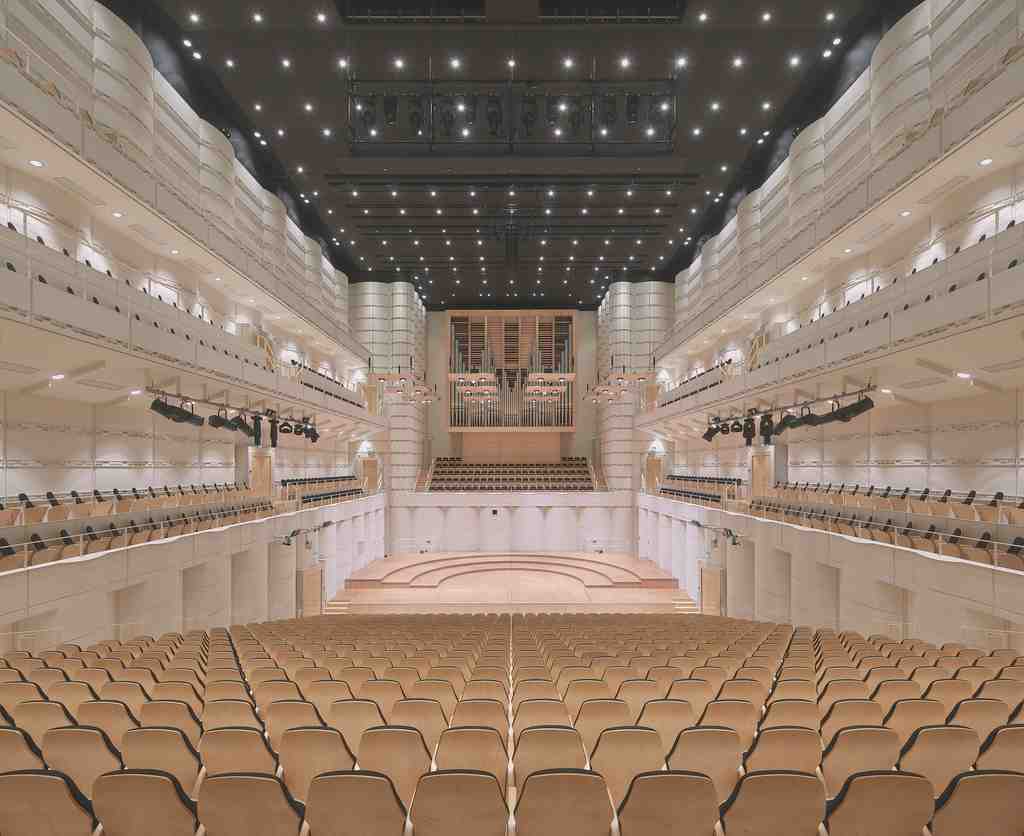
Step towards the glass entrance, and you'll find a lively city foyer, with a bar and cloakrooms greeting visitors. Above you floats a mysterious black concert hall-like a musical jewel box, suspended and waiting to be opened. Inside, you'll notice the smooth, cream walls and, if you look up, tiny star-like lights twinkling on the black ceiling, echoing the anticipation before a grand performance. Even Gustav Mahler, Arnold Schönberg, and Igor Stravinsky, captured in oversized oil portraits, seem to be keeping an ear out for the next incredible note.
The concert hall is a temple of sound science. The twelve wooden sails soaring above the stage aren’t just for show-they bounce music around the hall, ensuring every seat feels like the best in the house. The seats themselves are a feat of engineering, crafted for optimum sound, and the lighting can turn a string quartet into a thunderstorm or a jazz group into a dream.
And then… the organ. Like a giant slumbering beast behind the stage, it’s over twelve meters high, holding 3,565 pipes-some so tiny you could lose them in your pocket, some so massive, they could surf the Rhine. When the organ roars, it truly shakes the air. The electric console is a marvel, allowing organists to recall hundreds of settings at the touch of a button-a kind of musical time machine.
Since opening, the Concert House has hosted everyone from Anne-Sophie Mutter to the Boston Symphony Orchestra, giant festivals, jazz nights, pop subscriptions, and even edgy productions with video installations that make the walls themselves dance. Its program is as varied as Dortmund itself: from chamber evenings to orchestral blockbusters, baby concerts, and world-class lectures. If you’re lucky, you might just walk in on a rehearsal by a young prodigy-part of the hall’s “Junge Wilde” series, which gives rising stars a stage to shine for three years. Famous conductors, superstar pianists, and the world’s best orchestras have all left a bit of their magic on this stage.
But the Concert House isn’t resting on its laurels. It continues to innovate-not just with sound, but sustainability, powering much of its energy from sunbeams and proudly earning green awards. And the legend grows every season, as the music floats out to the city and beyond. So, standing here, you’re not just outside a building; you’re at the heart of Dortmund’s musical soul. And remember: around here, there’s an old joke-if you listen very closely during a quiet moment inside, you might just hear the Vienna Philharmonic still checking their tuning…


