
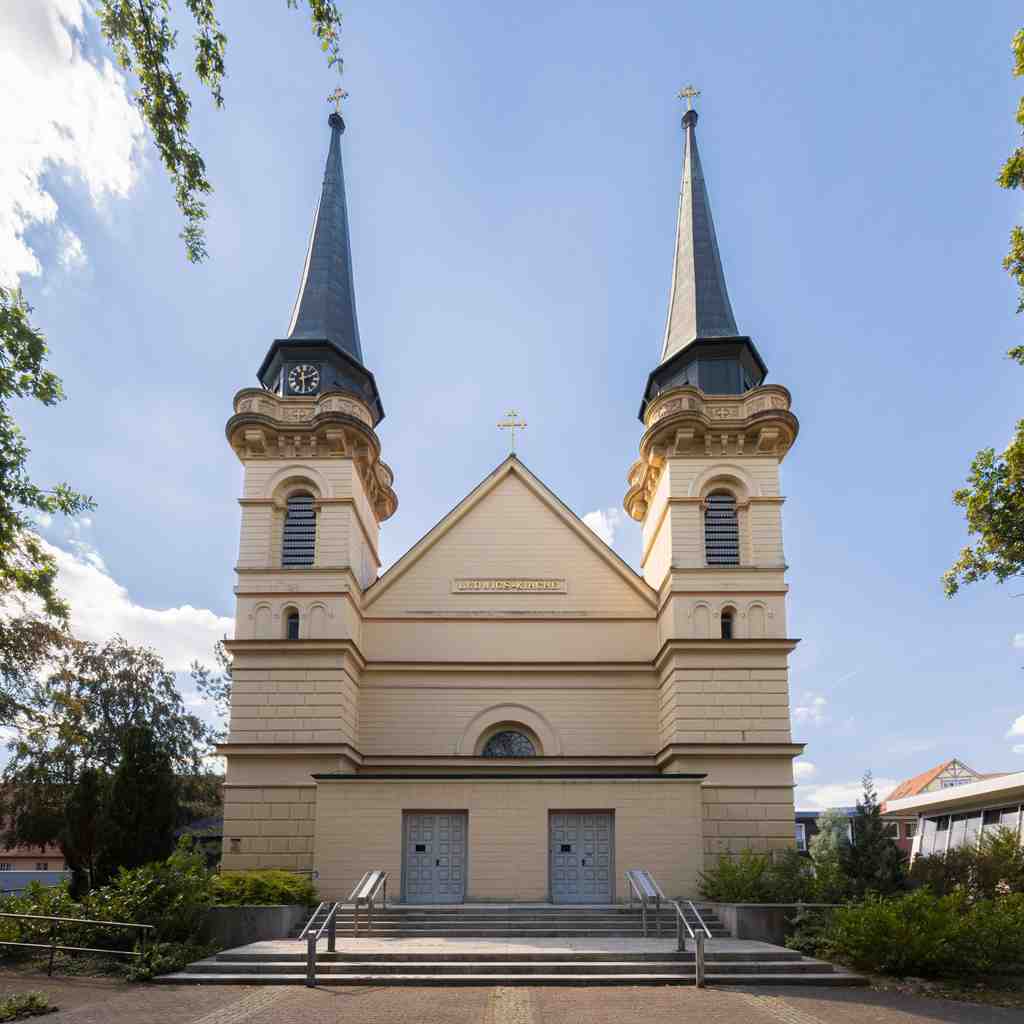
Right in front of you stands St. Ludwig, a pale yellow, blocky stone building defined by its striking symmetry and two tall, black-shingled spires topping off square towers. It is quite the statement piece, especially when you realize that for a long time, there were hardly any Catholics around here.
After the Reformation, Celle was a solidly Protestant town. The only Catholics hanging around were mostly foreign diplomats or people working at the royal court. They needed a place to worship, so in 1678, a bishop named Niels Stensen organized a permanent pastor just for them. For decades, they just used a private house outside the city that they had converted into a tiny chapel. But by the early nineteenth century, they decided it was time for an upgrade.
The main body of the church you see today was finished in 1838, designed by an architect named Anton Spetzler. He built it in a pure Neoclassical style. Neoclassicism was all about bringing back the clean, rational, symmetrical lines of ancient Greek and Roman temples. It is very orderly. But if you glance at your screen, you can get a great view of how those two dramatic towers change the whole vibe. Those were actually added much later, in 1881, by Conrad Wilhelm Hase. He designed them in a style called Romantic Historicism, which basically means he was looking backward for inspiration, pulling in more ornate, dramatic details from medieval times.
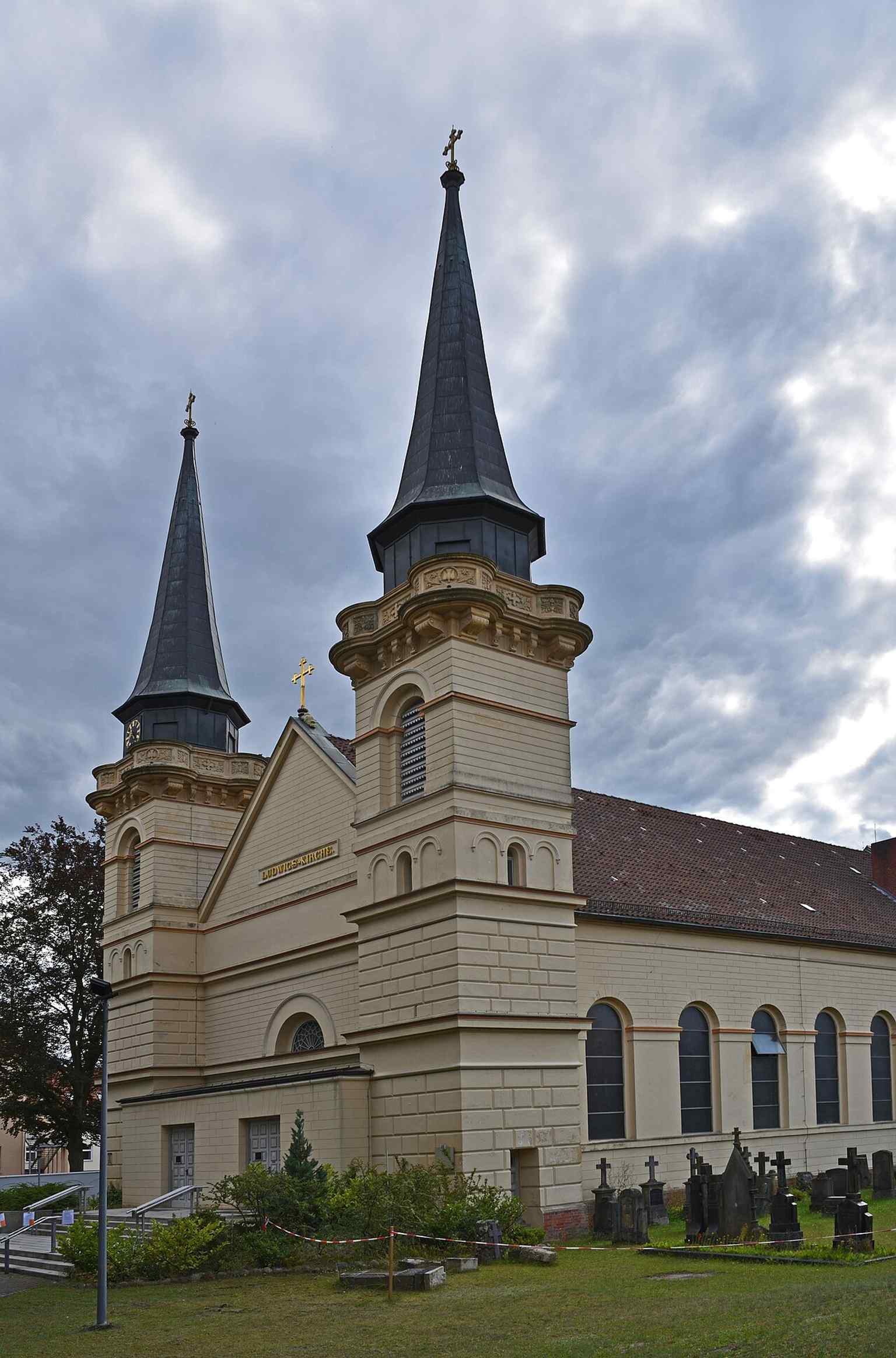
It is a bit of an architectural mashup, but it works beautifully. The inside is just as surprising. It features a massive central hall covered by a coffered barrel vault. That is essentially a long, curved ceiling decorated with sunken square panels. Twelve towering white columns hold it up, and the walls are accented with pastel pink stripes and delicate gold bands. It feels unexpectedly bright and airy.
You might wonder how a small, minority congregation afforded such a grand building. Well, they had some royal help. King Ludwig the First of Bavaria actually helped fund the construction. As a very polite thank you, the congregation chose Saint Louis, or Ludwig, the medieval King of France, as their patron saint. A little royal flattery goes a long way when you are trying to build a monument.
If you want to peek inside to see those pastel pink walls, keep in mind the building is generally open weekday mornings from nine to one, but closed on weekends. Take your time checking out the striking towers before wandering over to our next stop.





