
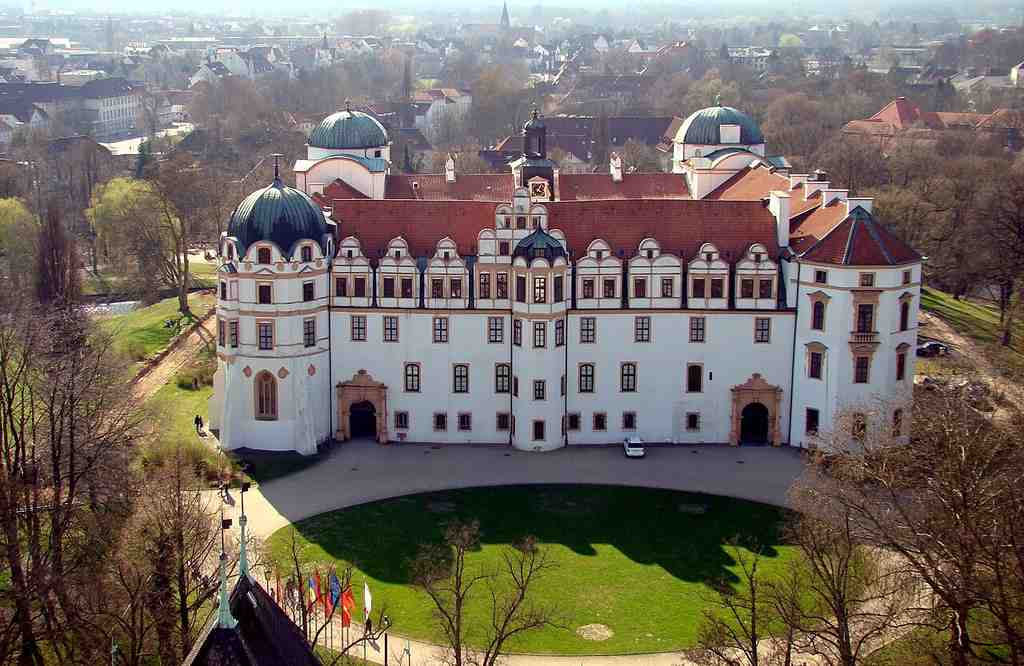
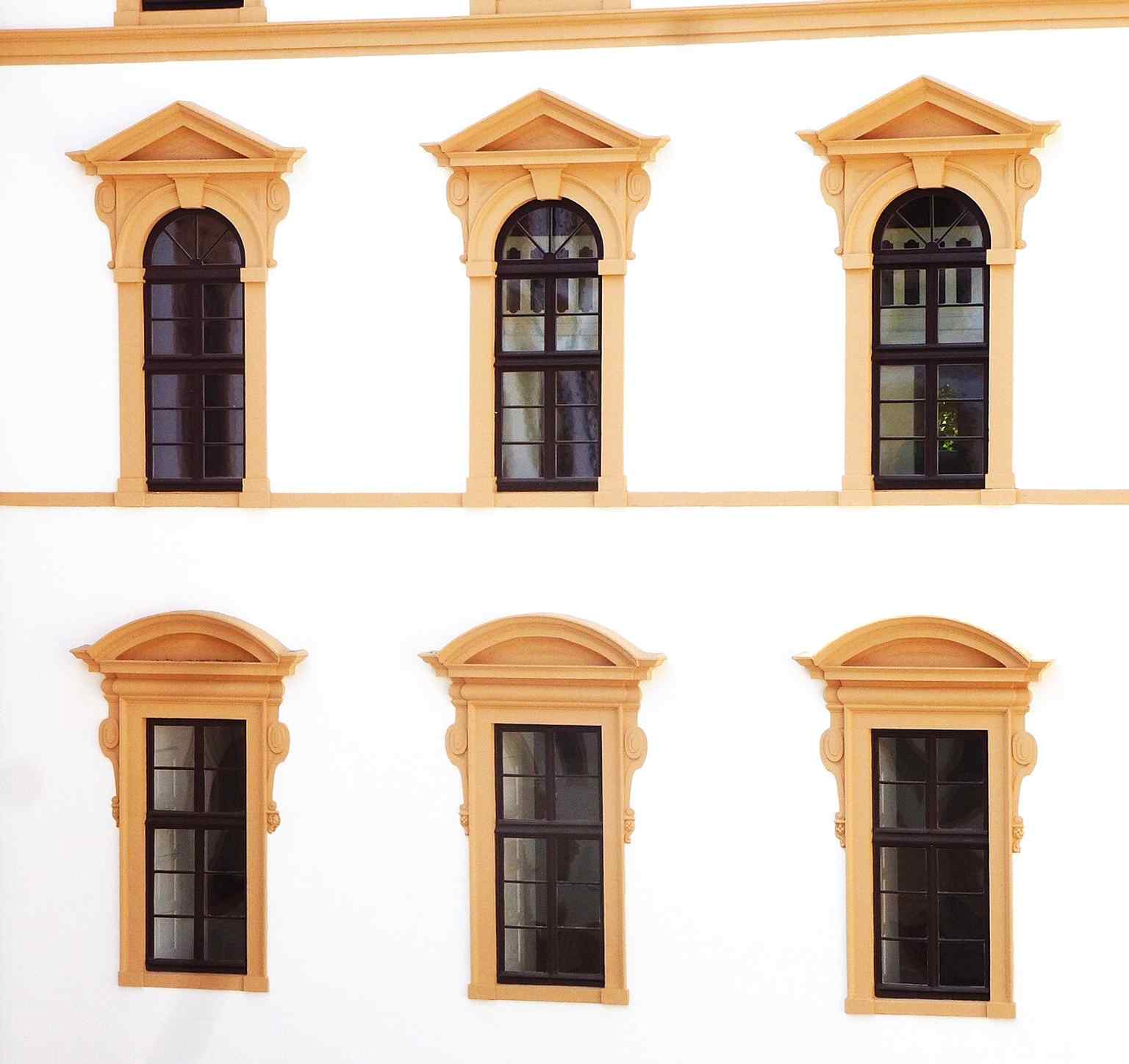
On your left stands Celler Schloss, a massive rectangular palace defined by smooth white plaster walls and topped with distinctive green domed towers.
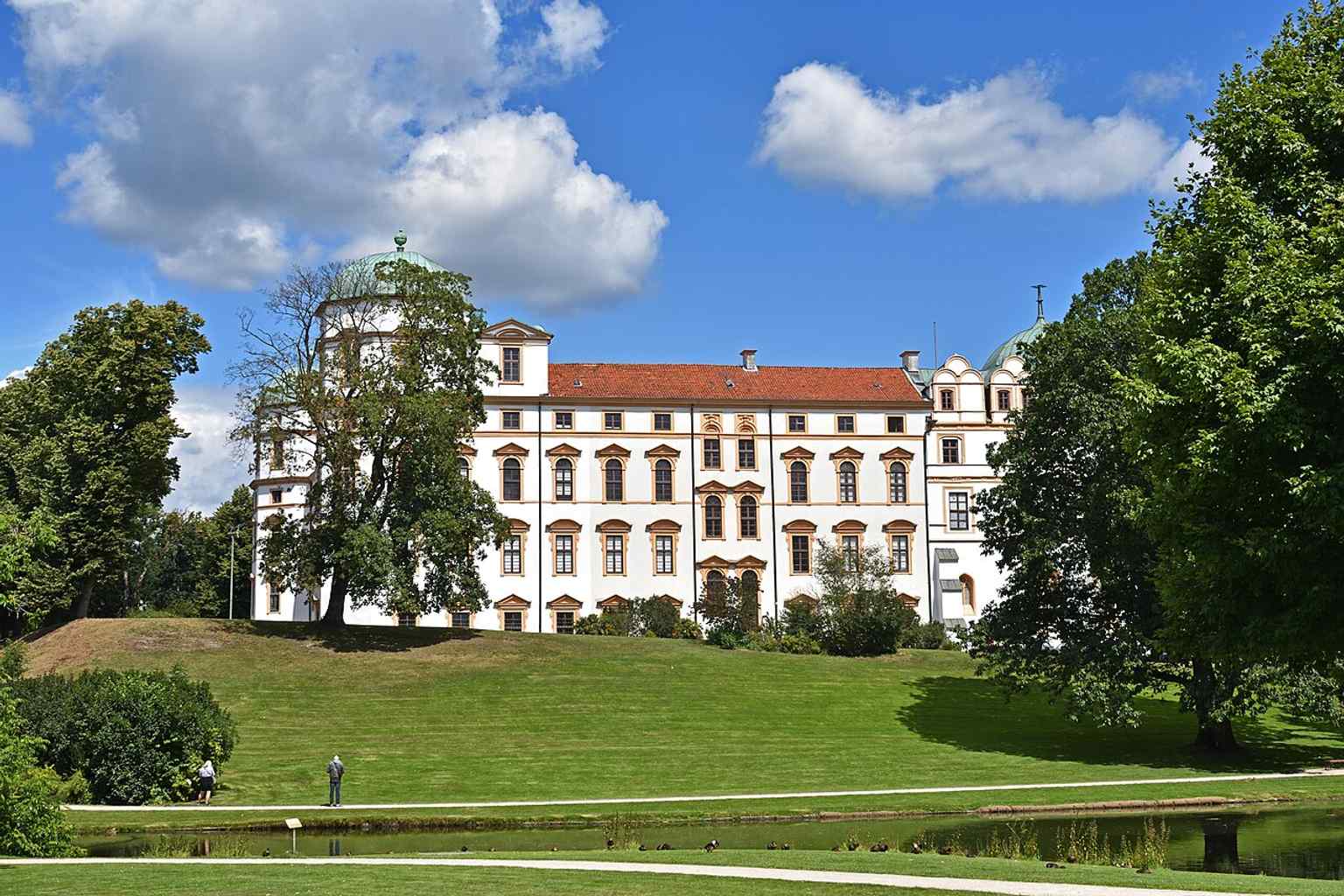
It is pretty hard to imagine now, but this elegant palace started out as a gritty, bare bones watchtower way back in the nine eighties, guarding a local river crossing. Over the centuries, it kept expanding. If you pull up your screen, take a look at this aerial shot showing how the castle sits on its own little island, surrounded by a moat. Originally, it was ringed by heavy bastions, which are basically thick defensive walls jutting outward to repel attackers. But once the castle stopped needing military defenses in the late seventeen hundreds, those walls were torn down and replaced with the sprawling landscape park you see today.
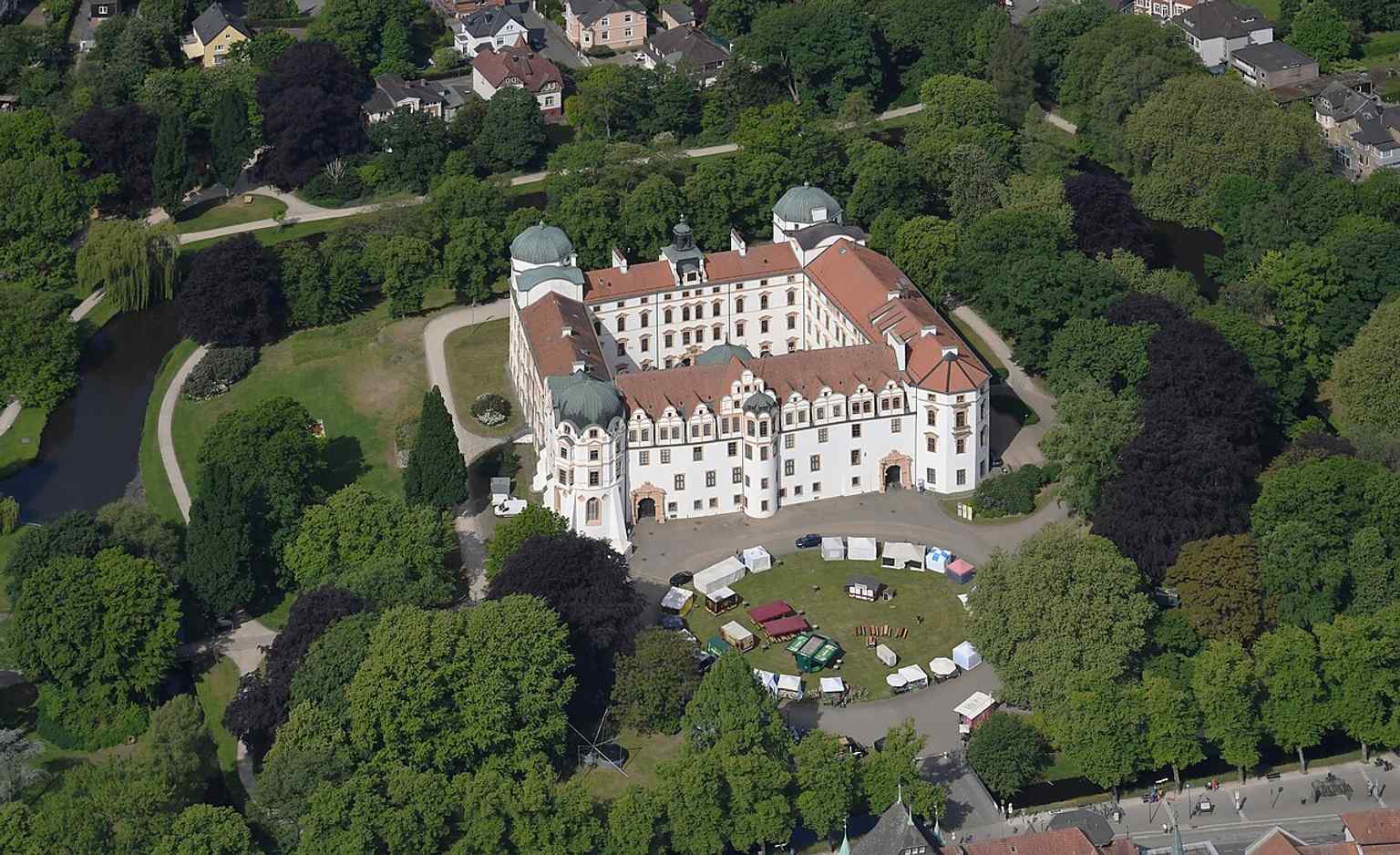
The real glow up happened in sixteen seventy. Duke Georg Wilhelm was running the show, and he was completely obsessed with Italy. He had spent time in Venice and decided his boring old German fortress needed a major facelift. He added that crown of gables around the roof and those unique, curving domes on the towers to mimic Venetian architecture. He even built a beautiful Baroque theater inside. Baroque is an incredibly ornate, dramatic style of design meant to overwhelm the senses, and amazingly, this theater still hosts performances by its own acting ensemble today.
But a palace is not a palace without a little royal gossip. In seventeen seventy two, the former Queen of Denmark, Caroline Mathilde, was banished to this castle. The rumor was she had a scandalous affair with a royal adviser named Johann Friedrich Struensee. Because of this, she was divorced, exiled from Copenhagen, and sent here to live out her days holding a much smaller, quieter court. Tragically, she died here just a few years later from scarlet fever at the age of twenty three.
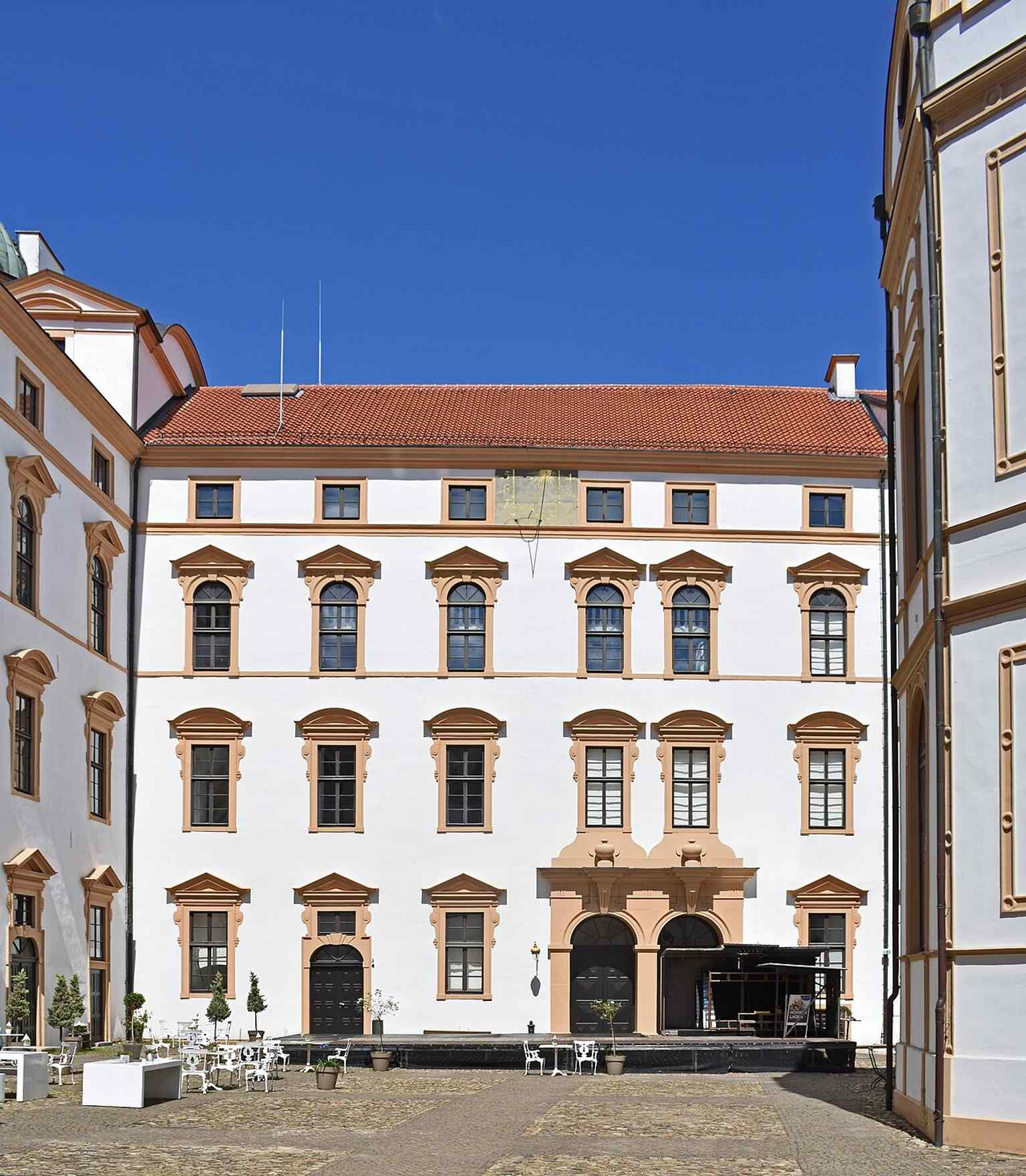
If you step inside the inner courtyard, which you can see in this photo, you really get a sense of the sheer scale of the place. The inside hides another incredible treasure. The castle chapel is one of the most important Lutheran court churches in Europe, completely covered in stunning sixteenth century paintings and wood carvings. But there is a catch. By the nineteen nineties, the incredible tourist turnout was actually destroying the art. The humidity from so many people breathing in the small space was causing the historic wood panels to warp and the paint to flake. Today, you can still view the magnificent artwork, but only from behind a protective glass wall to keep the climate perfectly controlled.
If you want to check out the interior rooms or the museum, the castle is open Tuesday through Sunday from eleven in the morning to four in the afternoon.
Take a moment to soak up the history of these white walls. Whenever you are ready, we can take a short walk over to the next stop.





.jpg)


