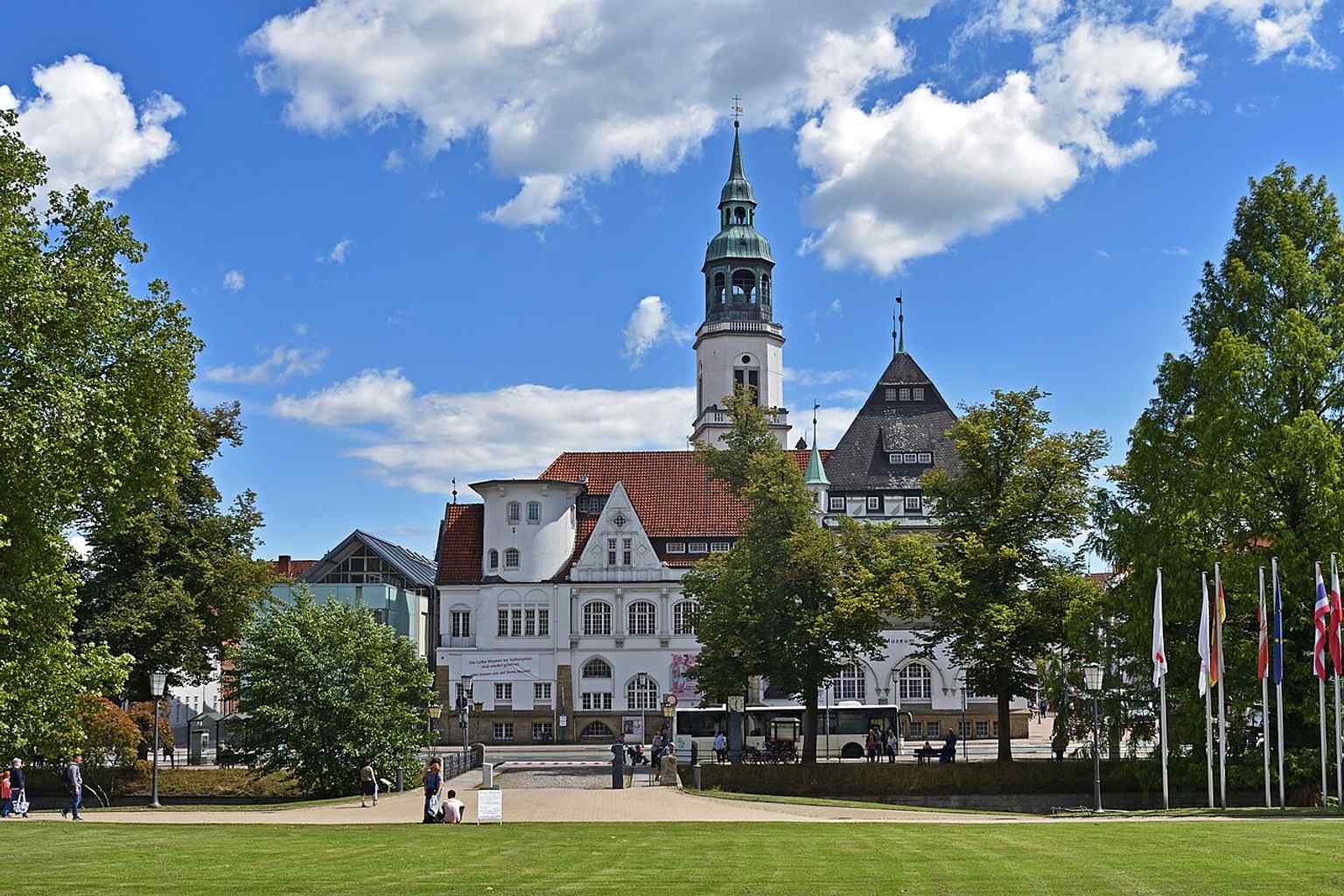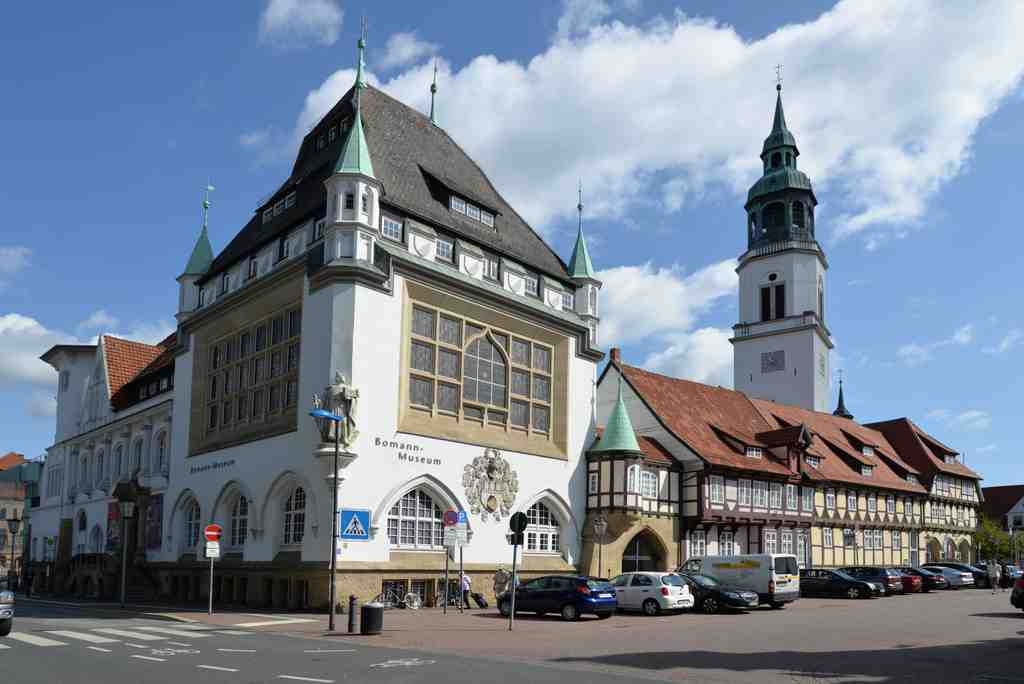
Look to your left and you will spot a striking white plaster building with a massive dark sloping roof, corner turrets topped with green copper spires, and an ornate stone coat of arms set right into the facade.
Welcome to the Bomann Museum. Now, I know what you might be thinking. This building is a lot to take in. It looks like a medieval fortress, a grand townhouse, and a traditional timber framed home all crashed into each other at a very polite speed. And honestly... that is exactly the point.
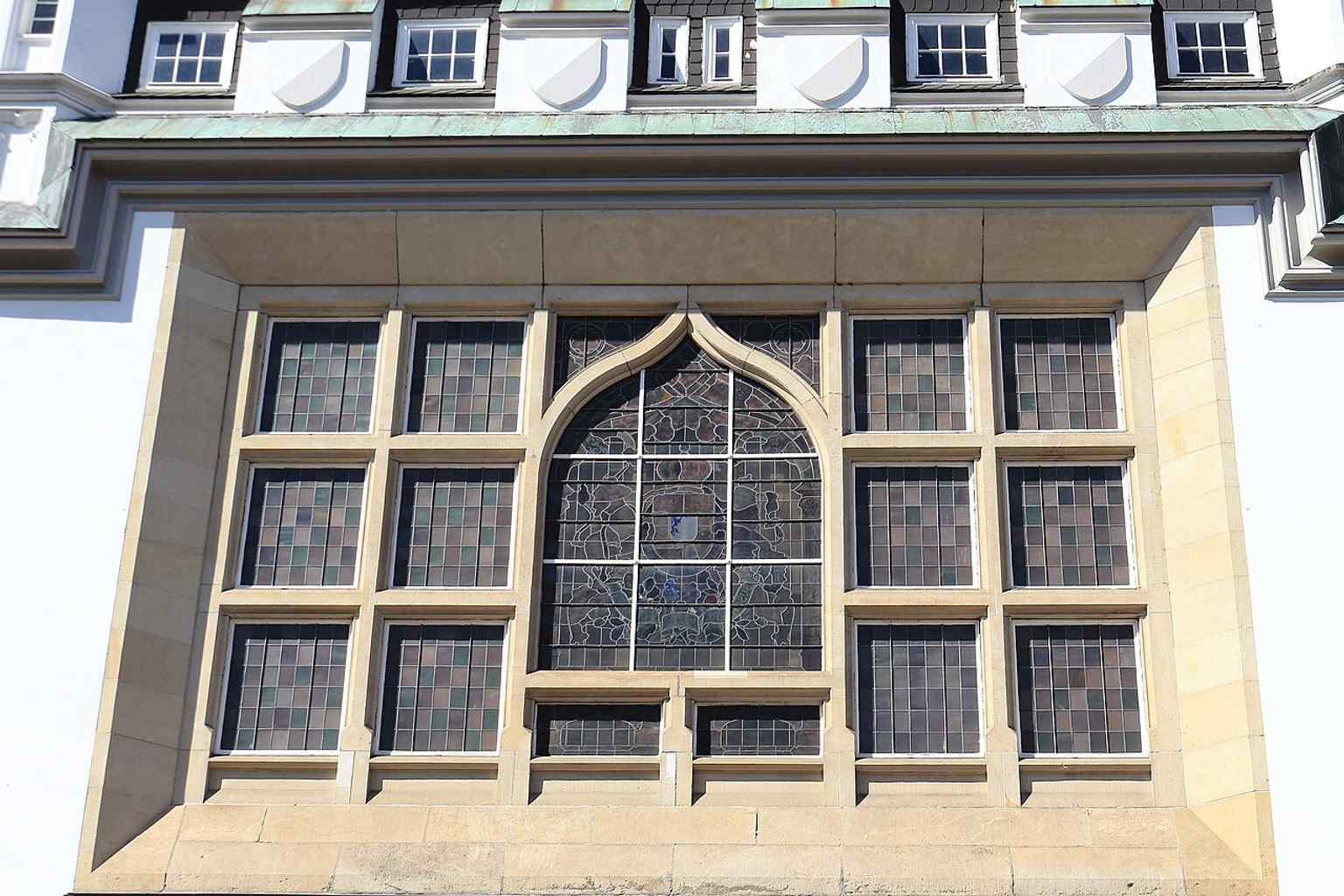
Back between 1903 and 1907, the architect Alfred Sasse and the museum's founder Wilhelm Bomann decided to make the building itself an exhibit. They intentionally smashed together different historical styles, from Gothic pointed arches to grand Renaissance flourishes, aiming to create this educational, picturesque collage of architecture. Not everyone was a fan right away. The famous local writer Hermann Löns famously mocked it as a true architecture pudding. Pull out your phone for a second and take a look at the screen. You can see exactly what Löns meant in this window detail, where different historical building traditions are stacked like layers in a rather chaotic cake.
But that eccentric exterior holds one of the largest city museums in all of Lower Saxony. And the surprises do not stop at the front door. When they built this place, they literally constructed the ground floor around a massive, authentic farmhouse from the year 1571. It is a traditional Hallenhaus, which is a classic Lower German hall house where the living quarters, the open fire kitchen, and the animal stalls were all gathered under one gigantic roof. You step out of a modern museum corridor and suddenly you are standing in a sixteenth century kitchen.
It is a place that impressed some pretty high profile guests. The German Emperor, Kaiser Wilhelm the Second, visited shortly after it opened and ended up donating a monumental battle painting that still hangs in the military honor hall today.
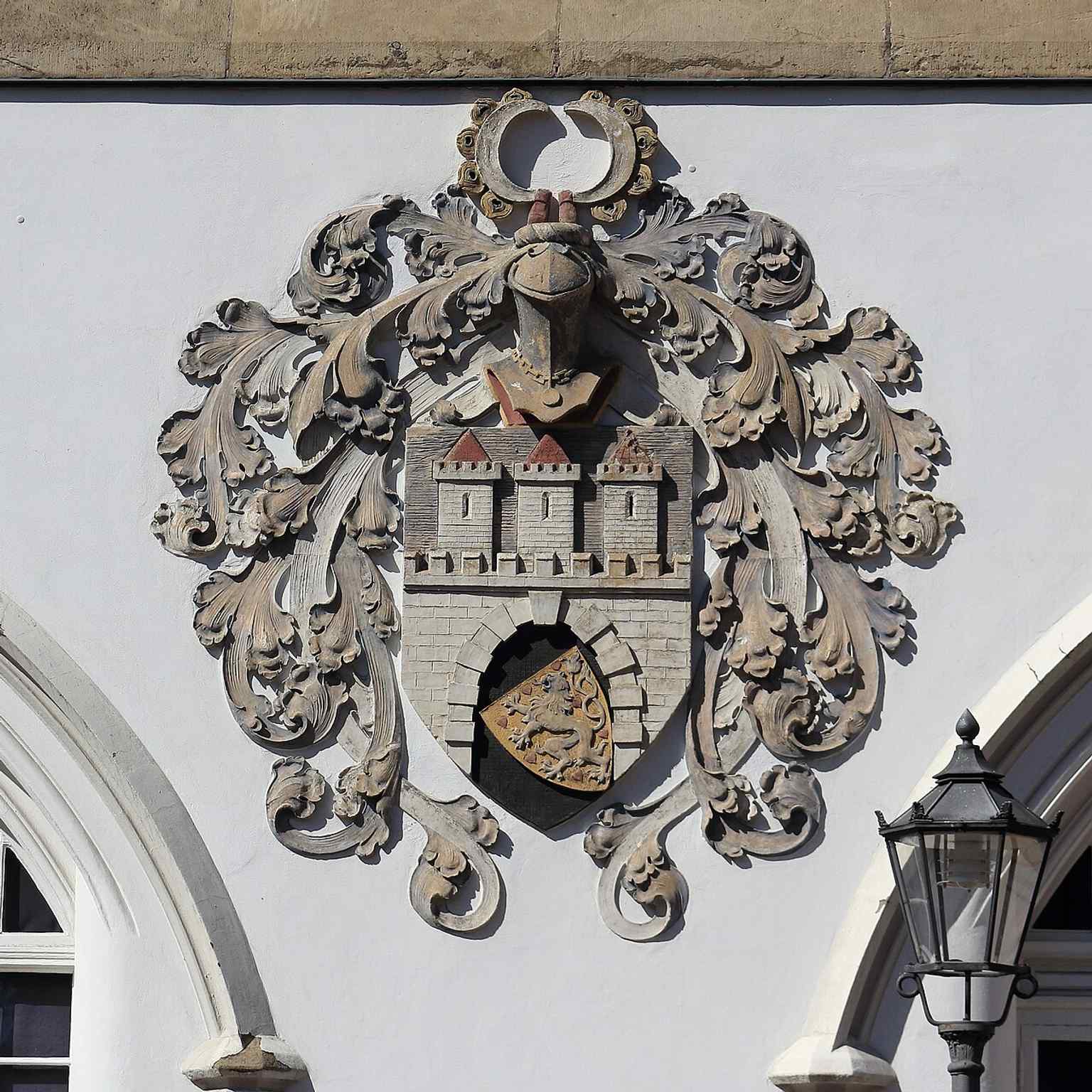
While you are looking at the building, check your app again. This image shows a close up of the incredibly detailed coat of arms of the City of Celle mounted right on the corner of the museum. It is just one more ingredient in Sasse's architecture pudding.
Today, the museum houses everything from ancient archaeological finds to the Tansey collection, which is one of the most important collections of portrait miniatures in the world. These tiny, exquisite paintings from the Baroque and Rococo eras were painstakingly painted on vellum and ivory, capturing the faces of European nobility in microscopic detail.
If you want to explore the architecture pudding for yourself, the museum is closed on Mondays but open every other day of the week from eleven in the morning until five in the evening.
Feel free to admire these wild architectural layers before heading to our next destination.