
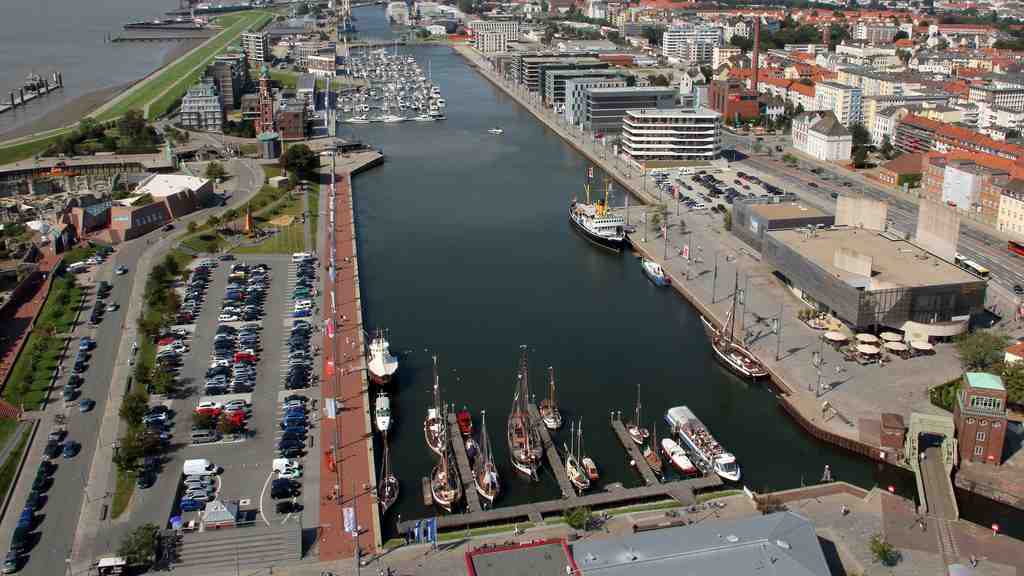
Look ahead of you and you’ll spot the New Harbor-it’s the waterway stretching straight in front, lined with boats docked along both sides and flanked by city buildings and parking lots. On the left, you’ll see a wide path for strolling and plenty of cars, while on the right there are more modern buildings, outdoor cafés, and the unmistakable view of ships bobbing on the gentle waves. The harbor itself is long and relatively narrow, with an inviting aura of both history and constant movement.
Imagine standing here back in 1852, when this very harbor first opened its gates to the bustling world of ships. Back then, ships didn’t just bring tea and coffee-they brought noise, excitement, maybe even a little sea shanty or two. The Old Harbor, just south from here, was getting a bit cramped; ships were getting bigger and more bosses were shaking their fists, so Jacobus van Ronzelen got the job to plan this whole new basin.
It wasn’t smooth sailing-construction actually stopped because of a legal squabble with Hanover. (Seems even harbors can get caught in a bit of political drama!) But they finally got the job done, and the New Harbor opened up, all 480 meters long. The place quickly became the hot spot for steamships and those flashy Lloyd liners. In fact, the northeastern pier over there has a special bulge-that was so ships could turn around more easily. You wouldn’t want a steamship doing a 10-point turn, would you?
The harbor saw a lot of firsts: the Simon Loschen lighthouse, sturdy cranes-one could lift 45 tons!-and even a hand-operated crane, which you can still see on display in the Maritime Museum. Picture the excitement when the train station opened, bringing travelers right to the water’s edge.
But it wasn’t all about work; there was drama, too. On a chilly December night in 1875, a barrel of explosives suddenly went off right here, next to the emigrant ship Mosel. It was a tragedy that shook the city-83 lives lost, with a memorial standing quietly today in Wulsdorf cemetery.
The harbor kept changing as the years rolled on. More bridges, more ship docks, even a mysterious phantom ship at the beginning of the Nazi era. Some of the dock’s original gates and bridges were replaced over time-at one point, they even had a railway swing bridge and a street swing bridge crossing over. Today’s lock to the river Weser was finished in 2005, all shiny and new, making sure ships can pass no matter the tides.
And if you look just a bit north, there’s a tiny oasis: the Schleusengarten. Tall trees, green grass, and a quiet obelisk tell the story of sailors who never made it home from distant lands.
So take a deep breath, enjoy the mix of sea air and city life, and maybe imagine a chorus of sailors, engineers, and townspeople, all buzzing with the energy that keeps Bremerhaven’s heart pumping. And remember-if a ship starts honking at you, step aside. The harbor’s still very much alive!


