
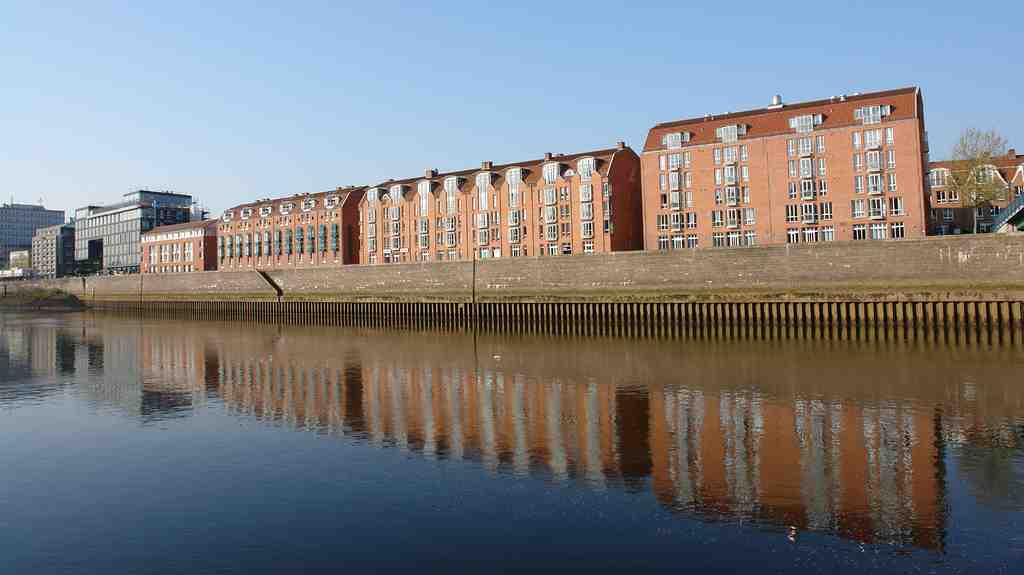
Take a look just ahead of you, and you’ll spot the Teerhof by its long row of modern red-brick apartment buildings with arched windows, stretching out on the narrow spit of land along the river, their reflections shimmering in the water below.
Picture this: over 400 years ago, the Teerhof glistened with thick black tar, not shiny glass and brick. Back then, every breeze carried the sharp, sticky scent of pitch as shipbuilders covered hulls and ropes, making them watertight right on this narrow peninsula. Workers shuffled around with their sleeves rolled up, dodging drips and splashes-if anyone dared to drop a white shirt here, well, let’s just say it wouldn’t last long! The name “Teerhof” literally means “tarring yard,” and it was as gritty as it sounds.
As Bremen grew, the Teerhof morphed into a jumble of tiny factories, homes, and even a coffee factory-imagine waking up to both the smell of fresh grounds and, well, hot tar! By the 1930s, the place had warehouses, buzzing workshops, and people calling it home. But then came the Second World War, shaking Teerhof to its bones. Nearly everything was flattened, except for one stubborn survivor-the Weserburg coffee factory. It limped back to life after the war, filling the air again with that rich coffee aroma until it finally closed in the seventies.
But the story doesn’t end there! The city scooped up the old coffee building, using it for wild art happenings and noisy artist studios, until a new adventure began: it became a collectors’ museum, the first in Europe. Fancy that! And through all sorts of wild ideas and neglect, the latest transformation brought those lovely red-brick apartments you see now, echoing the old warehouses, and a modern art museum that has become the beating heart of Teerhof. So next time you sip coffee or walk these quiet river paths, remember-this spot used to be stickier and noisier, but it’s always been full of surprises.




