
As you stand here, take a moment to look around and imagine Berlin in the late 1920s-a city full of noise, ambition, uncertainty, and shadows. Now, take a deep breath. I promise, there won’t be a pop quiz at the end, but this is one of Berlin’s most chilling stops.
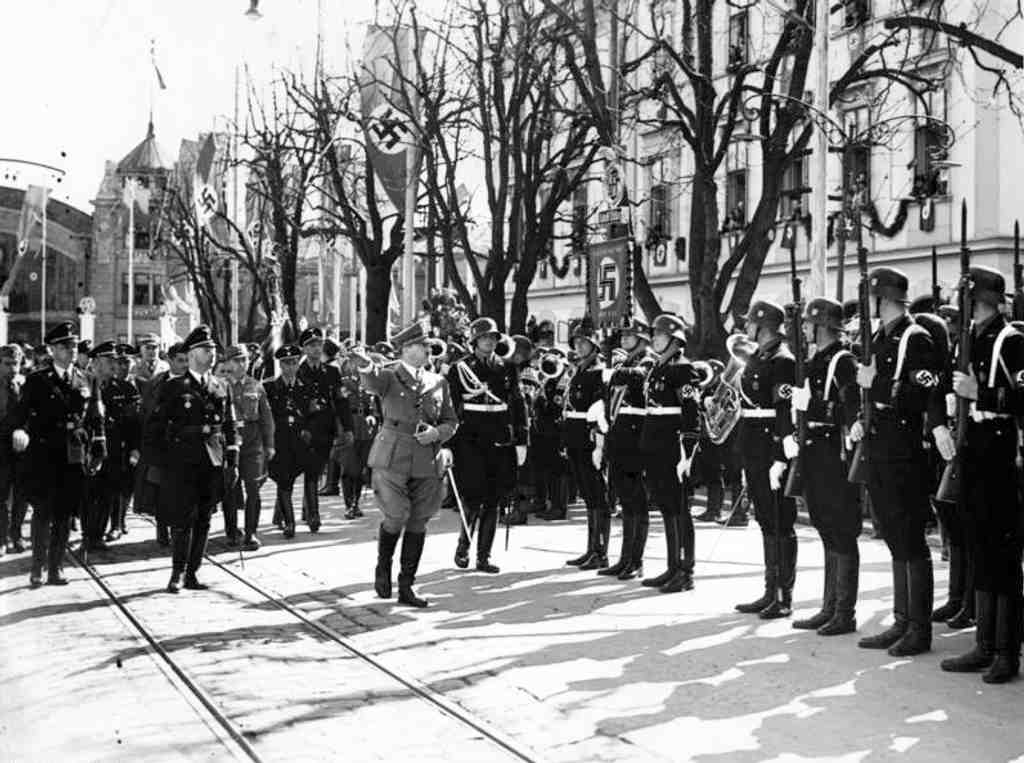
Right before you, history feels heavy because this is where the notorious Schutzstaffel, or SS, once ruled. “Schutzstaffel” simply means “Protection Squadron” in German, which sounds almost cozy-until you remember these were some of the most feared people in 20th-century Europe. They sure took the “security” part of “security detail” a little too seriously.
Picture the early Nazi meetings in gloomy Munich beer halls. There, a handful of volunteers called the “Saal-Schutz”-the Hall Security-kept order. They weren’t exactly secret agents; in the beginning, there were just eight of them! But soon, a man named Heinrich Himmler walked through their door in 1925. He was ambitious, steely-eyed, and determined. By 1929, Himmler took command and rapidly transformed this group from party bouncers into an elite ideological force. The SS ballooned from hundreds to hundreds of thousands. Himmler used to say he wanted his SS to be like “Teutonic knights, Jesuits, and Samurai”-all rolled into one very intimidating package. I suppose you could say, “If you want something done right, hire yourself some knights, priests, and sword-wielding warriors.” Well, that was Himmler for you.
Back then, Berliners would have heard the echo of marching boots and the as the SS paraded through these very streets. The Allgemeine SS enforced Nazi racial laws and regime purity, tapping on doors in the night, while the Waffen-SS fought as combat troops-their allegiances sworn directly to Hitler, not even the army. And there were the dreaded “Death’s Head Units”-the Totenkopfverbände-their skull-emblazoned insignia used to run the concentration camps, a symbol today of some of the darkest crimes in history.
Let’s lift the mood with a mystery. Legend has it that Himmler, who adored rituals, bought an old castle-Wewelsburg-and filled it with mock-pagan ceremonies just for his SS officers. Picture a bunch of men in black uniforms, earnestly lighting candles in a medieval castle and holding secret meetings. It sounds straight out of an Indiana Jones movie, doesn’t it? Sadly, the SS’s passion for pageantry was easily matched by their deadly seriousness.
Berlin itself became a city under constant watch. The SS, together with the Gestapo, set up a police state. They listened in on phones, checked the mail, and “invited” anyone who looked suspicious for... let’s call it a not-so-friendly chat. Paper trails and surveillance files bloomed like weeds. Ordinary citizens learned to trust only their shadows; even jokes about Hitler could land someone in a cold, grey cell.
The SS’s obsession with “race purity” meant members had to prove “Aryan” ancestry all the way back to 1750. No pressure if your great-great-great-grandpa left the paperwork at the bakery! And Christian holidays? Out with Christmas, in with strange solstice parties invented by Himmler himself. He replaced church weddings with SS-only ceremonies-think less “Here Comes the Bride,” more “Here Comes the Sworn Follower of the Fuehrer.”
When World War II broke out, the SS evolved into a monster with many heads. Their special units-the Einsatzgruppen-followed the army into Poland and elsewhere, leaving unimaginable horrors in their wake. Whole villages would vanish overnight. And all the while, the same SS officers who planned terror campaigns by day enjoyed fine dinners and swapped medals by night.
By the war’s end, the SS was known and feared across Europe for war crimes and the unthinkable brutality of the Holocaust. After Germany’s defeat, the world judged these men at Nuremberg. The SS-as an organisation-was declared criminal. Their leaders, if still alive, found themselves facing judgment-and a hangman’s noose.
Now, as the Berlin wind blows, remember: these stories hold a warning. The SS began as an ordinary group, became extraordinary in their cruelty, and were finally infamous for crimes against humanity. But Berlin endured. Today, the city stands as a monument to resilience, with reminders like this, ensuring we never forget.
So, ready to shake off the chills and step into the golden age of Berlin hotels at our next stop? I promise the only uniforms you’ll hear about there were the ones worn by waiters with too much cologne.
Wondering about the origins, pre-war germany or the ss in world war ii? Feel free to discuss it further in the chat section below.




