
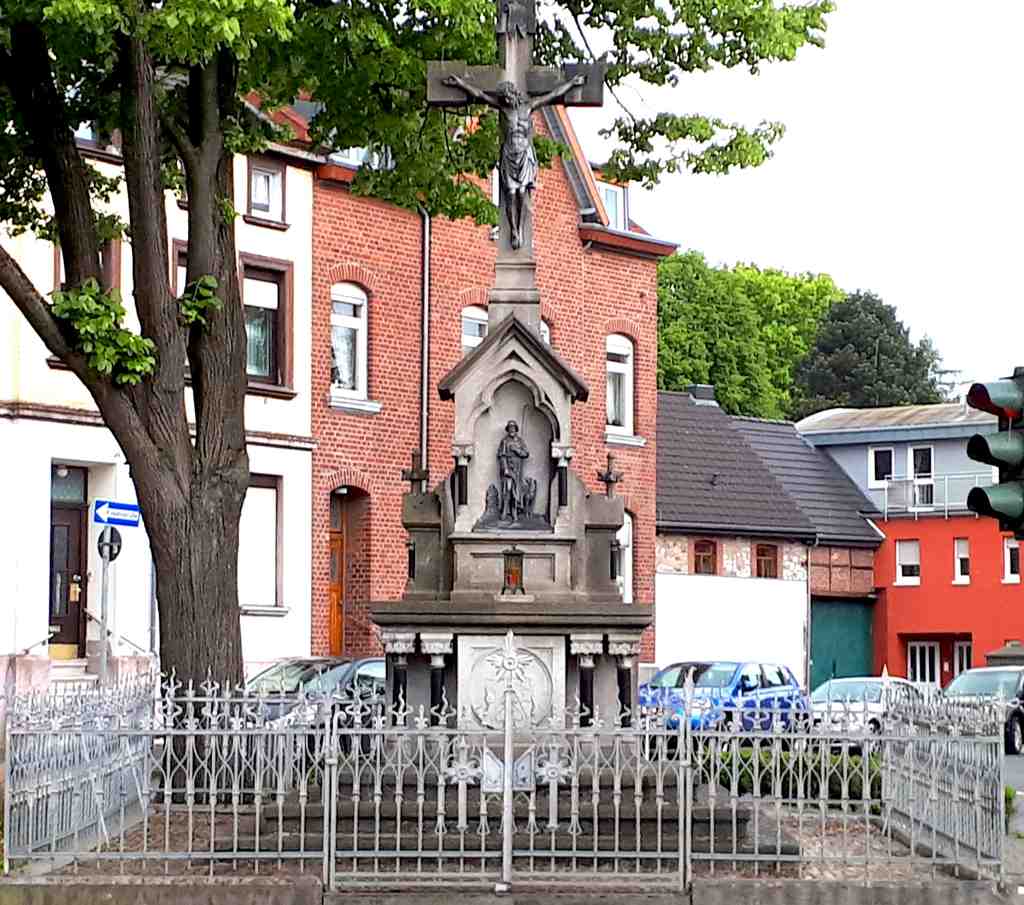
Directly in front of you at the corner of Von-Coels-Straße and Lindenstraße, you’ll spot a towering stone cross standing proudly behind a decorative iron fence, topped with a detailed crucifix and framed by leafy trees and brick houses.
Now imagine this spot more than two centuries ago-storms of fear and hope mingling in the air, as locals would gather at the very place you’re standing, casting nervous glances at a modest wooden cross that once stood under the old linden trees. They were praying, not for sunshine or good harvest, but for their very lives. Around 1652, a dreadful plague swept through Eilendorf, taking many with it. As a result, the villagers built a humble chapel nearby, dedicated to St. Rochus of Montpellier, the patron saint believed to protect against the plague. An act of hope during really tough times.
Fast forward to 1908, and the simple wooden cross was replaced with this grand monument, crafted in the ornate Gründerzeit style. Imagine a mini cathedral of stone and metal, gleaming with gothic details like tiny towers and swirling ornaments. Peer into that niche-there sits a statue of St. Rochus, showing his leg marked by the plague, with a loyal dog by his side. Legend has it that the dog brought him bread while he was sick and shunned by others. If you look closely at the metal corpus, you’ll spot an inscription that was hidden until 1980: a gift from Leonhard Geulen, a local with a generous heart and a sense for dramatic surprises.
This cross wasn’t just a landmark-it was a blessing station where locals gathered each year for processions, hoping for peace, health, and perhaps, a little break from life’s mischiefs. And today, you’re part of that story, standing where prayers and perseverance met at the corner of faith and daily life!


