
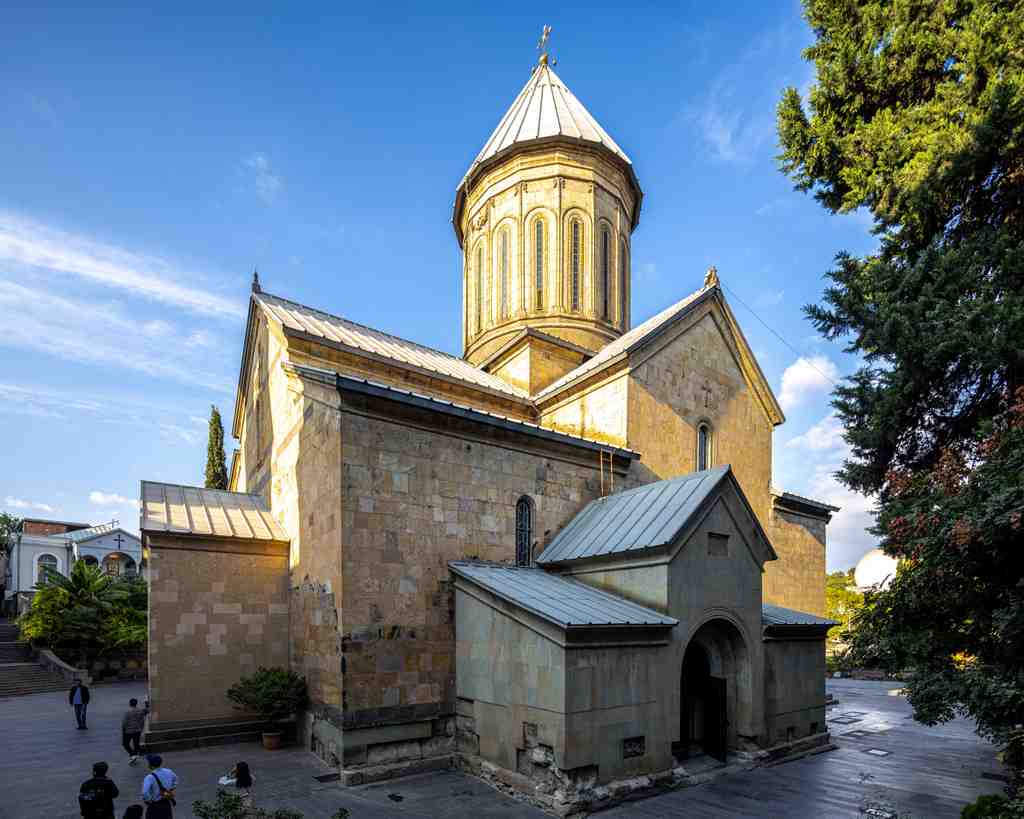
Great! You’re almost there. As you approach the Tbilisi Sioni Cathedral, look to your left. You’ll see a grand and majestic structure with tall, elegant walls, giving it a commanding presence against the backdrop of the cityscape. The cathedral's dome and impressive cross should help you spot it easily. The eastern façade, fronting the right bank of the Kura River, is particularly striking with its beautiful stonework and architectural details.
The Sioni Cathedral of the Dormition, or simply "Tbilisi Sioni," is an enduring symbol of Georgia’s rich history and spiritual heritage. It has a name as significant as it is grand, honoring Mount Zion in Jerusalem. This Georgian Orthodox cathedral was originally built way back in the 6th and 7th centuries. Talk about aging gracefully, huh?
Despite its ancient origins, the cathedral you see today mainly dates back to the 13th century. Like a cat with nine lives, this structure has been rebuilt several times over the centuries after being destroyed by foreign invaders, earthquakes, and other calamities. Each reconstruction blended old and new, resulting in a mesmerizing mix of architectural styles.
Legend has it that King Vakhtang Gorgasali first initiated the construction of a church on this site in the 5th century. The cathedral has been a silent witness to Tbilisi's dynamic history, including the time when it was commandeered for a grand announcement of Georgia's annexation by Russia in 1802.
Inside, don't miss the venerated Grapevine cross, said to have been forged by Saint Nino, the woman who brought Christianity to Georgia in the early 4th century. It's not just a religious relic but also a tangible link to the nation’s spiritual roots.
So, as you stand outside this resilient cathedral, think of all the stories it could tell. Each scar and repair is a chapter in Georgia’s history, making Sioni not just a cathedral but a living museum of Tbilisi's past. Now, how’s that for a riveting history lesson?




