
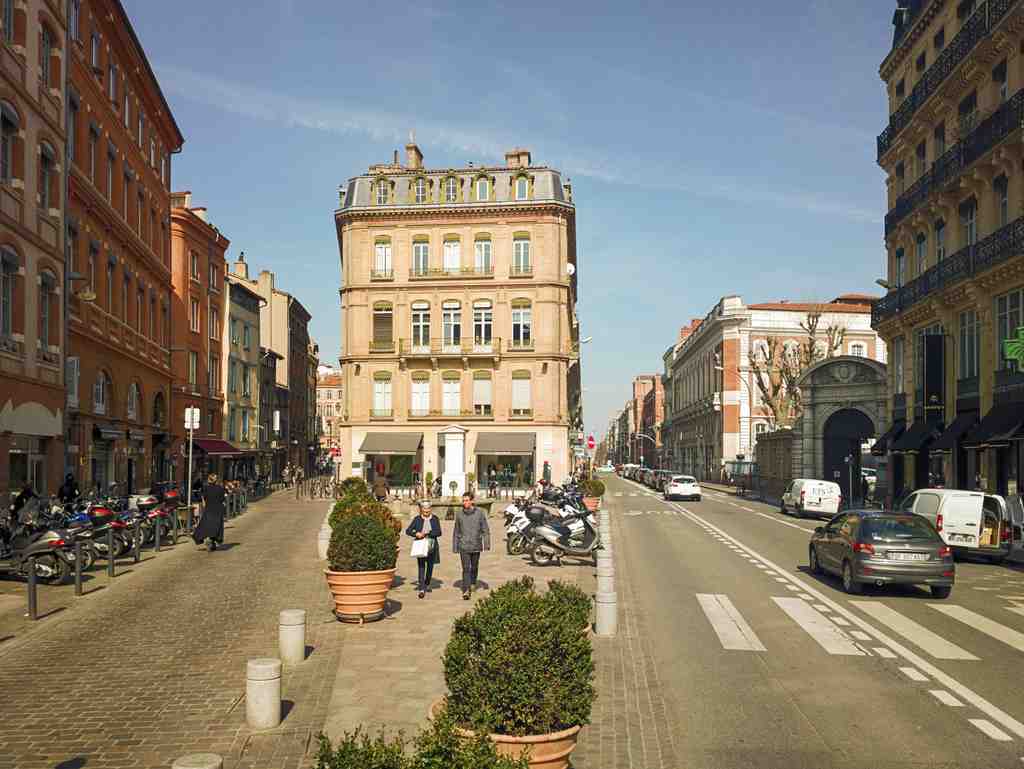
As you come up to Place Rouaix, look ahead for an elongated triangle of a square-about 150 meters long-where roads seem to flow around it like a gentle stream. You’ll see a ridge that peaks here: this is the highest point in ancient Toulouse. The ground under your feet rises just slightly, and in the middle, you might spot the modest fountain marking the spot where the city once reached for the sky, as much as 146.5 meters above sea level. To your left and right, narrow streets crisscross-Rue du Languedoc and Rue de la Trinité are just nearby, and the traffic seems to circle about politely, as if careful not to disturb history. This is where the Roman aqueduct ended its long journey, delivering water to the very heart of the ancient city.
Imagine, centuries ago, Roman engineers bustling about in togas, maybe grumbling about leaky pipes, herding crystal-clear water from the countryside to this very spot. The Lardenne aqueduct, an unsung hero, brought in a river of fresh water-19,000 cubic meters every day! Now, think of the relief on everyone’s face the first time they heard that water bubbling up here. No bottled water, no thirst, just pure refreshment. You might say this was the “high” point of Roman hydration!
But Place Rouaix is more than a faucet for thirsty Romans. For generations, it was one of the city’s most strategic places, the meeting point of important Roman roads. Shopkeepers, traders, and even the odd pickpocket might have gathered here, weaving between busy townsfolk and the shade of a mighty elm tree that stood at the center for centuries. In fact, the place was once known as the Place of the Elm of Rouaix-not for an evil wizard, but for a tree so loved that it gave its name to the square.
Oh, and about the name! Some say it comes from the Roaix family, a local dynasty who hit the jackpot-56 of them became city leaders over the years. Others argue the area was named for the old fountain itself-'ros' in Latin, meaning water falling in drops. Either way, this was the place everyone came for a drink, to gossip, or simply to show off a new toga.
When the French Revolution hit town, Place Rouaix was hastily renamed Place Marat, after a revolutionary hero who met a rather dramatic end. Don’t worry, the name didn’t last long, and today, Place Rouaix is still a hub for locals hurrying home, students cycling by, and curious visitors like you pausing to take in its layered past.
So as you stand here, imagine the echoes of splashing water, the clatter of Roman sandals, the shuffle of medieval markets, and the hum of modern life. This spot has always been the city’s crossroads-where everyone passes by, but few stop to listen to the stories under their feet. And lucky you! Today, you’re part of its never-ending story.
Intrigued by the description, odonymy or the heritage and places of interest? Explore further by joining me in the chat section below.




