
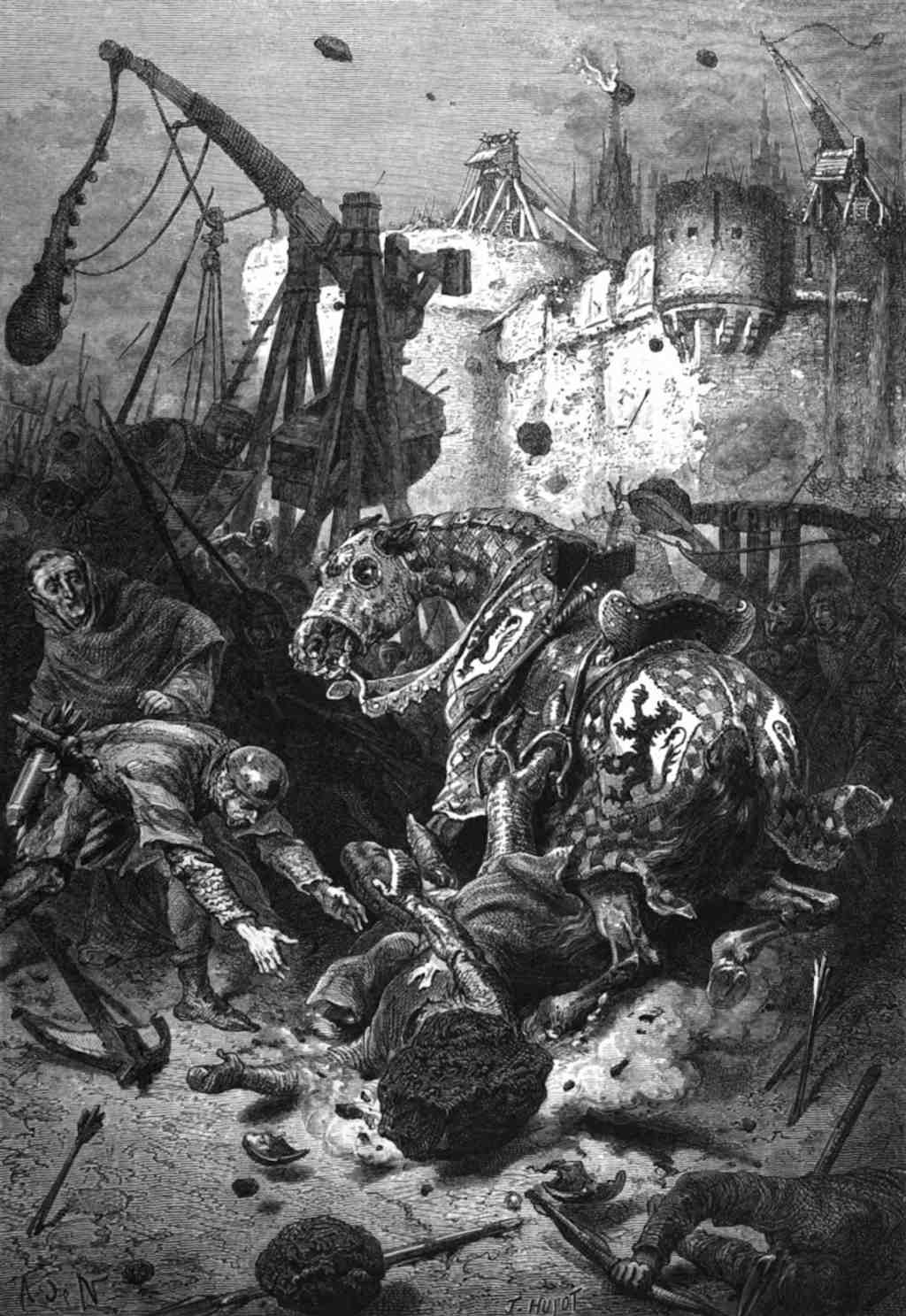
Just ahead, look for battered medieval stone walls and the remnants of powerful siege machines-imagine yourself amid a clash where castle towers and catapults once stood tall against the sky.
Now, let’s step back into Toulouse in the early 1200s. The air is sharp with spring rain, the ground trembling beneath the relentless crashes of stone shot from massive wooden trebuchets. Picture the city not as the peaceful place you see now, but a fortress under siege, its people desperate and determined, the smell of smoke lingering as flames lick at rooftops. It’s the year 1217, and Simon de Montfort, a feared crusader known far and wide, is laying siege to Toulouse-a city rebelled against him, exhausted by years of war and anxious for freedom.
For Simon, the road here was paved in ambition. The previous year, for the first time, Simon’s aura of invincibility had cracked at Beaucaire-his failure there sowed fatigue and unrest among his knights and barons. They quietly pleaded for peace, but Simon, learning that Count Raymond VI of Toulouse was gathering an army, couldn’t ignore the challenge. He marched his men to Toulouse, his gaze cold and determined. The city, sensing the threat, captured his advance guard-an act that made the tension in the air almost electric. Simon, furious, threatened to punish the city with heavy fines or worse: complete destruction.
Yet, not all hearts burned with vengeance. Folquet de Marseille, the bishop and a calming voice, tried to soothe Simon’s rage, mediating as the city sent a delegation-only for Montfort to seize them, deepening the sense of fear.
As armies maneuvered and alliances shifted, the people inside Toulouse knew the odds were against them. Shadows grew long, both from the catapults outside the walls and the dread of what might happen next. Simon’s men set fire to the Jewish quarter in a bid to sow confusion, but the city responded by throwing up barricades faster than flames could spread. The siege began with raw uncertainty and wild hope.
Simon eventually retreated to nearby Château Narbonnais, putting the city’s notables in chains, exiling some, and demanding an enormous ransom-thirty thousand marks of silver. What little goodwill he had left quickly turned to hatred among the citizens. He left for a while, arranging marriages to tie his family to powerful allies, only to return at Christmas with a fresh tax for his army. The drums of conflict never seemed to stop.
When 1217 dawned, Simon found himself caught in a web of shifting alliances and betrayals. In his absence, the city opened its gates to Raymond VI, who surprised everyone by returning not from Provence, where Simon thought he was, but from Aragon. As townsfolk busied themselves rebuilding broken walls and preparing new defenses, old friends returned as enemies and new heroes rose from the chaos.
Outside, the French forces, led on by Simon and his brother Guy, beat at the city’s gates. Assault after assault, they fell-repelled by the fierce resistance of Toulouse’s defenders. Inside, rumors swirled of secret tunnels and brave sorties. The defenders even rebuilt machines-mangonneaux and pierrières-hurling huge stones back at the besiegers. Winter dragged in, battles paused only by the icy air and hunger on both sides.
Spring came, and along with it, hope. Floods from a great storm washed away the barricades in the Saint-Cyprien quarter, opening the city to Simon’s men briefly, but reinforcements from Catalonia and Aragon soon arrived to help the defenders. Both sides grew desperate. Simon ordered a great wooden siege tower built, looming ominously over the walls, threatening to end the stalemate.
But history sometimes delights in irony. On June 25, 1218, as battle raged around the tower, Simon spotted his beloved brother falling, his horse cut from under him. He rushed to help, his armor heavy, heart racing above the screams and shouts. At that very moment, a stone-launched from a defender’s mangonneau-hurtled through the sky and struck him down. Simon de Montfort was killed instantly, his crusading dreams shattered amid dust and chaos.
His son Amaury inherited only defeat and the grim memory of that day. The morale of the besiegers collapsed, and just weeks later, the siege was lifted. Never again would the Montforts threaten Toulouse as before. The city, scarred but unbowed, had survived not only fire and famine, but the ambitions of men who seemed, for a moment, unstoppable. And as centuries flowed by, when kings and counts stitched Toulouse into the fabric of France, the defiant spirit that saved it in 1218 would echo through its streets-perhaps even in the step of every visitor, like you, standing here today.




