
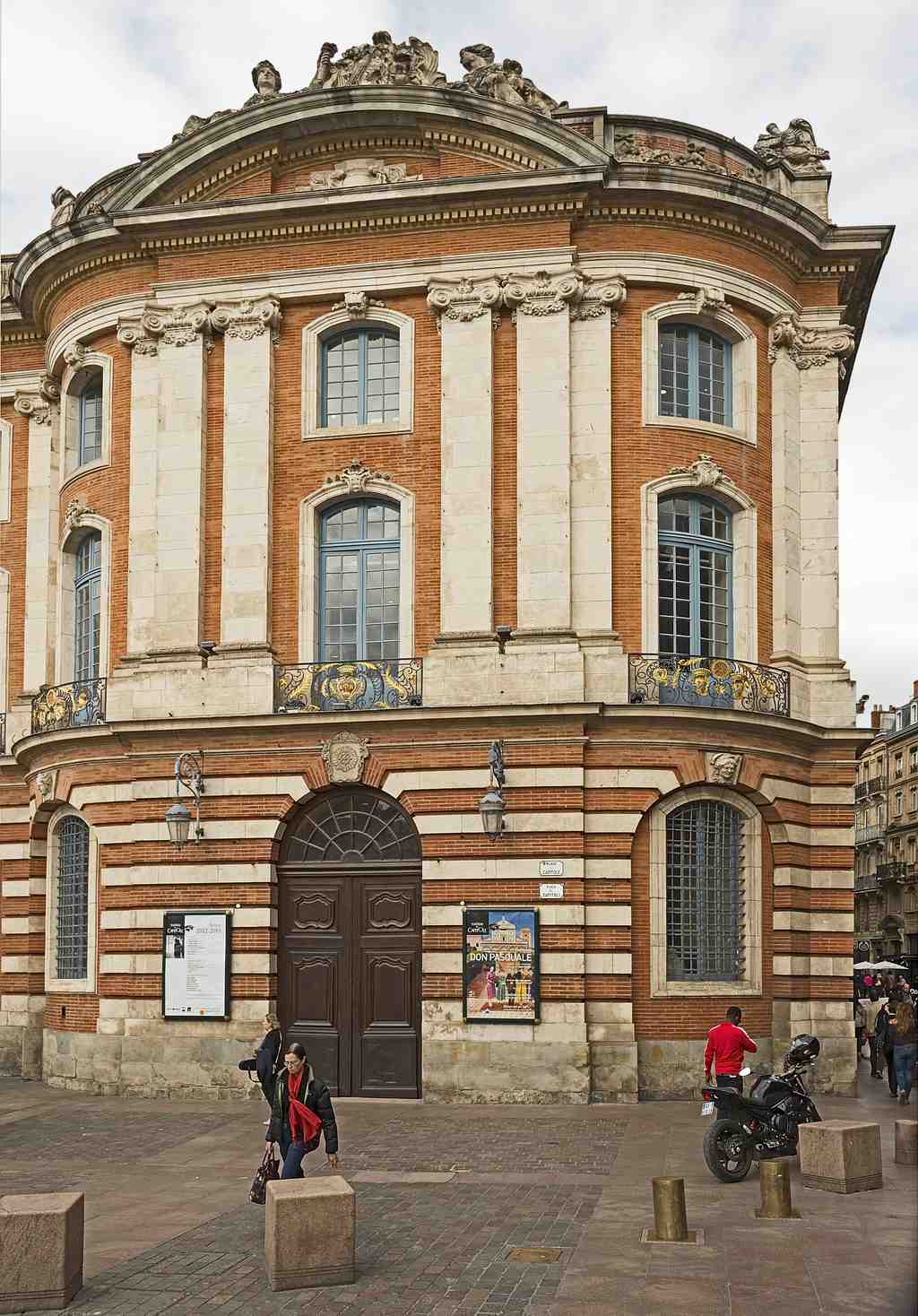
Look straight ahead for a grand building with elegant arched windows, stone columns, and a classical façade-its polished exterior and large entrance doors announce you’ve reached the Théâtre du Capitole.
Standing here, you can almost hear the echo of voices and orchestras from centuries past. Imagine Toulouse in 1736: this spot saw noblemen, powdered wigs, and swirling dresses as the city built its first real theatre, letting the rising sounds of opera and drama drift through the cobbled streets. After years of excitement, the stage faded, until in 1818, the theatre was reborn-rebuilt with new hopes and brighter lights. But in 1917, disaster struck: a fire roared through these walls. For a moment, it felt like Toulouse’s music might be silenced forever. But the people wouldn’t let it end. By 1923, the Théâtre du Capitole stood proud once more.
Inside its 1,156 red velvet seats, generations gasped at ballets, shivered at tragedies, or cheered for brave tenors. Over the years, passionate directors took center stage-Michel Plasson with his creative flair, followed by Jacques Doucet, then sonorous Nicolas Joel, and finally Frédéric Chambert, who directed the company through a grand renovation, forcing performances into alternate mysterious venues while dust and anticipation filled these walls.
As you gaze up now, think of all the dramatic entrances-onstage and off. Whether opera, ballet, or symphony, this place is Toulouse’s beating artistic heart, refusing ever to fade into silence.




