
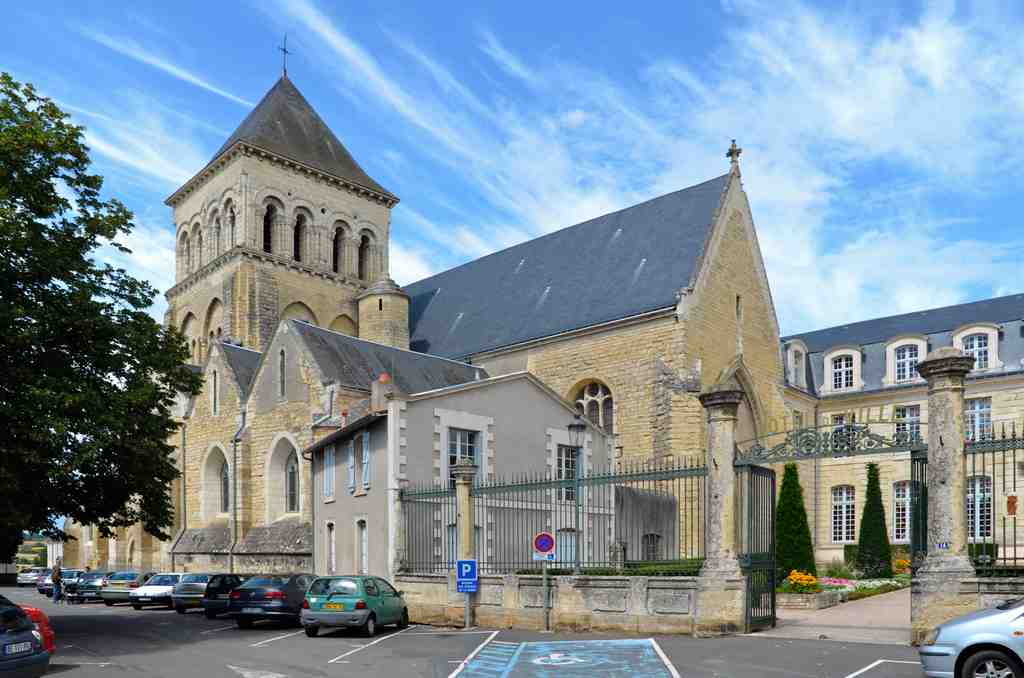
Look for a large, creamy yellow stone church with a tall, square bell tower topped by a pointed slate roof, right next to the city hall and fenced gardens on your right.
Welcome to the Church of Saint-Laon! Take a deep breath and imagine you’re standing at this very spot nearly a thousand years ago. The year is 1021, the air smells of fresh-cut stone, and the town is just a small patchwork of houses. Right in front of you, Achard, the mighty local lord, is founding a modest abbey for a handful of canons-just four, so you can picture their dinner parties were never crowded. The church becomes a treasure chest almost from the start, with a rather unusual relic: the mummified arm of Saint Laon himself. Yes, you heard that right! If you thought your family kept some strange heirlooms, well, these guys were keeping actual saintly body parts in the church.
Now, fast forward a few centuries. Picture the 1400s, a time when noblewomen made grand gestures. Marguerite of Scotland, a true VIP for the area, decided to have a chapel built here-just for her future grave. She got a bit sidetracked, though, since after her death she was buried somewhere else and only later brought back here. That’s dedication-some people have elaborate travel plans even after they’re gone.
As you gaze up at the church’s tower, notice how its lower parts have that sturdy Romanesque style from the 1100s-round arches, little windows, and walls so thick they could survive a siege. But then, as centuries rolled on, Thouars’s rulers wanted to impress the neighbors. They called in stone masons, who got a bit ambitious, adding soaring vaults and even more windows, poking extra holes in the ancient walls for heavenly light. If these stones could talk, they’d complain about all the drafts.
But it wasn’t all peace and hymn-singing. In the stormy 1700s, a massive hurricane swept through, toppling the spire with a crash that echoed through town. Tragically, it even claimed a life. Imagine the townsfolk rushing out in the howling wind and rain, staring at the fallen steeple, muttering, “Well, that’s going to be expensive.” And it didn’t stop there-the church suffered more bruises from storms in the 1800s, a true test of architectural stamina.
The Revolution turned everything upside down. The abbey disappeared, the monks left, and the church became a regular parish, its old companions-monks’ houses and stone cloisters-soon replaced by schools and then the city hall, which you see to your right. But Saint-Laon’s story has always been a mix of faith, fortune, and just a touch of chaos. Even restoration work in the 1800s accidentally stripped it of its historic title-like getting a new haircut and losing your ID!
So as you stand here, listen for the wind whistling between ancient stones, and imagine all those generations: monks mumbling Latin, noblewomen planning dramatic funerals, and townsfolk ducking for cover from surprise storms. You, my friend, are part of this church’s ever-growing story-no relics required!


