AudaTours logoAudaTours

Senlis Audio Tour: Legends and Echoes of Brichebay’s Timeless Treasures

Audio guide13 stops

Blood once pooled beside Senlis’ great cathedral walls, but beneath the ancient stones lie secrets even the locals whisper about only at dusk. Set off on a self-guided audio tour, winding through hidden courtyards and shadowed lanes where history’s echoes tell tales overlooked by hurried crowds. Uncover corners, cravings, and scandals that breathe life into Senlis like nowhere else. Which royal plot was hatched under the soaring vaults of the Cathedral of Notre-Dame? Why did shadows linger around the enigmatic Priory of Saint-Maurice on the eve of a forgotten uprising? And who tried to erase a scandal in the very chambers of the Royal Castle, leaving only a curious inscription by a vanished hand? Venture from bloodied battlements to sacred silence, feeling the pulse of rebellion and wonder in every step. Experience Senlis not as a passive visitor but as a seeker amid living drama. Slip into the city’s mysteries. Hit play and let Senlis reveal its hidden heart.

Tour preview

map

About this tour

  • schedule
    Duration 40–60 minsGo at your own pace
  • straighten
    3.2 km walking routeFollow the guided path
  • location_on
    LocationSenlis, France
  • wifi_off
    Works offlineDownload once, use anywhere
  • all_inclusive
    Lifetime accessReplay anytime, forever
  • location_on
    Starts at Cathedral of Notre-Dame de Senlis

Stops on this tour

  1. Look for a tall, elegant Gothic church with an impressively pointy spire and lots of carved stone details-the Cathedral of Notre-Dame de Senlis stands proudly with its ornate…Read moreShow less

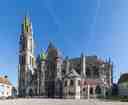
    Look for a tall, elegant Gothic church with an impressively pointy spire and lots of carved stone details-the Cathedral of Notre-Dame de Senlis stands proudly with its ornate western facade and massive southern tower above the quiet square in front. So here you are, outside Notre-Dame de Senlis, and you might be thinking, “This cathedral doesn’t look very huge!” - and you’d be right, but what it lacks in size, it more than makes up for in drama and stories. Let’s set the scene: it’s the year 1151, and Bishop Pierre, full of big dreams and probably a heavy purse (though, trust me, much lighter than his bishop friends), decides Senlis needs a cathedral to match the majestic French kings who often visit the town. The challenge? A small diocese means small funds-no King Louis showing up with a blank check here. So the bishops, using clever choices of local limestone and a lot of ambition, began construction at both ends of the cathedral at once. By 1191, after forty years and absolutely no corporate sponsorship, the church was ready for its grand opening, even if it didn’t have a transept yet! Now, feast your eyes on that central portal: this isn’t just any doorway. Look up at the detailed sculptures-the very first gothic depiction of the Coronation of the Virgin in France. In the tympanum, Mary sits beside Jesus, crowned and surrounded by bustling angels. Down below, a parade of Old and New Testament figures is carved in limestone. It’s like a Bible casting call! There’s Saint John, the prophet Isaïe (he’s the one with the phylactery and two sticks-not a magician, I promise), Moses, Abraham, and more. The stories here intertwine so that even the great high priest Aaron is shown sacrificing a lamb-a neat little preview of things to come. And those two towers aren’t twins! The southern tower is the real show-off. Around 1240, they topped it with that dizzyingly high, airy spire-the very symbol of Senlis. Its stonework is so well-crafted that eight centuries of storms have hardly budged it. Stand back a little and you’ll notice how this tower stretches toward the sky, with its pointed arches and delicate stone “crown.” The north tower, by contrast, wears a humble hat of slate-not quite as flashy, but every bit as tough. Senlis’s tower design got so popular that nearby villages started building their own “Senlisian bell towers” in a bit of medieval architectural “keeping up with the neighbors.” Of course, no epic tale is complete without disaster. In 1504, a lightning strike set the roof ablaze, vaults collapsed, and the storm did more than just singe the pews. But fear not! Kings Louis XII and François I chipped in for the restoration. That’s when those flamboyant side facades appeared with their dramatic sculpted details. The inside was rebuilt taller, the walls rising an extra six meters to let even more sunlight filter through the colored windows. Over the next centuries, chapels, a new transept, and a grand neoclassical decor were added-imagine centuries of styles, each grander than the last, layered like a very old, stone cake. During the French Revolution, most of the interior decoration-the statues, the sacred objects-were destroyed or stolen. But the old stones endured, and so did Senlis’s pride. In 1840, the cathedral was officially protected as a historical monument, one of the first in France. Today, as you listen, you stand before nearly 900 years of spiritual, artistic, and architectural ambition-built stone by precious stone from the ground beneath your feet. So, take in the soaring southern spire, the intricate figures above the doors, and maybe imagine the echo of a medieval bell or a great pipe organ rumbling to life. And as you set off for the next stop, don’t forget: in Senlis, even the small can tower above the grand. Onward! If you're keen on discovering more about the historical, building materials or the outside, head down to the chat section and engage with me.

    Open dedicated page →
  2. You can spot the Collegiate Church of Saint-Frambourg just ahead on your right-it’s a long, elegant stone building with rows of tall pointed windows and a gently sloped,…Read moreShow less

    You can spot the Collegiate Church of Saint-Frambourg just ahead on your right-it’s a long, elegant stone building with rows of tall pointed windows and a gently sloped, ochre-tiled roof, rising above the gardens and houses around it. Now, take a moment and let your senses travel through time! Imagine it is the year 987, and the French air is filled with anticipation and a bit of royal drama. Queen Adelaïde herself decided to build a chapel here-right after Hugh Capet was crowned King of the Franks in this very city. Old legends say that an entire Carolingian church was demolished just for this enormous new chapelle royale dedicated to Saint Fraimbault, whose relics-even his body, minus the head-were brought all the way here. His biography has absolutely nothing to do with Senlis, which makes you wonder-maybe Queen Adelaïde was a bit of a medieval collector? Back then, only the royal family and twelve privileged canons, handpicked by the king, could attend services inside. The townsfolk? Well, they had to drop by just for a peek or to make a donation. If you listen closely, you might still hear the gentle murmurs of prayers, and, if the canons got a little rowdy, the occasional royal reprimand over who forgot to water the eternal lamp! Fast forward nearly two centuries-to an era of ambitious gothic dreams and royal visits. Picture King Louis VII dropping by and grumbling politely about how the chapel wasn’t bright enough for his taste. He left a donation to keep the lamp glowing and-perhaps unintentionally-sparked a wave of construction that would transform this place. Beginning around 1169, the site exploded with workers, stonecutters, and gargantuan activities: they leveled part of the ancient Gallo-Roman walls and used the rubble as a foundation. If your shoes are dusty, you’re practically stepping on ancient history right now! The building’s layout was simple but impressive: a single, bright vessel, forty-six meters long and almost ten meters wide-a royal size fit for relics and ambition. Unlike many flashy churches of the time, this one chose elegance and harmony over being decked out like a cake at a medieval wedding. It changed very little over the centuries, standing strong, illuminated with sunlight, and topped by a bell tower that once hugged the western facade-until someone decided the stonework would fetch a good price and tore it down in the 1820s. Bold move or just real estate gone wild? Through the centuries, the chapelle saw it all: from its days as a temple of Reason during the Revolution (that’s just what you need in a church, right?) to later serving as a riding academy, workshop, and even a car garage after World War I. Imagine parking your car where kings once kneeled-you’d hope they left enough headroom for your hat! But the real twist came in 1974, when the world-famous Hungarian pianist György Cziffra, following a tip from his friend André Malraux, bought the dilapidated shell to transform it into a concert hall. During restoration, workers uncovered medieval graffiti, mysterious unicorn carvings, frescoed pilasters, and even ancient tombs, creating as much excitement as finding a backstage pass to history. Today, thanks to the Cziffra Foundation, you might catch the gentle notes of a piano drifting through the air. The church is now an auditorium that hosts festivals and concerts-proof that, whether serving royalty or music lovers, these walls always find a new song to sing. So go ahead, glance up at those pointed gothic windows-once beacons of royal prestige, now spotlights for world-class musicians.

    Open dedicated page →
  3. To spot the Museum of Art and Archaeology of Senlis, look for a large, pale stone building in an L-shape with elegant windows and a tiled roof, facing onto a geometric garden…Read moreShow less

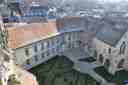
    To spot the Museum of Art and Archaeology of Senlis, look for a large, pale stone building in an L-shape with elegant windows and a tiled roof, facing onto a geometric garden right beside the cathedral-just follow the path leading towards this graceful corner and you’ll find yourself at the museum entrance. Alright, time to brush off some centuries and jump into an incredible story! You’re standing before what was once the bishop’s palace-yes, bishops didn’t believe in modesty back in the day. If you listen carefully, you might even catch the imaginary creak of ancient wooden doors and footsteps echoing in grand assembly halls. These walls witnessed medieval banquets, Roman remains, lawsuits, art squabbles, and a parade of hats that would put a fashion show to shame. Let’s rewind to the mid-1800s, when this spot was more about justice than art; part tribunal, part home, even soldiers rolled through during the 1840s. But the palace’s real story stretches further, reaching deep into the Middle Ages-imagine a time when bishops avoided chilly Senlis for their comfy castle, only returning here when duty called, leaving this place to echo with the shuffle of scribes and the faint smell of incense. But the real action began in 1862 with a group of history lovers-the Committee of Archaeology-itching to collect oddities, relics, and funky old stones from across Senlis. Their treasures included everything from ancient Roman pieces dug up in the local arena to some very mysterious Gallo-Roman odds and ends. With civic pride (and maybe a little rivalry), they moved their growing stash into the old bishop’s chapel on the first floor here in 1867-the museum’s first official opening. Tableaus, statues, dusty manuscripts-anything you could trip over ended up here. Security was, shall we say, "relaxed," and the only way to get in was with a committee member, because some over-eager visitors left with more than just memories. Not to be outdone, the municipality launched their own competing museum in 1876-history buffs vs. the city council! It got a bit dramatic: art donations, anti-church sentiment, and even a brief squabble over where to put all these treasures. By the 1920s, the collections filled nearly every inch of this floor like an attic explosion. Fast-forward to the 20th century, and the plot thickens-literally, when a German shell crashed into the stair tower in 1940, blowing away plans (and a bit of structure). Through wars, lawsuits, and some rather persnickety landlords, the museum bounced between different historic buildings, finally landing back here after years in exile. You could say the art needed a vacation! By 1989, the museum returned triumphantly to the bishop’s palace after hosting art shows in borrowed rooms and basements. Imagine painting being dragged up attic stairs, sculptures lovingly dusted, treasures sorted and restored. If you think organizing your garage is tough-try moving 3,178 cataloged objects, some from the Roman era, into a centuries-old palace! The newest restoration started in the 2000s, thanks in part to a generous private donation-fixing up the roofs, reopening the old 12th-century chapel, and even adding an elevator (because even knights got tired of stairs). Occasionally, even today, archaeologists find another surprise beneath your very feet-pottery shards, old brickwork, or the remnants of a Roman home hidden under the foundations. Inside, you’ll find sculptures from the 1100s, a marble statue called “The Birdcatcher,” jewelry from ancient graves, imposing stone gargoyles, and even the bronze base of a statue honoring Emperor Claudius-sadly, nobody’s found the emperor’s head yet, so keep an eye out on your way out. This building seems calm now, but its story is layered: from a simple bishop’s gathering hall, to a Renaissance gallery, to a courtroom, barracks, artists’ studio, and finally, a museum that’s still unveiling secrets. Enjoy the next chapter of your tour-and don’t worry, if a bishop in a robe rushes by muttering about misfiled sculptures… just smile and wave!

    Open dedicated page →
Show 10 more stopsShow fewer stopsexpand_moreexpand_less

  1. location_on
    4

    Château royal de Senlis et prieuré Saint-Maurice

    Buy tour to unlock all 17 tracks
    Right in front of you stands a dramatic spread of light-grey stone walls and arches rising out of the green park, with roofed remains and windowless ruins-look to the right of the…Read moreShow less

    Right in front of you stands a dramatic spread of light-grey stone walls and arches rising out of the green park, with roofed remains and windowless ruins-look to the right of the open lawn, where the largest fragments stand grouped by old stone and modern gardens together. As you stand before these timeworn stones, picture yourself on Senlis’s highest ground, surrounded by centuries of French drama, royalty, and some very unlucky architects. Let’s go all the way back: behind these fractured walls was once a mighty Merovingian castle-so old, it’s almost like it’s playing hide and seek with the archaeologists! The spot was the ultimate medieval hotspot-think less “Instagrammable” café and more “where kings are made.” For example, in 987, Hugues Capet was elected King of the Franks right here. Imagine nervous nobles whispering, clerics clutching their robes, and the fate of France changing with almost as much drama as reality TV. The castle we see today owes much to King Louis the Fat-now, don’t laugh, that really was his name-who bulldozed the old palace around 1130 and built a grand new fortress that would soon host wandering royals, wild banquets, and, let’s be honest, probably some epic medieval dance parties. For almost four hundred years, kings called this place their weekend getaway until fashions (and capitals) changed, leaving Senlis and its castle to fall slowly into disrepair. You might spot a grand fortified gate, built for defense and, apparently, for dramatic entrances-although the drawbridge and its round towers are long gone, you can still picture armored guards checking people in. I bet their guest list was trickier than a modern nightclub! History took some wild turns here. The castle withstood legendary sieges by thousands, harbored treasures, hosted big names-Charles the Bald, for one, tried hiding family members here, though it didn’t always end well. In fact, a young king, Louis V, had a really bad day in 987, falling fatally from a window-sparking a gathering of nobles that turned into an emergency king-making ceremony. No pressure! Later, treaties were signed, royal weddings were celebrated, and unfortunate prisoners spent memorable ‘holidays’ in its cells. Over time, the castle’s grand halls-the guard room, kitchen, royal apartments-lost their splendor. By the late Renaissance, not even the rats wanted in. By the time the French Revolution rolled around, the castle was so ruined the locals saw more value in its stones than its stories, and large parts were demolished. Only these sections survived: a huge blocky tower-with walls so thick, it could survive a modern teenager’s Wi-Fi destruction-and grand arched openings hinting at vanished chapels and royal galleries. Let’s not forget the Priory of Saint-Maurice beside it, almost like the castle’s quieter sibling. Founded around 1262 by the famously pious King Louis IX, who was on a quest for relics from the legendary Saint Maurice, the priory became a kind of medieval celebrity guesthouse. On the big day in 1264, imagine processions, knights bearing reliquaries, the king scrambling to put up his Swiss guests, and everyone heading to the chapel (which, rumor had it, tried to copy Paris’s fancy Sainte-Chapelle, but with a bit more monkish austerity). The priory rode a rollercoaster of fortunes-famous guests, passionate reforms (some monks didn’t want to swap their red robes for white, imagine the scenes in the laundry!), and royal visits. By the 18th century, not enough monks were left to play a proper football match, and the Revolution swept the place into private hands. Soon after, the cloister and chapel were demolished. Still, two buildings survive: the long, austere former monks’ dormitory-if you think your hotel room is basic, imagine fifty monks snoring in a row here-and the larger manor-style house of the prior, which looks like it’s plotting to win a “most sensible building” contest. Today, the monks’ hall is used for community events (and probably echoes with fewer chants). In the end, these ruins are more than just stones: they’re the survivors of sieges, stories, squabbles over hat colors, and a city’s royal dreams-open for free, as long as you don’t show up on a Tuesday. This castle may not have all its walls, but trust me, the stories are still standing strong.

    Open dedicated page →
  2. location_on
    5

    Senlis

    Buy tour to unlock all 17 tracks
    In front of you is the historic heart of Senlis, easily spotted by the jumble of terracotta rooftops and winding stone streets clustering around the majestic spire of the gothic…Read moreShow less

    In front of you is the historic heart of Senlis, easily spotted by the jumble of terracotta rooftops and winding stone streets clustering around the majestic spire of the gothic cathedral-the tallest point rising dramatically over the old town. Welcome to Senlis! Picture yourself standing where ancient kings and wandering Romans once roamed, surrounded by a patchwork of old houses, secret courtyards, and stories that cling to the air like morning mist. This city is like an open-air museum-except you don’t need a ticket and the pigeons don’t judge your fashion choices. Over 42 hectares of preserved heritage stretch before you, all protected since 1962-imagine, that’s almost as big as 60 football fields! But Senlis isn’t just about pretty buildings and dreamy alleyways. Long before espresso bars and Instagram, this site was chosen for its strategic perch above the valleys of the Nonette and Aunette rivers. Even now, you can sense the city’s pride in its geological roots. The ground here is full of secrets: beneath your feet, ancient limestone and alluvial silt hide stories from the Neolithic period. And with so much sand in the northern forests, maybe Senlis should have considered hosting beach volleyball tournaments. Okay, maybe not-but you get the picture! During the Middle Ages, Senlis became a favorite royal hangout. The kings of France strolled these very streets (probably wondering where to get a decent croissant). The old city is still wrapped in stone walls, some dating all the way back to the Gallo-Roman era. If those walls seem a bit medieval, it’s because they are! These fortifications once had to divert the river Nonette itself to protect the inhabitants from invaders. That’s right-a little medieval waterworks project right outside your window. Senlis is a patchwork of neighborhoods, each with its quirks and personalities. From the faubourgs of Saint-Martin and Villevert-where the countryside peeks in-to quirky Bon Secours and bustling Brichebay, the city grew outward like a living organism, adding new layers from the thirteenth century right through the 1970s (when the main problem was too many empty houses rather than too many tourists). Peering toward the horizon, you’re flanked by immense forests-Chantilly, Ermenonville, and Halatte-thick enough for epic walks or for getting perfectly, fabulously lost. In the very center of town, the old cobbled district remains almost untouched by time. 2,600 meters of curved boulevards and resurrected ramparts embrace the historic core, separating old from new. The railway may have missed its chance at urban expansion here, but thanks to smart city planning, sumptuous green buffers still frame your approach to this old town-helping it stand out like a well-dressed visitor at a muddy festival. Speaking of visitors, Senlis has always been a crossroads. In the Roman era, it was a vital point between Paris, Lille, and beyond. The roads here have seen Roman sandals, medieval carts, royal carriages, and even modern commuters dashing for the 6:40 bus to Paris. Of course, no city is perfect. Below this charming surface lies a maze of ancient wells, cellars, and even old underground quarries-sometimes causing surprise sinkholes (nothing says “historic city” like the sudden vanishing of a street corner, right?). Yet the people of Senlis have always been resilient, restoring what time and weather tried to steal, and hosting festivals and markets that fill the air with laughter through every season. In the end, Senlis stands as living memory: a place where medieval towers, modern boutiques, social housing, rivers, and forests all meet-sewn together by centuries of daily life. So as you stand here, feel the weight of its stories in the breeze, and try not to get lost in one of those tiny side streets… unless you’re searching for the city’s best pastry, in which case, full support! Wondering about the geography, town planning or the toponymy? Feel free to discuss it further in the chat section below.

    Open dedicated page →
  3. location_on
    6

    Eglise Saint-Pierre

    Buy tour to unlock all 17 tracks
    Look ahead, and you’ll spot the Church of Saint-Pierre de Senlis by its grand, weathered Gothic facade with tall, pointed arches and its striking bell tower to your right, keeping…Read moreShow less

    Look ahead, and you’ll spot the Church of Saint-Pierre de Senlis by its grand, weathered Gothic facade with tall, pointed arches and its striking bell tower to your right, keeping watch above the neighboring cream-colored building-if you see elaborate stonework and towering windows, you’re in the right place. Now, let’s step back in time together. Imagine this square centuries ago, filled with the bustle of townsfolk, the air thick with the scent of fresh bread and the clatter of horses. In front of you rises the Saint-Pierre church, standing since the Middle Ages, with its story packed full of twists and a few surprises-if only these stones could talk! Built on land once used as a cemetery, the first church here was likely put together around the 11th century. Historians like to argue about the date, but, let’s be honest, medieval folks weren’t great with Google Calendar. Early on, this church wasn’t just spiritual headquarters; it was a vital hub for the whole community. Picture families gathered for baptisms, processions snaking through the narrow streets, and on Pentecost, little cakes and treats-“oublies”-being tossed down from the church loft, sometimes with fire and water, to mark the descent of the Holy Spirit. Now that’s my kind of Sunday service! As centuries rolled by, the church was expanded-in the 13th century they added a grander choir and chapels, and in the late 1400s, stone masons and carpenters hammered and chiseled, giving the church those dramatic Flamboyant Gothic features you see today. By the 1500s, further extensions meant the place could fit even the grandest town feasts or, well, the occasional quarrelsome town meeting. I bet there were more than a few “Amen!” and “Excuse me, that’s my seat” moments. But Saint-Pierre’s story isn’t just about old prayers. Fast-forward to the French Revolution and the church is swept up in the storm. The doors were slammed shut, holy rituals ceased, and the once-sacred space was sold off to become-wait for it-a chicory factory! So if you smell coffee, you’re getting centuries of leftover memories, not just the boulangerie next door. Later, in the 19th century, the city bought the building and packed it with cavalry horses and hay. Soldiers stomped where nuns once knelt. Eventually, the church was filled with market stalls and voices-its ornate arches sheltering vegetables rather than vespers. By this time, the church had seen everything: royal burials, brave processions through plagues, and even a woman almost buried alive-only to wake up as the service was taking place. After years of neglect and the pain of war-including bomb damage in 1940 and repairs after-Saint-Pierre clung to life. In the 1970s, after a tragic air crash nearby, the church was transformed into a chapel of remembrance. Restored once again, it finally reopened as a public hall, echoing with new voices but keeping centuries of whispers in its stones. So next time you spot a tourist snapping photos or a local parking right in front, remember: this old church has survived fire, flood, factious city councils, and almost every use you can imagine. If walls could laugh, these would-and if you listen closely, you might just hear a thousand stories, ringing out from under those ancient arches.

    Open dedicated page →
  4. location_on
    7

    Rasher

    Buy tour to unlock all 17 tracks
    Straight ahead, you’ll spot a tall, pale stone wall topped with decorative carvings and crowned by a grand old green wooden gate-look for the Renaissance details just before you…Read moreShow less

    Straight ahead, you’ll spot a tall, pale stone wall topped with decorative carvings and crowned by a grand old green wooden gate-look for the Renaissance details just before you hit the corner. Welcome to the Rasher-well, officially, the Hôtel de Rasse, but don’t expect room service! This impressive mansion owes its name to the powerful Rouvroy de Saint-Simon family, the lords of Rasse, and was first built back in 1522. Now, the house itself might not stand out much-maybe it was having a bad architecture day-but the real showstopper is this towering wall. Imagine the bustling life of Renaissance Senlis: carriages rumbling on the cobbles and the occasional noble peeking out from behind these stony defenses. The wall is no ordinary barrier. It’s boldly dressed with pilasters, medallion faces staring down, and quirky upside-down consoles, each one a testament to 16th-century creativity. Official historians took notice too-the wall has been protected as a historical monument since 1930. So, as you brush your hand along the cool stone, you can almost feel the parade of centuries, all those Rasse family secrets still safely hidden behind that gate. Funny to think a wall could steal the spotlight from a mansion, isn’t it?

    Open dedicated page →
  5. Monument of Franco-Moroccan Fraternity
    8

    Monument of Franco-Moroccan Fraternity

    Buy tour to unlock all 17 tracks
    Right in front of you, look for a striking white stone monument featuring two life-sized riders on horseback, locked in a firm handshake-the Monument of Franco-Moroccan Fraternity…Read moreShow less

    Right in front of you, look for a striking white stone monument featuring two life-sized riders on horseback, locked in a firm handshake-the Monument of Franco-Moroccan Fraternity stands tall on a leafy square, impossible to miss! Now, picture the world straight after the First World War-Europe is quiet, but memories roar. This very monument began its life nearly 3,000 kilometers away, in the bustling heart of Casablanca. Back then, veterans wanted a bold tribute to honor both French and Moroccan soldiers who fought and fell side by side. Imagine the scene: French officers in sturdy uniforms, Moroccan spahis in flowing robes and sturdy turbans, shaking hands on horseback-designed by the famous Paul Landowski, who surely knew how to put drama into stone! He drew inspiration from a simple moment: two horsemen meeting, pausing in the countryside. Its first unveiling was pure spectacle, with Marshal Lyautey himself taking the honors. Yet, history took a wild turn-after Morocco gained its independence, the once-colonial symbol standing at Casablanca’s center no longer fit. What to do with a 14-ton handshake? In 1961, it was carefully taken apart, almost like a life-sized puzzle, put on ships, and sent all the way here to Senlis. Why Senlis? This town had its own long history of Moroccan spahi regiments and still honors that bond today. So, what you see now isn’t just a monument-it’s a survivor of two continents and two histories. French and Moroccan horsemen face each other, equal and resolute. Feel the energy: horses lean in close, hands grip firmly, warriors gaze steadily. No quarrels here-just a handshake across time, born of war, living on in peace!

    Open dedicated page →
  6. location_on
    9

    Abbaye Saint-Vincent de Senlis

    Buy tour to unlock all 17 tracks
    To spot the Abbey of Saint-Vincent de Senlis, look for a large, pale stone church with a pointed bell tower and a sprawling rectangular convent building, just beyond a small…Read moreShow less

    To spot the Abbey of Saint-Vincent de Senlis, look for a large, pale stone church with a pointed bell tower and a sprawling rectangular convent building, just beyond a small football goal-it's impossible to miss its graceful presence rising above the southern edge of the old city. Now, take a slow breath and imagine yourself stepping back nearly a thousand years, right here in front of these historic stones. The Abbey of Saint-Vincent feels peaceful today, but its past is as dramatic as a medieval soap opera. Founded in 1065 by Anne of Kiev-a queen with royal headaches and a flair for new beginnings-this abbey rose from the ruins of an even older religious house. Legend says Anne, widowed and seeking a bit of heavenly favor (and perhaps some forgiveness for marrying her late husband's vassal and being excommunicated-awkward at family dinners, I imagine!), promised to build a monastery if her prayers for children were answered. You’re standing where monks once walked and powerful kings left their mark. In its first century, Saint-Vincent blossomed with gifts from kings and hopeful nobles-land, mills, and enough property to make even modern real estate agents envious. Over time, not just monks, but also noble ladies and aspiring priests found a place within these walls. The abbey’s school was a local legend by 1124, and its mighty refectory could seat eighty hungry souls-yes, that’s a lot of bread and perhaps a few heated theological debates! But drama never stayed far away. The Abbey’s independence from both church and local lords sparked tense competitions-imagine monks keeping the bishop at arm’s length, and handing him permission slips anytime he joined them for dinner! Then, in tougher times, rival churchmen tried sneaking into the role of abbot-one even had to be escorted out by soldiers, while others turned to parliament and the Pope to settle scores. In between, the Hundred Years’ War swept through: kings, dukes, and invaders squeezed the abbey for every last coin and crumb. Not even the abbots were immune-one got tangled up with the notorious Jean II de Montmorency and ended up with the monastery doors battered down. And oh, the 1600s! Picture the young reformer Charles Faure arriving as a novice-met not by saintly seriousness, but by easy-living monks who barely remembered their own vows. Faure’s perseverance sparked a monastic makeover that spread across France and gave birth to the powerful Génovéfains. At one point, the town even rioted and stormed the abbey, only to find the monks were just, well, being unusually saintly. Through war, fire, and revolution, Saint-Vincent endured. In 1791, during the French Revolution, the abbey was shut down and its buildings became a hospital, a barracks, a prison, even a cotton factory bustling with five hundred workers before falling silent in the 1820s. Just when demolition seemed certain, three determined canons from Beauvais rescued these glorious stones and started a school for boys-a tradition that still lives on today as the Lycée Saint-Vincent. Look around at the elegant, sober architecture: you’re viewing a rare blend of Romanesque and first Gothic style, with a central nave stretching forty-seven meters, and a slender bell tower rising forty-one meters above-tall enough to compete with any local legend. The abbey’s cloister, the heart of monastic life, is a quiet place now-unless a stray football comes flying in from the playground! So, the next time you see a schoolchild dashing across the courtyard, remember: they’re running through centuries of kings, queens, monks, and a little bit of well-earned chaos. The Abbey of Saint-Vincent is proof that even the most peaceful places can have the wildest stories-if only the walls could talk. Exploring the realm of the localization, historical or the description? Feel free to consult the chat section for additional information.

    Open dedicated page →
  7. location_on
    10

    Haubergier Hotel

    Buy tour to unlock all 17 tracks
    To spot the Haubergier Hotel, look for an elegant, three-story mansion on the corner with a striking mix of pale stone on the ground floor and warm red bricks above, lined with…Read moreShow less

    To spot the Haubergier Hotel, look for an elegant, three-story mansion on the corner with a striking mix of pale stone on the ground floor and warm red bricks above, lined with tall windows and touches of sculpted stonework, right as you stand at the intersection of rue Sainte-Geneviève and rue du Haubergier. Now, let’s unlock the secrets of the Haubergier Hotel as you stand before its watchful windows and brick-and-stone walls. Imagine the air tingling with stories - the echoes of centuries of footsteps, laughter, and the quiet rustle of mysteries moving behind shuttered windows. Beneath your feet, a hidden world lies carved deep into the earth. This grand house stands on vaults older than itself, with ancient cellars built in the 1100s that once served as a homemade quarry, stone cut straight from the rock, as if the house grew from Senlis itself. Rumor has it that you could still feel the cool, musty breath of medieval times if you ever braved the narrow staircase plunging five meters down to the lower level - no elevator, I’m afraid, just pure adventure! The upper house, built in the early 1500s, whispers sophistication with its careful blend of stone and brick, tall mullioned windows, molded frames, and a proud stature atop the cobbles. But don’t let the Saint-Geneviève façade distract you! The real entrance, like a secret passage, is tucked in the rear courtyard off rue du Haubergier - a backdoor fit for the true locals, or perhaps a mysterious visitor or two! Now for the name, you ask? “Haubergier” hints at the craftsmen once thought to have lived here, smiths who made chainmail armor called hauberts - but, in truth, there’s no proof any knights-in-shining-armor ever lived on this street. The name is older than the house itself: the street began as vicum Haubergière back in 1238, and over centuries kept shifting, as if trying on disguises - rue aux Bergères, rue du Haut-Berger… yet the fine old house only took the name “Hôtel du Haubergier” in the 1800s. Let’s step back to the sixteenth century. Here lived Regnault de Bonvilliers, a powerful “Prévôt Forain” - the lord of the merchants. Imagine well-dressed notables and townsfolk meeting in these very rooms, while outside, history rolled on. The estate changed hands, old charters named noble families, and its walls quietly collected secrets - though, like so many grand houses here, it always belonged to ordinary citizens rather than churches or convents. Leap forward to the 20th century - and what drama unfolds! The building becomes the museum of archaeology, with a lapidarium in the courtyard (imagine stone heads staring up at the stars), ancient artefacts inside, and a library where learned minds pored over treasures by candlelight. But then - calamity! The city needed room for a new court after a fire, and the museum was forced out of its old home. The Haubergier Hotel became its new heart in 1927, filled with bustling workmen carrying ancient pots, medieval swords, and even original Watteau sketches upstairs! Then comes the darkness of war. The German occupation nearly ruins the museum, cutting off visitors, and soon, a shell damages the hotel’s beautiful octagonal stair tower. The city and the building’s owner bicker endlessly about the cost. The upper floors become off-limits, locked away like an attic in a haunted house. After years of arguments and missed openings, the city finally buys the house, restoring its elegant features. As if waking from its long slumber, the old hotel greets a new museum in the 1950s. Outside, gargoyles and tiny chimeras cling to the drainpipes, staring protectively down, while the beautiful stone Madonna above the entrance gazes gently over visitors - her head lost (don’t worry, just the statue!) during the French Revolution, then carefully restored. Look closely around the courtyard - you might even spot the old communal well, shared between two neighbors, a symbol of Senlis’s closeness. Today, the Haubergier Hotel is, once again, a private home. It keeps its stories close, but if you listen, it seems you can almost hear the whispers of museum curators, noble families, and far-off chainmail makers… or perhaps just the creak of another lucky owner closing the shutters for the night. Isn’t history amazing? Just be glad the chimeras don’t blink!

    Open dedicated page →
  8. Church of Saint-Aignan de Senlis
    11

    Church of Saint-Aignan de Senlis

    Buy tour to unlock all 17 tracks
    Right in front of you, you’ll spot the Church of Saint-Aignan de Senlis-a weathered stone building with a dramatic triangular roof, creeping green vines swallowing its southern…Read moreShow less

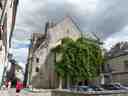
    Right in front of you, you’ll spot the Church of Saint-Aignan de Senlis-a weathered stone building with a dramatic triangular roof, creeping green vines swallowing its southern wall, and architectural fragments peeking out towards you from its quiet corner on the hill. Now, take a moment to imagine what this old church has seen-all those centuries perched high on the Montagne Saint-Aignan, gazing down over Senlis! Built nearly a thousand years ago, likely sometime after 1024, this was once one of the city’s grandest churches. Don’t be fooled by its sleepy appearance today; if you squint, you can almost feel the nervous excitement of stonemasons in the 11th century arguing over who could build the best Romanesque bell tower. That bell tower, by the way, became the celebrity of the region-other churches looked at it and thought, “That’s the style I want!” The bell towers of Saint-Pierre de Senlis, Saint-Gervais de Pontpoint, and several others took their inspiration from Saint-Aignan. You could say it set the trend for “Romanesque chic.” Back in the Middle Ages, Saint-Aignan wasn’t just any old parish church. The community was wealthy, and you could probably hear the sound of important Senlisiens jostling for space to found new chapels. In fact, there were at least four notable chapels lining the southern side, each with its own rich sponsor-dames and cardinals and all sorts of local celebs. By the Gothic period, around the 13th century, the church got a major renovation. The old Romanesque features inside were cleverly hidden so that the latest style could show off-much like swapping your old wardrobe for a brand new one but keeping your favorite socks hidden underneath. Time, as usual, had other plans. By the tail end of the 18th century, the French Revolution swept in, and the church found itself without a flock. The building was sold off as “national property” in 1792. Imagine Saint-Aignan’s surprise when the high-arched ceilings suddenly echoed with the sound of… sheep. That’s right, it spent a few years as a sheep barn! But that wasn’t even its strangest moment. In 1806, Pierre-Jacques Fricaut, a wine merchant, turned up with a wildly ambitious plan-to gut the nave and convert the whole place into a grand theater. You might say Saint-Aignan had its first big scene change: nuns and prayers out, actors and applause in. The theater came with all the drama you’d expect-backstage mishaps, money trouble, and disappointed creditors. To keep things lively, there was a popular café in the entresol beneath the audience, where townsfolk gossiped and musicians might have tuned their violins. Sadly, despite the best curtain calls, the theater was never quite profitable. Changing owners, changing hands, the building eventually ended up in the city’s care and was run as the municipal theater-then, dazzling the crowd again, as a cinema. Just in case you think this is all old news, remember in 1963, a French film, “L’Année du bac,” was shot right here, casting the church in a starring role once more! Through all these reinventions, precious bits of the church’s architecture survived-a stunning blend of Romanesque and later Gothic, complete with chapels tucked away, and even the ghostly scars of demolished arcades still visible on the side. Restoration in the 1980s brought a new lease on life, but for now, the saintly old structure-protected as a historic monument-sits quietly behind its vine curtain, closed to visitors for safety reasons. So, as you stand here, think of Saint-Aignan as a bit of an old actor: a dramatic past, a collection of costumes, and countless stories tucked away in every stone, waiting for its next unexpected role. I hear even the pigeons audition to be part of its next act! Now, let’s wander on to our next stop-your audience with Senlis’ history has only just begun. Fascinated by the localization, historical or the description? Let's chat about it

    Open dedicated page →
  9. location_on
    12

    Faucigny-Lucinge Hotel

    Buy tour to unlock all 17 tracks
    To spot the Faucigny-Lucinge Hotel, look for a grand and ornate stone gateway with green double doors and sculpted decorations right along 23 rue de Beauvais-it’s the only part of…Read moreShow less

    To spot the Faucigny-Lucinge Hotel, look for a grand and ornate stone gateway with green double doors and sculpted decorations right along 23 rue de Beauvais-it’s the only part of the mansion you can see from the street, and it stands out like a guardian keeping secrets behind its walls. Now, as you stand here, imagine yourself in the heart of old Senlis, right at the edge of an enigma. The Faucigny-Lucinge Hotel-also known as the Hôtel du Plat-d'Étain-proudly hides behind this magnificent gateway, a stone portal that’s as grand as it is mysterious. You can almost hear echoes of lost footsteps and the rustle of silk gowns brushing past, because behind this door lies centuries of secrets, drama, and a touch of aristocratic flair. But here’s the twist: for such a stately mansion, hardly anyone really knows its full story-even the experts! Picture Senlis in the eighteenth century, the air heavy with anticipation, the garden to the south tumbling down in terraces toward ancient city walls. Above the entrance, the stern eyes of mythic faces carved into the stone look down, as if daring you to guess what has happened here over the ages. There are no records older than the 1800s-this place keeps its secrets close. Yet, beneath your feet, there’s a cellar nearly as old as the town itself, its sturdy archways built perhaps in the 1600s, and a spiral stair plunging down into a hidden chalk quarry deep below. Imagine workers by flickering lantern light chiseling away, their laughter muffled, as they gathered stone to build the very mansion above. Go back to the 1500s, and the property belonged to descendants of Fleuriot de la Haye. Was it already a grand home? No one knows! Even the name, Hôtel du Plat-d'Étain-the Hotel of the Tin Plate-is a puzzle. Did it get its name from a tavern? A shop sign? That’s one for the Senlis detective club. By the time the Revolution rolled around, this grand property was sold for the princely sum of 30,900 livres to Pierre-Charles-Étienne Lecomte du Colombier, who probably congratulated himself daily for striking such a deal. The house then bounced from family to family-each adding, removing, and reshaping rooms like an eccentric artist updating a masterpiece. The garden grew, walls shifted, and neighbors suddenly found themselves sharing a boundary with luxury. The impressive carriage gateway-yes, the one in front of you-was built after much of the old mansion was cleared away. Look up: see that round medallion? The number “61” carved there is a nod to its old street number, which lasted until 1868. This gate is so special, it was dubbed a historic monument back in 1949. Fast forward to 1961, and a real prince-the Prince of Faucigny-Lucinge-swept in dramatically, bought the mansion, and began restoring it to its former glory. Today, while the stories of balls, whispered intrigues, and lost loves echo inside, for most of us, this grand old gate has the last laugh… keeping the mysteries of Senlis tucked safely away from the curious eyes on the street. So, while you stand here, take a deep breath, listen to the cobblestones beneath your feet, and remember: behind this gate, hidden histories slumber-and they’re not giving up their secrets easily!

    Open dedicated page →
  10. location_on
    13

    Arena of Senlis

    Buy tour to unlock all 17 tracks
    Right in front of you, you’ll spot a shallow, elliptical area with low stone walls and terraced grassy steps forming a sunken arena, blending almost seamlessly into the…Read moreShow less

    Right in front of you, you’ll spot a shallow, elliptical area with low stone walls and terraced grassy steps forming a sunken arena, blending almost seamlessly into the surrounding gardens and greenery-look for a grassy field enclosed by ancient stonework and you’ve arrived! Welcome to Senlis’s grandest secret, the Arena of Senlis! Now, imagine yourself standing about 2,000 years ago, when this quiet patch of grass would have been packed with up to 10,000 excited Gauls and Romans, all buzzing with anticipation. Built in the 1st century AD, this arena was once the heart of a lively Roman town called Augustomagus-a town filled with merchants, soldiers, and even some enthusiastic fans of wild animal shows. Yes, that’s right: lions, bears, and all sorts of beasts were unleashed right here! I hope you’re not allergic to ancient fur or gladiator sweat. The arena you see today was once surrounded by stone benches-stone for the “exclusive” seats and wood for the less fancy folks up top-and the spectators must have filled three whole levels. Down in the oval, fighters showed off their bravery, but don’t get your hopes up for any Russell Crowe cameos: true gladiator fights aren’t confirmed here, but it’s very likely animal battles and some theatre-complete with music and drama-kept the crowds roaring. If you listen very carefully now, you might even hear some ghostly cheers… or perhaps just the wind whistling through the chapels where, back in the day, statues of Roman gods watched over the action. But here’s where things get mysterious. After centuries of wild entertainment, the arena faded from memory, becoming little more than a field, a handy spot for stone mining, or even rubbish dumping. In 1589, during the wars of the League, it was even used as a cannon platform by soldiers-less exciting than a tiger, but probably much louder! For hundreds of years, people walked right past, never realizing they were treading above hidden Roman grandeur. Everything changed in 1865 thanks to a local archeology buff named Félix Vernois. One chilly winter day, Vernois started poking around the area known as “la Fosse” and, quite literally, struck gold-or rather, struck Roman roof tiles! Imagine digging in your garden and finding a lost stadium under your flowers. The town’s archaeological society quickly scooped up the property, and the digging began. It was no Indiana Jones adventure: think more muddy boots and confused workers than lost arks, but they did uncover chapels, animal cages, and walls where the crowds once sat, munching whatever the Roman version of popcorn was. The arena’s restoration turned into a town obsession. Subscriptions were sold, government grants rolled in, and the people of Senlis suddenly remembered they were sitting on a historical jackpot. By the late 1800s, the whole dig was finally cleared, and you could almost sense Roman ghosts shaking their heads at the new hairstyles. But time was not always kind. In the 1900s, interest dwindled, money ran short, and the glory faded. The arena hosted concerts and archery contests-until, in the 1960s, careless parties led to a collapse that shut the whole site down. On the bright side, nothing motivates a town to love their history quite like a big hole in the ground! Local historians rallied, and the arena received the care-and the historical protection-it so richly deserved. Today, while the stone benches are worn and the animal cages stand empty (no lions, sorry), you can walk where Romans cheered, soldiers camped, and even clumsy archeologists tripped over ancient tiles. Every summer, guides reopen it for the public, and the echoes of the crowd-okay, mostly local tourists-return for a day. So, next time your garden looks a little uneven, dig carefully… you might just have your own hidden arena! Eager to learn more about the localization, historical or the description? Simply drop your inquiries in the chat section and I'll provide the details you need.

    Open dedicated page →

Frequently asked questions

How do I start the tour?

After purchase, download the AudaTours app and enter your redemption code. The tour will be ready to start immediately - just tap play and follow the GPS-guided route.

Do I need internet during the tour?

No! Download the tour before you start and enjoy it fully offline. Only the chat feature requires internet. We recommend downloading on WiFi to save mobile data.

Is this a guided group tour?

No - this is a self-guided audio tour. You explore independently at your own pace, with audio narration playing through your phone. No tour guide, no group, no schedule.

How long does the tour take?

Most tours take 60–90 minutes to complete, but you control the pace entirely. Pause, skip stops, or take breaks whenever you want.

What if I can't finish the tour today?

No problem! Tours have lifetime access. Pause and resume whenever you like - tomorrow, next week, or next year. Your progress is saved.

What languages are available?

All tours are available in 50+ languages. Select your preferred language when redeeming your code. Note: language cannot be changed after tour generation.

Where do I access the tour after purchase?

Download the free AudaTours app from the App Store or Google Play. Enter your redemption code (sent via email) and the tour will appear in your library, ready to download and start.

verified_user
Satisfaction guaranteed

If you don't enjoy the tour, we'll refund your purchase. Contact us at [email protected]

Checkout securely with

Apple PayGoogle PayVisaMastercardPayPal

AudaTours: Audio Tours

Entertaining, budget-friendly, self-guided walking tours

Try the app arrow_forward

Loved by travelers worldwide

format_quote This tour was such a great way to see the city. The stories were interesting without feeling too scripted, and I loved being able to explore at my own pace.
Jess
Jess
starstarstarstarstar
Tbilisi Tour arrow_forward
format_quote This was a solid way to get to know Brighton without feeling like a tourist. The narration had depth and context, but didn't overdo it.
Christoph
Christoph
starstarstarstarstar
Brighton Tour arrow_forward
format_quote Started this tour with a croissant in one hand and zero expectations. The app just vibes with you, no pressure, just you, your headphones, and some cool stories.
John
John
starstarstarstarstar
Marseille Tour arrow_forward

Unlimited Audio Tours

Unlock access to EVERY tour worldwide

0 tours·0 cities·0 countries
all_inclusive Explore Unlimited