
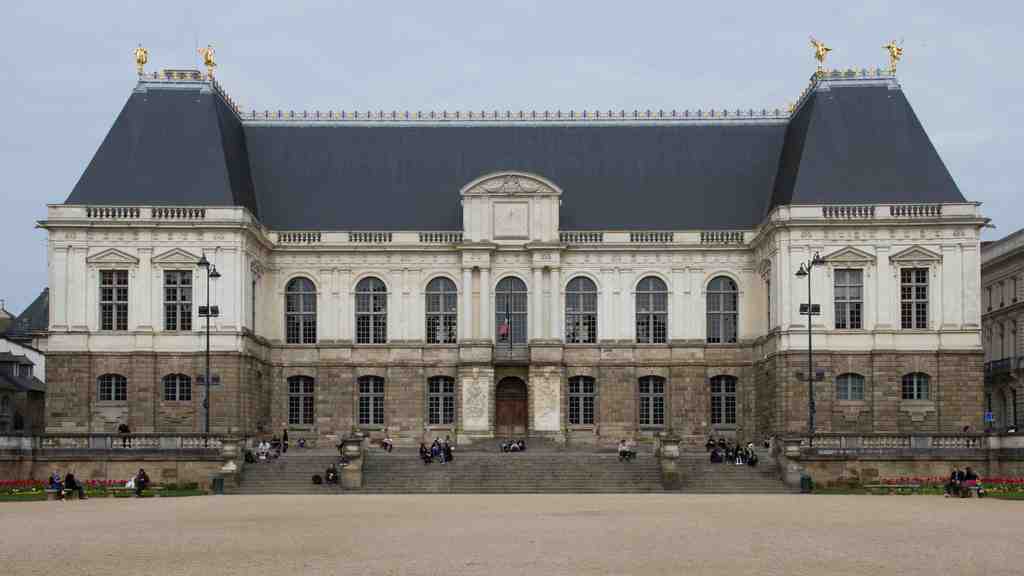
If you look ahead, you’ll see a large, commanding rectangular building with a grand stone staircase at its center, tall arched windows, intricate carvings, and four shiny golden statues glimmering above the slate roof-right there on Place du Parlement-de-Bretagne!
Now, take a moment to imagine: The year is 1655, and in front of you stands one of Brittany’s proudest symbols-the Palace of the Parliament of Brittany. This magnificent building was born from a bit of a tug-of-war; the powerful Parliament wanted its home inside the city walls, while town leaders dreamed of somewhere outside. After years of heated debate (and possibly some dramatic huffs and puffs), the builders settled here, in what was once a cemetery and an awkwardly shaped patch of ground. It might not have been Paris, but hey, everyone loves an underdog story, right?
By the time the foundation stone was laid in 1618--the city was itching for change. Picture a bustling construction site, clanging tools and clouds of dust rising as plans shifted, money ran out, and even a plague slowed things down. It took over 40 years before the judges, dressed in their finest, could finally march through the doors. But once complete, the palace transformed the city’s north end, sparking a rush of fancy townhouses and the French court’s artsy style trickling into Rennes.
As you stand here, admire how the palace stands apart-set back so you can walk all the way around it (if you need your steps for the day, you’re in luck). Its bold facade-a mix of rugged granite on the bottom and elegant pale stone topped with towering windows-speaks of dignity and drama. If you look up, you'll spot intricate reliefs and a balustrade lined with symbols. Those statues on the roof? They aren’t just there for show-they represent the Law, Force, Eloquence, and Justice, which frankly sounds like the start of a superhero team.
But let’s not forget the action this palace has seen. In 1720, a catastrophic fire razed much of Rennes, but the Parliament was spared, thanks to some well-placed firebreaks. It became so important that a grand statue of Louis XIV starred in the square out front-until the Revolution, when the locals decided they’d had enough kingly poses.
Fast forward to the 1990s, when an entirely different sort of drama played out. It was 1994, and a protest by fishermen took a fiery turn. A stray flare set the wooden roof ablaze and the flames raged through the night--consuming centuries of history and thousands of precious documents. Firefighters rushed from miles around, and by dawn, the city mourned, but most of the palace’s treasured artwork and tapestries were heroically saved.
Rennes wasn’t about to let its icon vanish for good. The palace was painstakingly rebuilt, stone by stone, using old plans and photos to restore every historical detail and spending enough money to make even a king blush. Today, the grand interiors-once full of anxious lawyers and important objections-boast breathtaking ceilings, golden moldings, and a hall where Justice herself peers down from above.
Fun fact: the Parliament’s peaked roof used to be called “the forest” because of its massive beams-today, you’d find a metal skeleton instead, making fire less likely to crash this party twice. And even though most of the criminal courts have moved on to shiny, modern homes elsewhere, the palace remains a working courthouse and a radiant tourist draw, often lit up for special events and known as one of Rennes’ “must see” sights.
So, if you fancy wandering inside, seeing the famous Grand’Chambre where every inch screams “important things happened here,” book a visit at the tourist office. Oh-and next time your city council can’t agree on anything, just remember: it could take forty years and a few costume changes to get it just right!




