
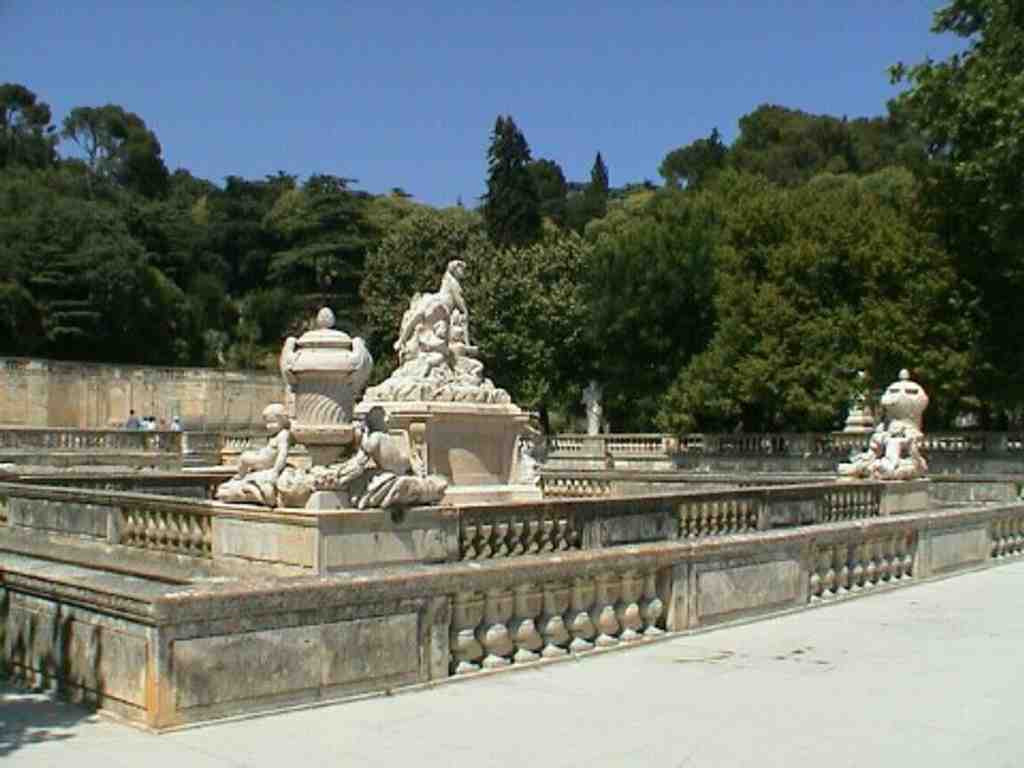
Right ahead of you, you’ll spot an elegant stone terrace decorated with big marble vases, detailed balustrades, and intricate statues-just look for the sweeping staircases framed by green trees and you can’t miss the Fountain Gardens!
Welcome to the legendary Fountain Gardens, a place where history, water, and a little bit of Roman flair all come together. Now, pause for a moment and take a deep breath. Imagine it's over two thousand years ago, and the only sound is water bubbling from a mysterious spring-a spring so enchanting that ancient tribes worshipped it, even before the Romans arrived. This magical source was, quite literally, the reason for Nîmes’ birth; people settled here just to be near its life-giving waters way back in the Iron Age.
As centuries rolled by, the Romans swaggered in and said, “Let’s make this epic!” They built a marvelous sanctuary called an Augusteum, right where you’re standing, celebrating both the emperor and the eternal flow of this spring. These lush gardens still follow the grand design of Roman times-notice how the curved staircases wrap gracefully down to the fountain, and the remains of ancient monuments, like the Temple of Diana and the mighty Magne Tower, peek out amidst the greenery. If you squint hard enough, you might feel like a toga-wearing senator is about to stroll past you asking for directions to the forum!
Fast forward to the bustling days of the Middle Ages and beyond, and the story gets even juicier. At one point, the city’s vital water canal was so important, it ended up being used for mills. That led to squabbles between thirsty townsfolk and millers, until finally, those pesky mills were torn down in 1742. Not long after, you’d see washerwomen scrubbing away at bedsheets right in the fountain’s basin. The city’s leaders panicked at the health risks. Yep, nothing like a dirty sock emergency to spark urban reform! So, they built a fancy outdoor laundry station nearby-a little less poetic than bathing in history, but definitely more sanitary.
But the most ambitious makeover was masterminded between 1745 and 1755 by Jacques Philippe Mareschal, an engineer who believed even ancient ruins deserved a touch of French garden elegance. He blended stately staircases, sparkling canals, and white marble statues-many of which, believe it or not, used to decorate a castle in Montpellier! Imagine rolling those heavy vases and statues into Nîmes: "Hey Fred, careful with that 300-year-old marble, all right?"
As you wander along the shaded walkways, look up at the grand pine, chestnut, and cedar trees waving overhead. The air is thick with stories-Romans arguing over aqueduct plans, city consuls puzzling over droughts, even daring explorers crawling through underground water tunnels like medieval Indiana Jones.
During scorching summers or rainy seasons, the garden stayed open to all, with the majestic wrought-iron gates letting in locals, travelers, and the odd visiting noble or duke. And every year, the city marvels at the blend of ancient engineering and French artistry that keeps the gardens blossoming.
So, next time you spot someone staring dreamily at the rippling water or climbing up those majestic half-moon staircases, remember-they’re walking over layers of forgotten temples, hidden tunnels, ancient laundromats, and centuries of human wonder. If these trees and stones could talk, just imagine the secrets they’d spill!


