
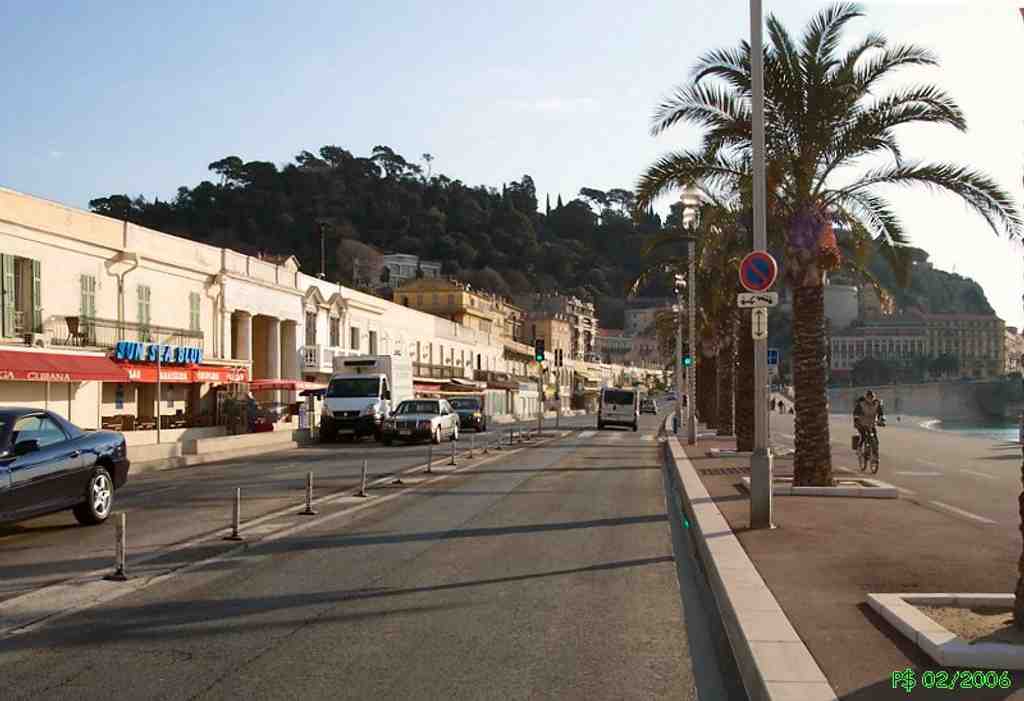
As you walk along the coastline, look to your left for a long line of creamy-white buildings stretching beside the wide boulevard, with tall palm trees standing proudly by the road like windblown sentinels. To your right, waves dance along the pebbled shore-this is the United States Quay. You’ll know you’re here when you see a line of cafés with red awnings and cars gliding past under the soft Mediterranean sun. Sometimes you can even spot cyclists whizzing by, and if you follow the line of palm trees, the sea glimmers just beyond.
Now, imagine standing here a couple of centuries ago. There are no holidaymakers, no cars, no laughter from sun-hatted tourists. Instead, this place was once a defensive wall, keeping invaders out. But after Louis XIV had the ramparts torn down in 1706, the city began to dream bigger dreams-a place not for battles, but for seaside strolls and laughter.
Just picture it: the year is 1832. The salty breeze carries the scent of the sea as the first terrace here is built, a grand place for people in elegant coats and silk dresses to take in the view. The gentle clink of pebbles beneath antique boots, oversize umbrellas to shade faces, the excited chatter in French and Italian. Pretty soon, benches are added. Now, the aristocrats escaping harsh winters up north have somewhere to rest and gossip, watching the sun paint everything gold.
By 1917, the war rumbles far away, and the city wants to thank its new allies. That’s when this sweeping seaside road gets its heroic name-the United States Quay, in honor of the US joining the fight. Since then, the quay’s story keeps evolving. Now you might spot fantastic sculptures along the path, like the famous giant blue chair-a playful wink to the simple joys of seaside living.
So as you stand here, you’re not just looking at a road. You’re stepping into a living tapestry of sunshine and shadow, battles and celebrations, and the slow march of people longing to pause and gaze at the endless blue. Keep your eyes open-who knows what new work of art, or even which whisper of the past, you might discover today?




