
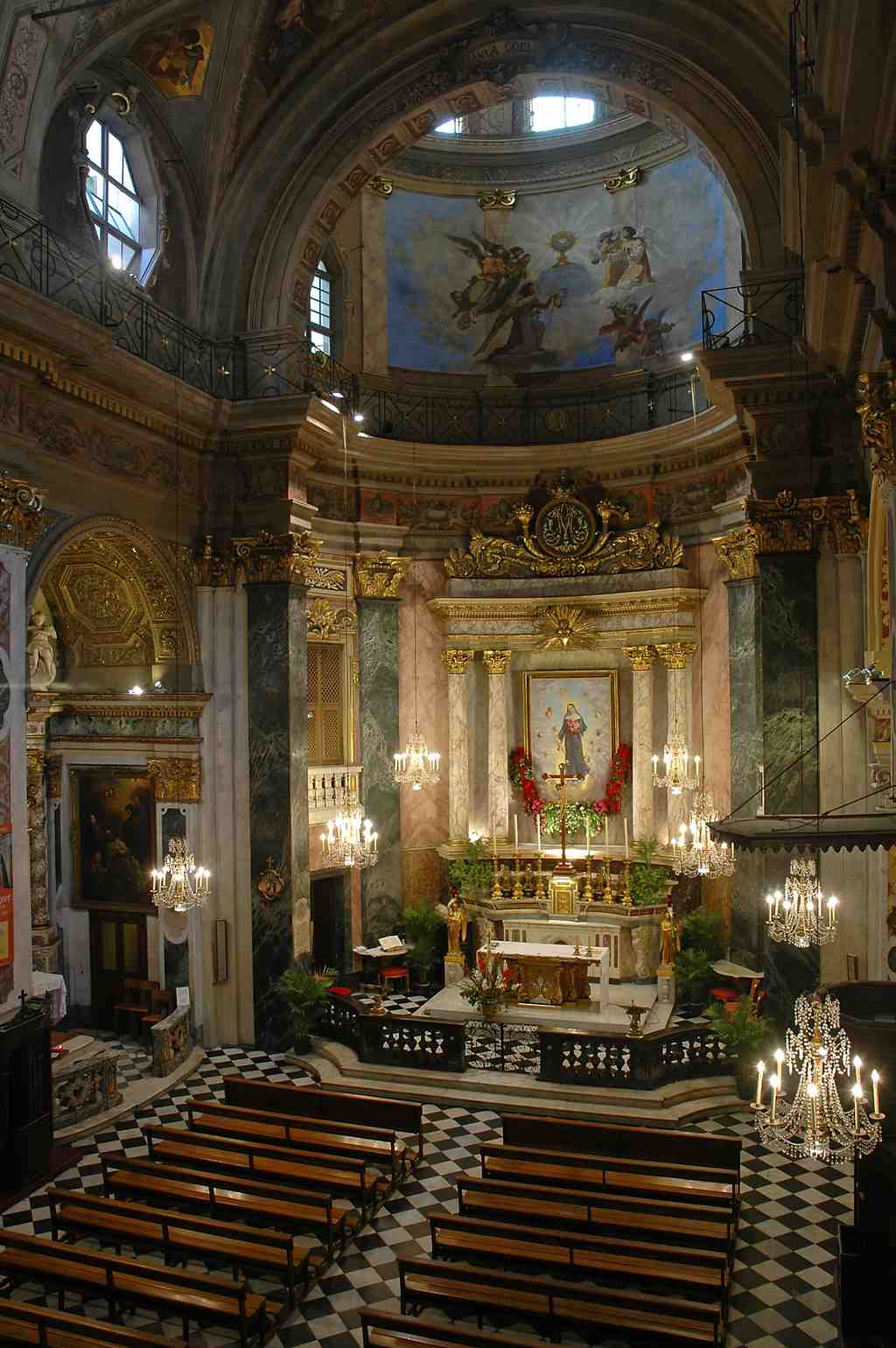
As you approach, look to your left for a building that rises up with a baroque façade, its creamy walls trimmed with gold and intricate stonework. The entrance is marked by a grand doorway and subtle columns, and if you glance upward, you’ll spot its delicate bell tower peeking above the rooftops of the old town’s narrow streets. This is the Church of the Annunciation, though here in Nice, most locals call it Sainte-Rita.
Imagine stepping inside as the heavy wooden doors creak open. Instantly, the world outside fades. The cool air is mixed with the scent of old wood, melted candle wax, and polished marble. This church might seem like a hidden gem, but it has watched over Nice for centuries-built around the year 900, making it one of the city's oldest sanctuaries.
For nearly a thousand years, it was dedicated to Saint James the Greater and served as the second most important parish in Nice. Back in the days when merchant ships crowded the harbor, sailors came here to pray before their dangerous Mediterranean journeys. Listen-if you let your mind wander-you might almost catch the faint echo of sailors’ boots on stone, their whispered prayers before the altar of Saint Erasmus, the patron of navigators.
History packed drama into every corner. In 1543, the old Carmelite monastery was destroyed in a siege. Homeless, these monks found sanctuary here at Saint-Jacques, starting a new chapter for the church. Over time, fires and wars battered these walls. In 1834, a terrible blaze destroyed the beautiful painting in the apse. But from ashes came rebirth: a Russian tsar’s aide gifted a new painting-The Annunciation-giving the church its current name.
Through all this, the walls changed, the doors were replaced with precious walnut, and restorations smoothed over the scars. Still, the feeling remains: this is a place where hope always rises from hardship. And if you happen to visit in the quieter hours, you might even catch a gentle, otherworldly hush-the sound of nearly 1,100 years of prayers, secrets, and stories settling into the very stones around you.




