
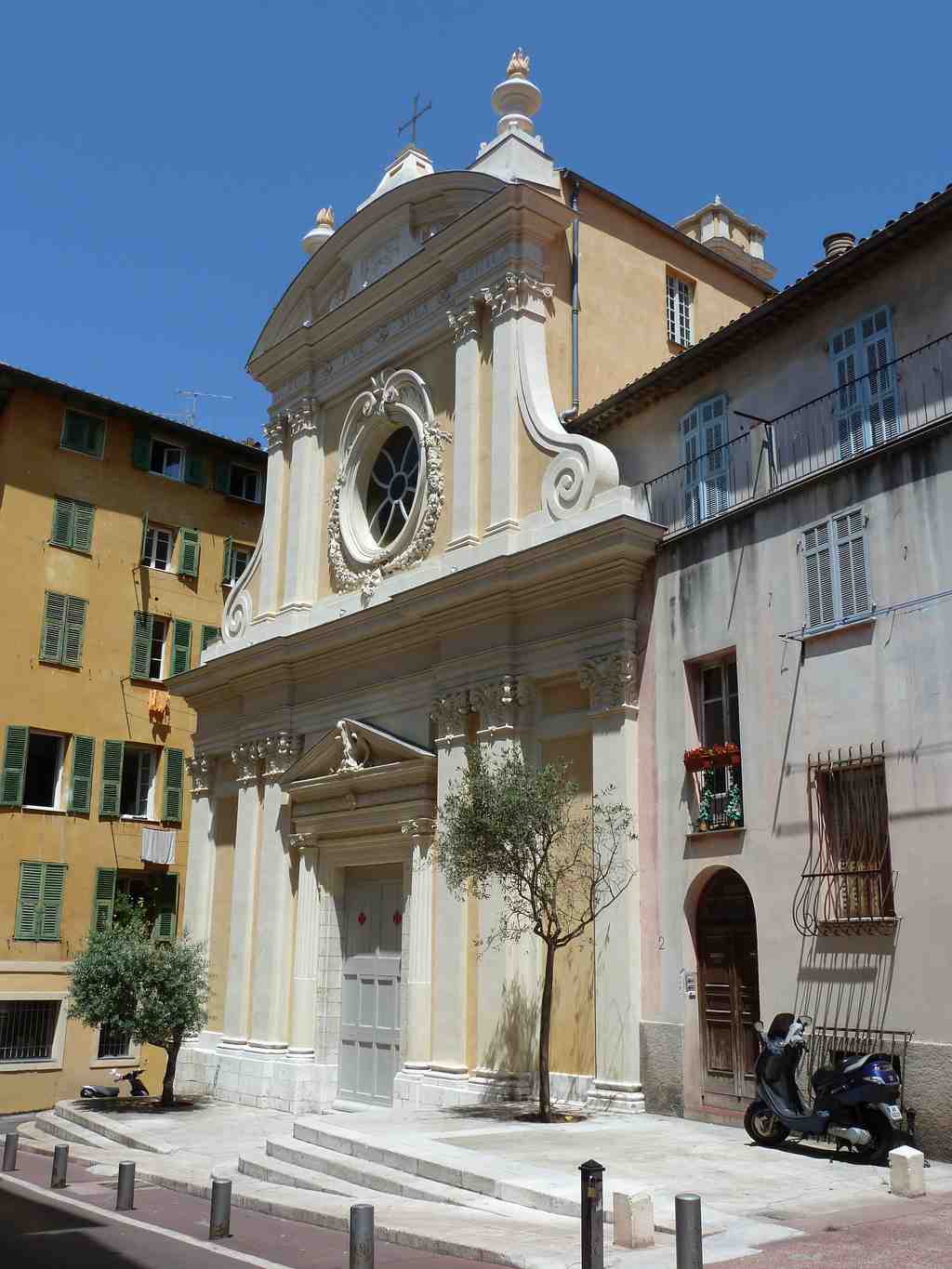
Look just ahead on Rue Saint-Joseph and you’ll spot a striking, pale cream-toned chapel with delicate blue and white trim standing proud among the pastel buildings. Notice the intricate baroque facade, gracefully sculpted with swirling details, and a small bell tower peeking up into the sky-this is the Chapelle Sainte-Croix, the Chapel of the White Penitents.
You’re standing outside a building that has kept its secrets and stories for nearly four centuries. Imagine the year is 1633: the streets are packed dirt, and the sound of monks’ sandals echoes through the Old Town as the Minimes, a small order of friars, begin to build this very chapel.
Now, gaze up at the front. See the pelican sculpted above the doorway, feeding its chicks? That’s an old symbol of charity-a message to all who pass by. Carved into the facade are two mottos: “In hoc signo vinces”-by this sign, you will conquer-and “O crux ave, spes unica”-Hail, O Cross, our only hope. These words have comforted countless souls who came here in hope or fear, seeking forgiveness and peace.
Step closer and listen: centuries ago, this was the home of the White Penitents, men devoted to helping the sick, the dying, and the poor. On Tuesday afternoons, the doors still creak open-just as they have since 1767-inviting the curious and the faithful into their simple, airy nave. Inside, the light is soft and blue-grey, bouncing gently across flower-patterned walls. The ceilings are high; every sound hangs in the air a second longer than you expect.
Within, there’s almost no extravagance, just clear devotion-the vast hall was designed for crowds, because this was once the largest brotherhood in Nice. During solemn ceremonies, the Penitents filled the benches, heads bowed, listening to prayers drifting up to the painted vault. Here, the theme of the Cross is everywhere: painted, carved, woven into every detail. It’s easy to imagine a cold winter morning, the faithful gathered in silence, flickering candlelight reflecting on faces marked by care and hope.
There are small treasures, too-a 17th-century Pietà, sorrowful and serene; a restored painting of Saint Michael crushing the dragon; a wooden kneeler, worn by generations. The sanctuary’s wooden stalls once cradled the Penitents as they sang hymns late into the night, sometimes with voices trembling from both humility and the chill.
If you were here on the afternoon of May 1, 1767-the day of its consecration-you would have smelled incense, heard the choir rise, and seen sunlight streaming through as the new altar was blessed. Or imagine the secrets whispered between Penitents in the shadows, pledging to care for the forgotten and the afraid.
Even today, if you linger near the door on a quiet Tuesday, you might catch the smell of wax polish or hear the creak of pews and feel time slip just a little. Every inch of this chapel still speaks of centuries of kindness, service, and human hope wrapped around one unchanging symbol: the holy cross.
Shall we continue to the next stop?




