
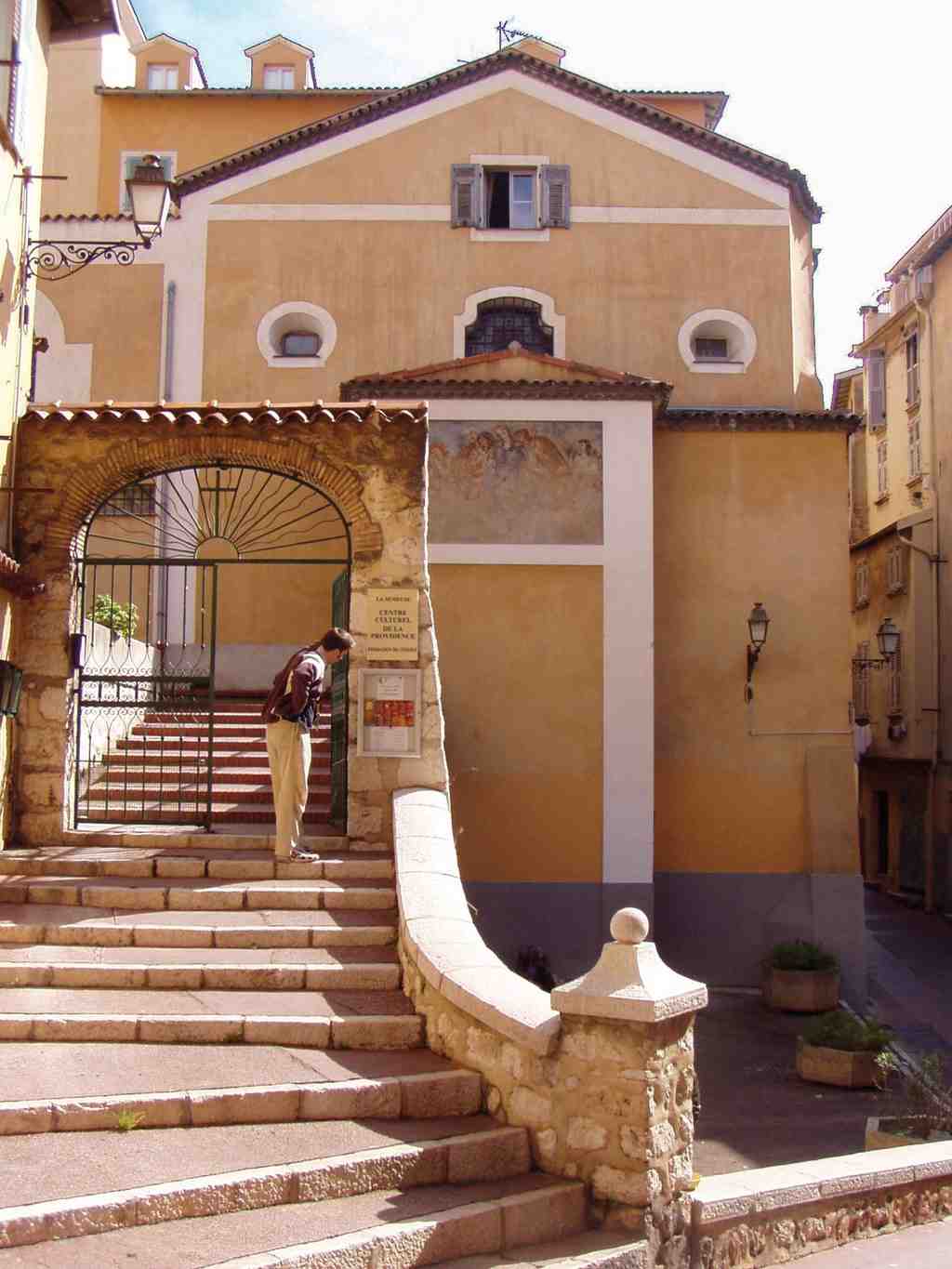
Right in front of you, you’ll see a charming, light-orange building with a simple triangular roof and rustic, wooden shutters. Notice the stone staircase curling its way up to a pretty iron gate-and if you look above the entrance, there’s a faded mural pressed into the wall, almost like an old secret waiting to be discovered. This is the Chapelle de la Visitation, or as locals sometimes call it, Chapelle de la Providence. Surrounded by the old, narrow streets of Vieux-Nice, you’ll spot it set above a peaceful little square, quite like a stage waiting for a story to begin.
Over four hundred years ago, this whole spot was filled with the gentle footsteps and whispered prayers of Cistercian nuns, who built both a convent and chapel here. Imagine the quiet-except maybe the distant clang of a church bell-until everything changed. In the mid-1500s, the buildings were so rundown that the Cistercian sisters had to leave, and a new group moved in: the Clarisses. But the place was still crumbling, so they built another chapel nearby and moved on.
For decades, this spot stood full of echoes-doors creaked, dust danced in the empty halls. Then, in the late 1600s, the Visitandines arrived, guided by the Bishop of Geneva. The Visitandines built everything almost anew, between 1680 and 1685, giving the site the name Saint-François de Sales. They must have sighed with relief, finally stepping into a home of their own. For the next hundred years, the Visitandines prayed, taught, and watched the city outside change-until the Revolution forced them out, like so many before.
Here’s where the story gets emotional: By the early 1800s, the chapel was almost in ruins, but one man-Eugène Spitalieri de Cessole-turned its story around. He used these walls to help Niçe’s poorest girls, offering soup, shelter, and hope. He gathered abandoned girls, taught them, and gave them a future, even renting them as mourners for funerals, their black veils flickering through the streets like shadows of the past. Imagine their laughter echoing up these very stairs as the city bustled below.
Don’t miss that this building is shaped like an L, with two crossing naves-one for the nuns, hidden behind thick grilles, and another for the townsfolk. Even today, if you listen carefully, you might almost hear the soft trill of an organ, built long ago and passed through many hands, each note a whisper from the past.
Today the Chapelle is a hub for arts and culture, known as the Centre culturel de la Providence. But as you stand here, imagine the lives-quiet, secret, sometimes desperate-that unfolded in these warm ochre walls. The past is still heavy in the air, like a perfume caught in sunshine.




