
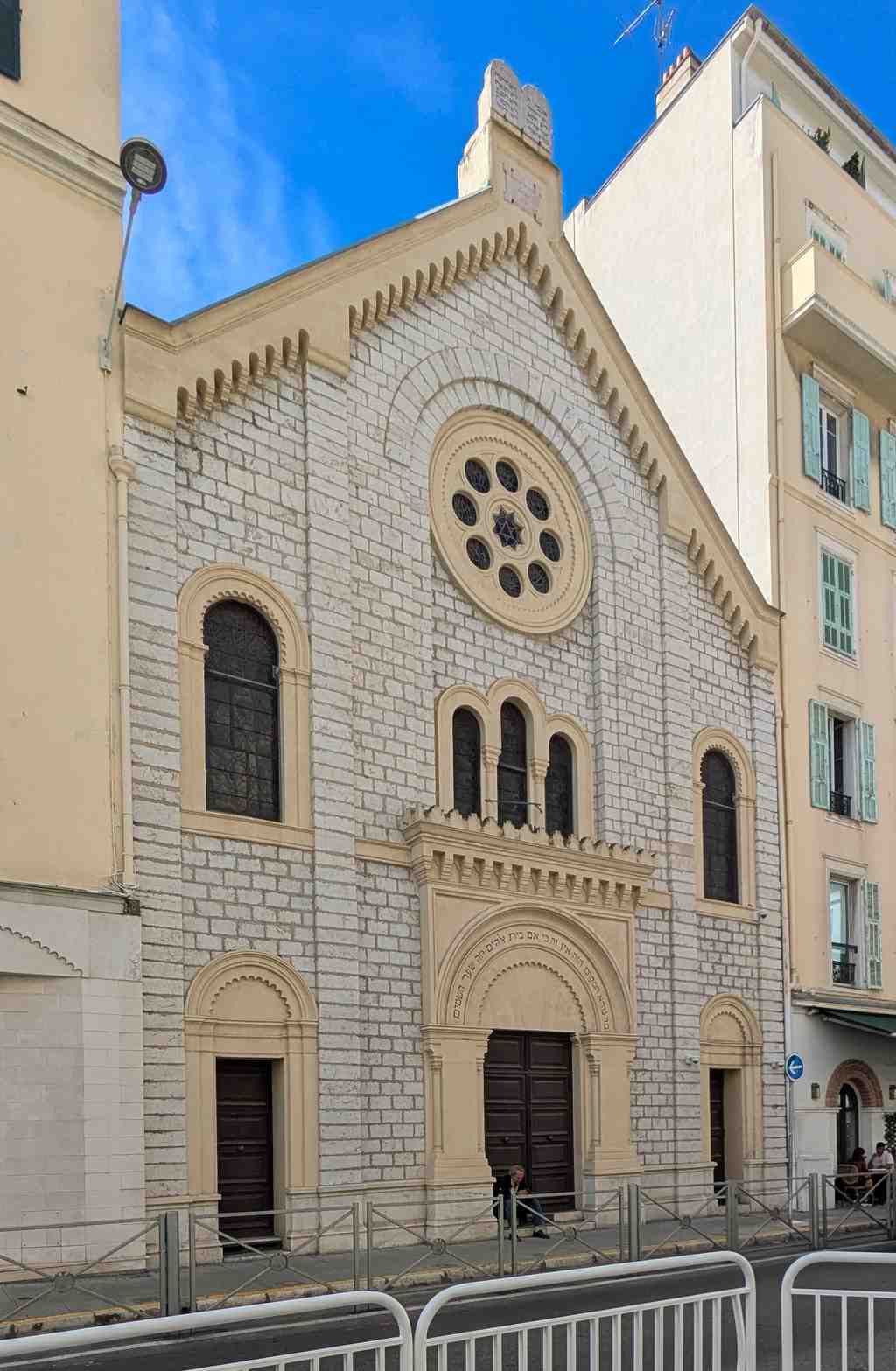
As you come down rue Gustave Deloye, keep your eyes to the left-there it is, the Nice Synagogue, standing quiet and steadfast among the quieter city buildings. You might notice its elegant, sand-colored exterior stretching up with arched windows facing the street, its solid doors set between sturdy columns, and a modest elegance that commands respect without shouting for attention. Look for the tall, rounded windows, and the Hebrew inscription above the entrance-these are your clues that you’ve found this landmark. The street in front is busy with the sounds of everyday Nice, but for over a hundred years this place has seen stories quite unlike any other on this route.
Take a moment to imagine walking into Nice in the late 1800s: the city is growing, shedding some of its old superstitions, and, finally, a proper synagogue is being built for the Orthodox Jewish community-a place they could openly call their own. Paul Martin designed it, and in 1886 its doors opened wide, a powerful symbol for a people whose story in this city began in the shadows.
If you stood here centuries ago, you might have seen small groups wearing special marks on their clothing, hurrying along, careful not to draw attention. Jews first appeared in Nice in the 14th century, arriving quietly, often not by choice. They’d weathered rules that forced them into certain neighborhoods, pushed them into specific trades, and made them wear badges like characters in a strange, ongoing costume drama. At times, they might have lived just up the street, but by decree had to gather on the third floor of a building owned by a Catholic brotherhood-their synagogue a secret sanctuary in someone else’s house, their ritual bath hidden in the basement below. Imagine the nervous excitement of those quiet walks to prayer, never quite sure who would knock at the door.
The rules changed again and again, swinging between strict and more relaxed as Nice traded hands-Savoy, Sardinia, France. But even during the worst times, the community endured. Then, in the 19th century, the legal chains fell away, and by the time this Great Synagogue opened, everyone in Nice could worship as they wished.
But the building’s calm was shattered during the Second World War. For a brief moment, Nice felt like a refuge, the city drawing Jews fleeing persecution from all over France and even further away. But then, in 1943, the fear grew sharp and sudden: over five terrible months, around 5,000 Jews from Nice were arrested and deported-an entire world snatched away.
Yet, incredibly, the synagogue did not fall silent. After the war, families arrived from North Africa and elsewhere, their laughter and sorrow mixing in the halls. Today, the Jewish community is smaller, but every day this building stands as a quiet witness: to kindness and cruelty, hardships and hope, sorrow and celebration. Look up at those rounded windows-how many stories have they kept inside, while the city outside rushed by unaware?
Take a moment to stand here, feeling the life of the street and the quiet weight of history pressing through the walls. When you’re ready, we’ll continue our journey through Nice, carrying a little of this story with us as we go.




