
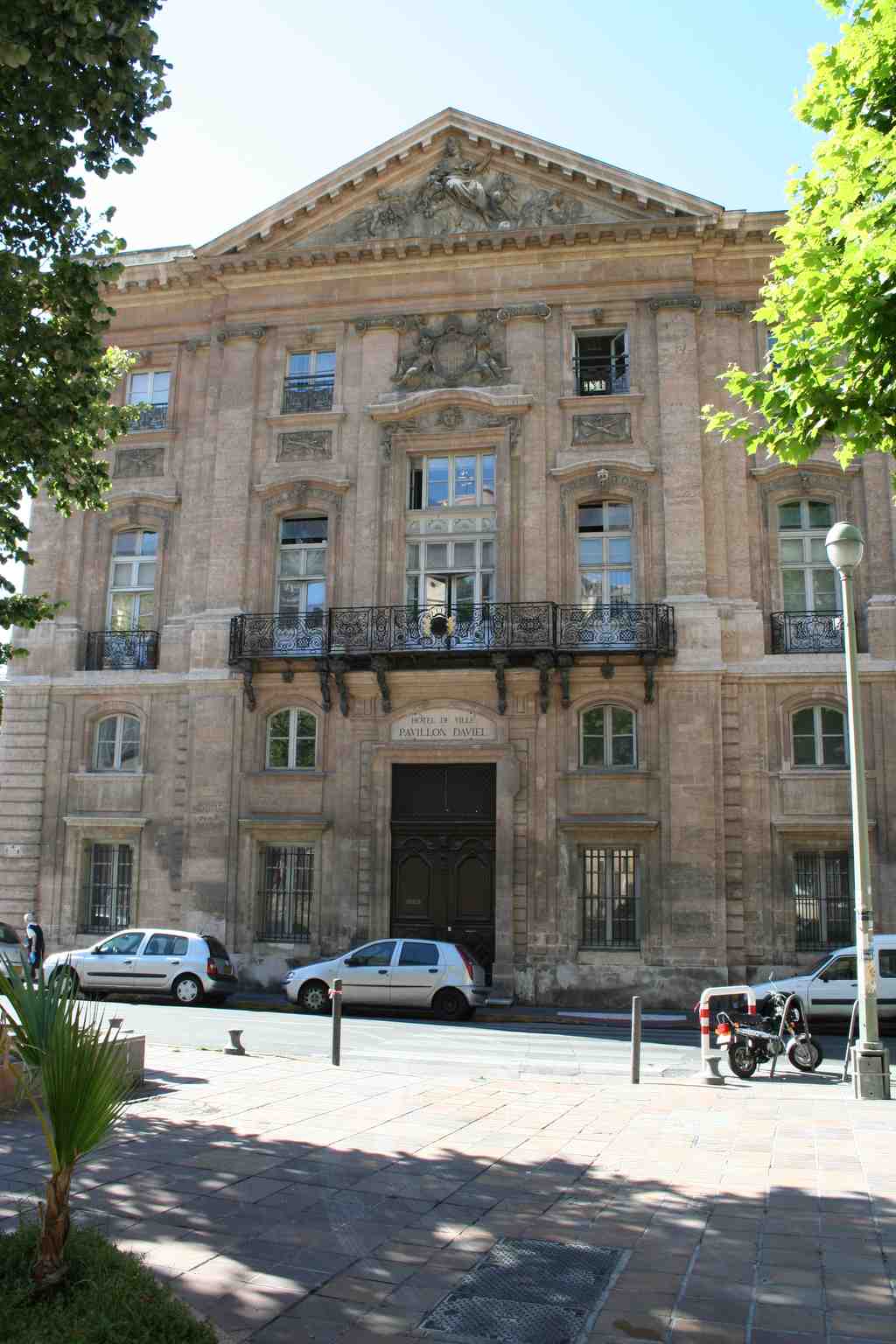
To spot the Hotel Daviel, look straight ahead for a grand, elegant stone building with tall windows, intricate iron balconies, and a triangular sculpted pediment above its main entrance-right opposite you on Place Daviel.
Alright, time to set the scene. Imagine you’re standing here in the 1740s, just as the sweet scent of newly cut stone fills the air and the sound of hammers echoes from this bustling construction site. The Hotel Daviel wasn’t always here, but this spot has long belonged to justice and drama! First, there was an old courthouse built back in 1576-so ancient, a Dutch traveler once said it was the most impressive building in all Marseille. But, as buildings do, it began to groan under the weight of too many legal discussions and not enough space. The city leaders dreamed of a grand new palace of justice, and after a bit of royal arm-twisting, they got their wish. But there’s a twist: they had to buy extra land-by raising taxes on every sack of grain! Talk about making you pay for your daily bread.
The new palace, begun in 1743, was the work of the Gérard brothers, master builders, and it opened its doors in style. Justice had a new home, and Marseillais flocked here to see justice served-or avoided with a clever story and a wink. If you gaze up at the building now, you’ll see its noble façade: divides of stone pilasters topped with Ionic capitals, and right at the center, a gorgeous, ornate balcony fenced with ironwork decorated with daisy patterns. Above, the triangular pediment boasts a bold goddess riding a lion, surrounded by children-one showing the Marseille shield, the other holding the tablets of law. Just beneath the second-floor windows, carved panels hint at the building’s past: the hand of justice and the torch of Themis, the goddess of fairness. It’s a stone tale of law and order!
But those stones have heard everything: echoes of judges' gravelly voices, the tense whisper of important verdicts. In the 1790s, as the French Revolution swept Marseille, these walls bore witness to some dark days and death sentences. Imagine crowds buzzing nervously outside, waiting for news. For more than a century, this was the city’s main courthouse-until justice packed its bags and moved to a newer building in 1862.
Yet the Hotel Daviel’s life didn’t end there; it found a second wind. From old justice to young students, it hosted Marseille’s medical school, bustling with the curious and the future healers of the city. Through all this, it survived wars and even escaped destruction during World War II, when other buildings nearby were not so lucky.
And now, look around-today, the Hotel Daviel is tightly woven into city life, even connected to the nearby Hôtel de Ville by a secret underground passage. Not bad for a building that started life financed by grain. If these carved angels and fierce lions could talk, oh, the stories-and the scandals-they’d share with you!
If you're curious about the historical, the different assignments or the description of the buildings, the chat section below is the perfect place to seek clarification.




