
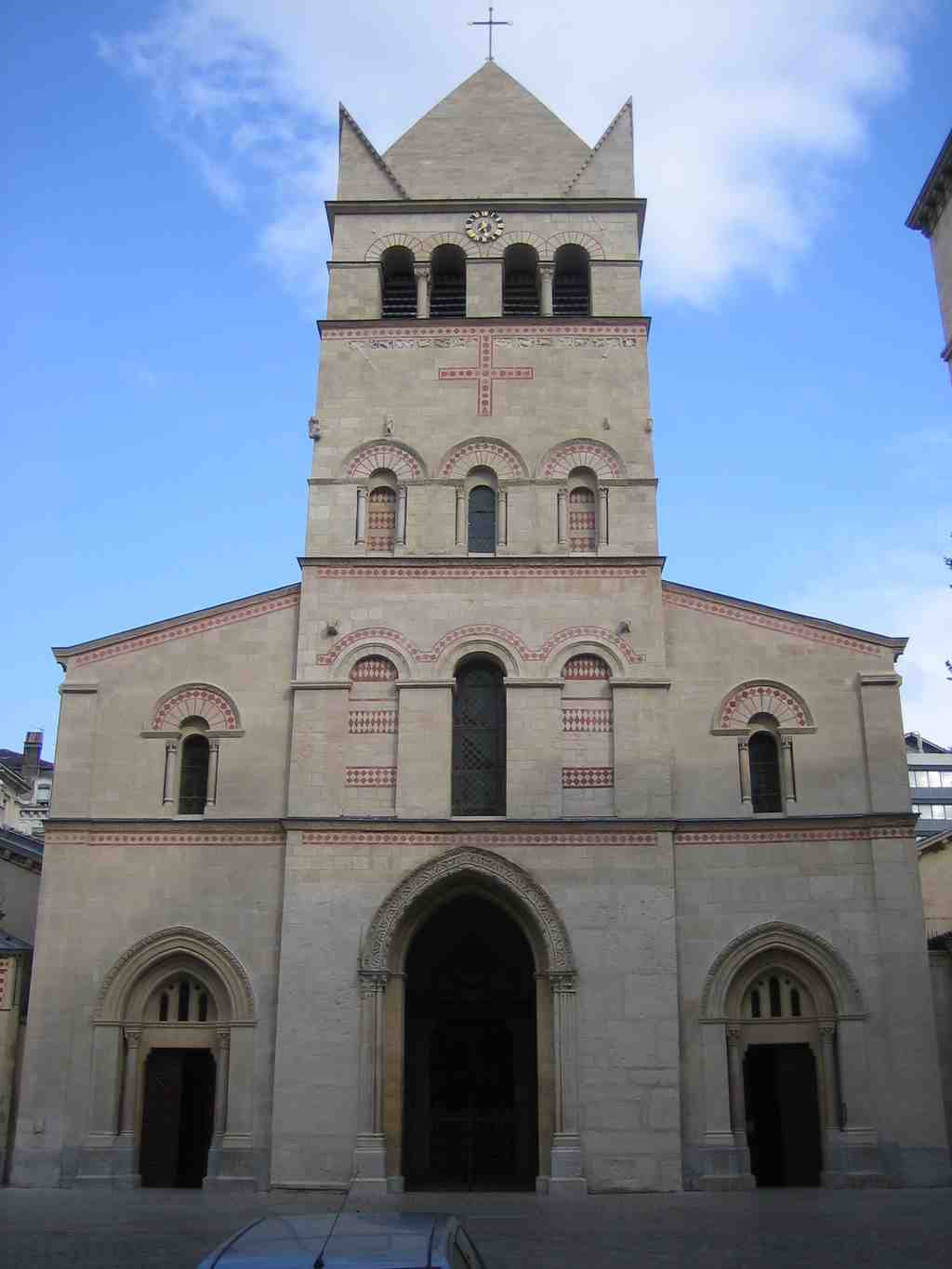
Look ahead-straight in front of you stands the striking Basilique Saint-Martin d’Ainay. Its thick stone walls are a pale beige sprinkled with delicate red brick detailing, almost like it’s wearing a medieval necklace. Three tall, arched doorways line the base, the central one crowned by a deep archway, inviting you in. Above, you can’t miss its square tower rising strong and sturdy-the tower looks almost like a watchful guardian, topped with a simple cross that reaches for the Lyon sky. For a real medieval moment, spot those arched windows with red zigzagged patterns. If you see a flat square in front of you and a car or two parked nearby, you’re in the right place.
Now, close your eyes-just for a second-and listen for faint echoes of monks shuffling through ancient stone halls. This basilica is almost a thousand years old, and if these stones could talk, oh, the stories they would tell. Picture the time around the year 1100: the air thick with incense, and heavy footsteps of abbots and kings echoing off the Romanesque arches.
But let’s rewind even further. Legend says this spot might have been chosen after finding the ashes of Lyon’s long-lost martyrs. One story claimed Saint Pothin rested his weary head on a stone right here-but that’s a bit murky, and historians like a good mystery. If history were a detective novel, this basilica would be one of its best red herrings.
Let’s jump to the Middle Ages. This place wasn’t just any old church-it ruled over dozens of other churches from Burgundy to Provence. Imagine being the boss of 71 churches. Talk about a busy inbox! In the Renaissance, the monks here even had their own port, vineyards, and gardens. The abbot got a palace, and the monks? Well, they got grapes. Fair trade, right?
Of course, life wasn’t always peaceful. In the 1500s, the Wars of Religion swept through Lyon, and much of the abbey was destroyed. Archives? Up in smoke. Cloister? Flattened. But the heart of the church stood strong, like a grandparent who’s seen it all and still tells the best stories.
By the time Henry IV came through-suite case in hand, getting ready to marry Marie de Médicis-the grandeur was fading, but the legend lived on. Even today, as you stand here, you’re outside one of Lyon’s rare surviving Romanesque churches.
So, take a moment to breathe in this history. Imagine chants drifting out those windows, the sound of distant bells, and maybe, just maybe, a cheeky monk sneaking a grape from the garden out back. Ready for a bit more Romanesque magic? When you’re set, I’ll guide you onwards.
For further insights on the history, architecture or the grand organ, feel free to navigate to the chat section below and inquire.




