
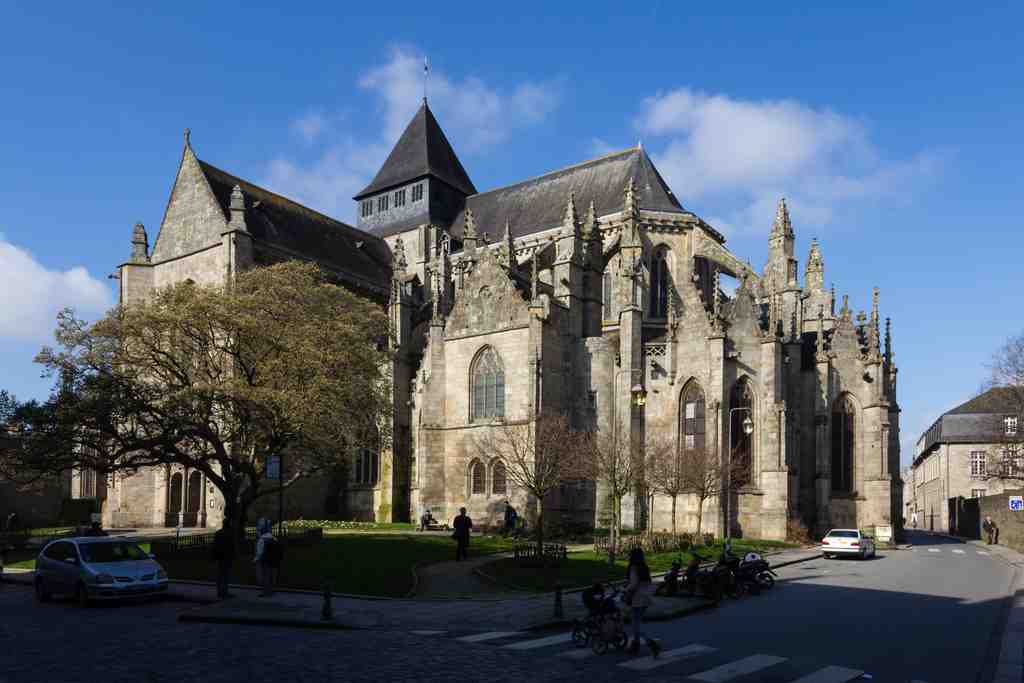
Look for a grand stone church with dramatic pointed arches and tall, slender stained glass windows clustered together - you’ll spot the St. Malo Church easily at the corner where the sunlight plays off its intricate spires.
Now, as you stand outside this mighty church, imagine the world in the mid-1800s, the air humming with the echo of hammers and the clatter of horse-drawn carts, while all around you the aroma of baking bread drifts from village ovens. The Saint-Malo church had just finished its nave in 1865, and something magical was happening with its windows. Workers started installing the first stained glass panes, works of art designed not just to let in light, but to tell stories, spark hope, and stir awe.
Back then, after fading away like an unwanted fashion trend, stained glass was having a comeback! You see, after dazzling everyone in the 12th and 13th centuries, the stained glass industry hit a rough patch. By the time of the Renaissance, most people wanted their churches to be bright and "modern"-so out came the colorful glass, and in went clear panes with simple patterns. And during the Revolution, anything with hints of feudal lords or kings was declared an enemy, so even more glass disappeared-talk about a fragile situation!
But the 1800s were like a grand encore. France was booming: cities swelling, new churches going up, old ones growing new wings. People were leaning back into religion, and the neo-Gothic style was the latest craze-think pointy arches, spires that looked like icing on a cake, and glass that glowed like jewels. At Saint-Malo, both the so-called ‘neo-Gothic’ windows from the 1800s and ‘stained-glass paintings’ from the 1900s decorate the space, reflecting how attitudes shifted through time. Some windows even bring these two ideas together, with historical scenes framed in flamboyant Gothic architecture-a mash-up worthy of a medieval rock band.
But here's the fun part: for decades, people didn’t really appreciate these stained glass works. In 1922, the French architect in charge of civil buildings looked at the neo-Gothic glass and shrugged-“not interesting at all!” he said. In 1950, another expert scoffed: "Just old figures, not worth a look." Even in 1974, as the windows started showing their age, yet another official called them “big, boring scenes from fifty years ago.” Ouch-glass can be sharp, but those reviews were even sharper! The twist came in the 1990s, when someone finally took a closer look and realized: actually, these are fantastic examples of the art of the time.
What you see today is like a timeline in glass. Some windows shine with saints and biblical episodes, all wrapped in Gothic patterns, painted in rich colors. Others are dedicated to big moments for the city of Dinan or commemorate local heroes-one even honors the “children of Dinan who died for France.” There are windows filled with medieval landscapes, and others that switched to wild vegetation, thanks to the Art Nouveau trend in the early 1900s. After World War I, another window appeared-a patriotic one, where figures like Joan of Arc look serious and geometric, as if they've just stepped out of an Art Deco poster.
Now, the making of these windows was a team effort. Glassmakers from Nantes, Chartres, Paris, and even Quintin all left their marks: look inside and you might spot a tiny signature, like a secret handshake between artists and the future. As for the selection and funding, that used to be a tug-of-war between the church, city officials, and even the mayor-sometimes the priest picked the design, sometimes local donors, rarely did they all agree, but they always managed to get the windows in.
So next time you see sunlight piercing through those tall, colorful windows, imagine the centuries of debate, fashion changes, revolutions, and quiet persistence that got them there. And remember: even art that’s forgotten can one day shine brighter than ever!
Fascinated by the revival of stained glass in the nineteenth century, historical background or the glass painters? Let's chat about it


