
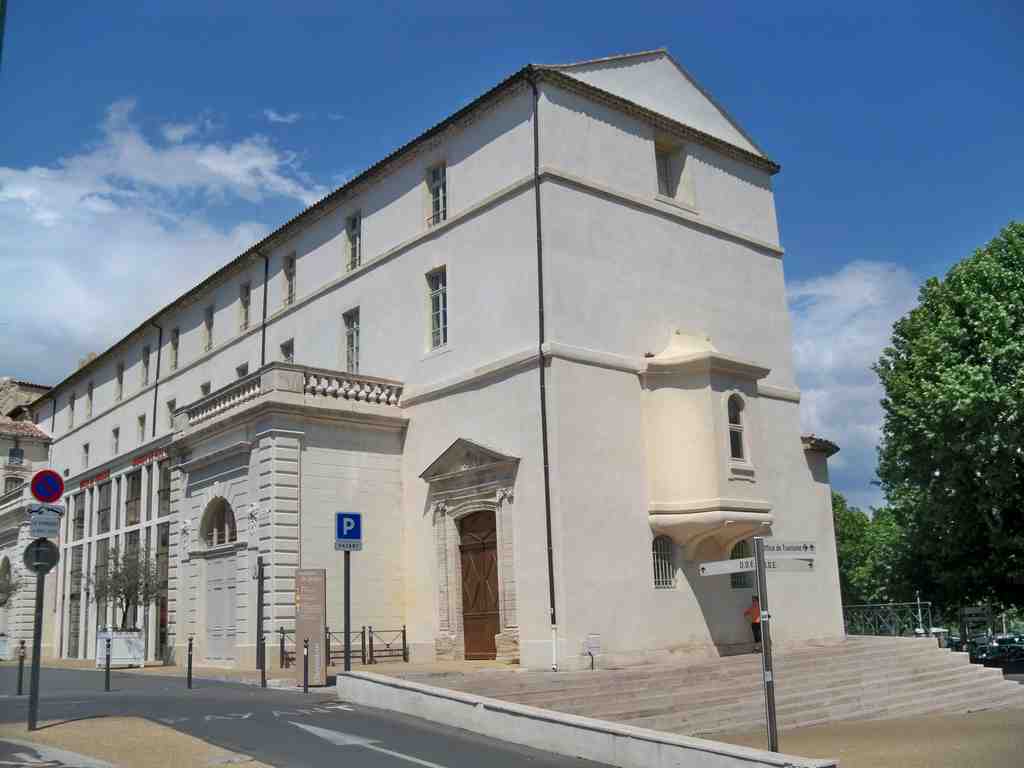
To spot the Convent of the Dominicans, look right ahead for a grand, pale cream-colored building with a tall façade, rows of simple windows, and a distinctive angular tower on the corner, standing proudly at the intersection just beside the trees.
Now, let me paint a vivid picture for you! Imagine it’s the year 1312. Instead of cars and parking signs, you’d hear the gentle footsteps of robed Dominican friars echoing on old stone as they moved from their convent to the nearby chapel, carrying the secrets of faith and perhaps the latest town gossip-though I suppose confessions kept most of that under wraps! This convent you’re standing in front of was once just outside Carpentras’ city walls, a place of prayer and silence, close to the Notre-Dame-du Grès gate.
Through the years, major families and friars wanted to stay close, even in the afterlife-so they were buried right here in the church, which was so popular it got rebuilt and consecrated by 1499. The beautiful cloister, which you might be surprised to learn now serves as a parking lot, was once redesigned by a real heavyweight: Henri de Sourdis, Archbishop of Bordeaux. But don’t worry-today’s residents parking their cars have no idea they’re driving over centuries of footsteps and whispers.
During the French Revolution, things took a dramatic-or maybe comedic-turn. The holy halls echoed instead with marching boots as the convent turned into a barracks for artillerymen and sharpshooters, who probably swapped prayers for parade drills. By the time peace returned, the convent lived many new lives: a church, barracks, a center for culture with theater and cinema lights flickering where candles once glowed. Today, it’s the city’s Tourism Office, buzzing with excited travelers, and even houses local heritage and flavors. Not bad for a 700-year-old building that’s survived burials, battles, and blockbusters, wouldn't you say?




