
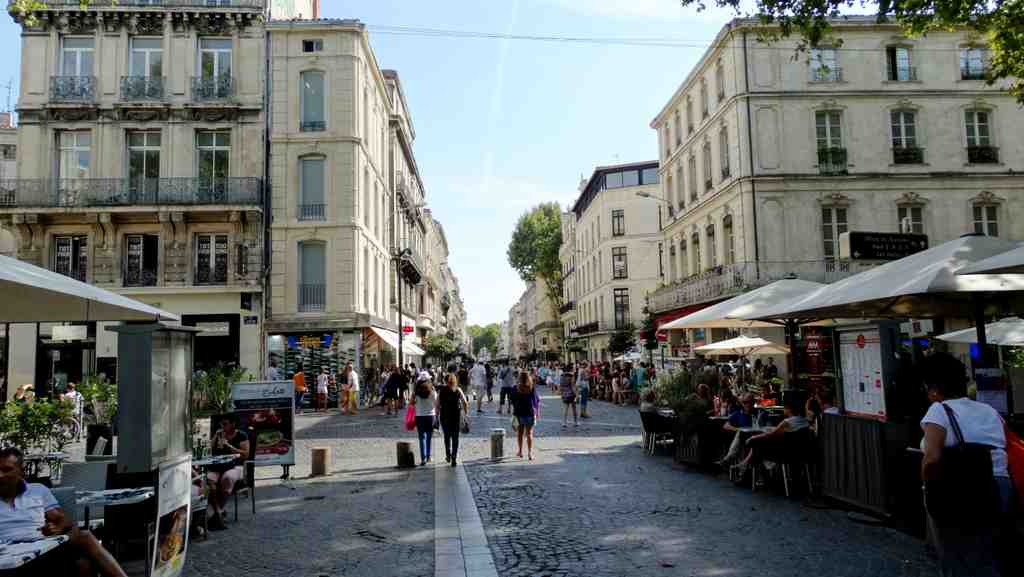
To spot the Rue de la République, just look straight ahead for a wide, lively boulevard lined with elegant pale stone buildings, bustling cafés, and lots of people strolling and shopping as far as the eye can see.
So, you’re standing at the heart of what locals like to call the backbone of Avignon-Rue de la République! Can you feel the buzz? Imagine the echo of footsteps on these cobblestones, the distant clang of a café spoon against a glass-this is where Avignon marches to the beat of city life.
Long before selfies and lattes, this street didn’t even exist. Back in the 1600s-way before anyone thought to slap a “tattoo & piercing” sign in an elegant window-an ambitious fellow called Pierre II Mignard had a dream: he wanted a straight road slashing from the Place de l’Horloge all the way over to the Saint-Michel gate. Of course, like many grand city dreams, it sat on a shelf for quite a while. Fast-forward to the 19th century, and finally, the need for easier access to the brand-new railway station gave Avignon a reason to build. Suddenly, the clatter of pickaxes and the rumble of carts filled the air as this wide boulevard was carved right through the old city. You could say it literally changed the town-some might joke it “cut the city in half,” though at least now locals didn’t have to squeeze through medieval alleys just to make a train!
But building Rue de la République didn’t come cheap. What started as a 700,000 franc undertaking ballooned to almost double! People lost houses, shops had to move, and some folks thought the city was ruined. If you listen closely, you might sense the grumblings of old-timers from 1860, muttering about dust, wind, and the loss of the city’s charm. André Hallays, in 1909, loved the convenience but hated how the mighty mistral wind now swept down this “huge, straight wound” whenever it wanted!
If you could peel back the layers under your feet, you’d find traces of even older streets. Rue Saint-Marc, for example, once teemed with travelers and intrigue-a place where hot bathhouses and taverns attracted everyone from weary pilgrims to, let’s say, some less-than-angelic night owls. And across from the Jesuit College, now the Lapidary Museum, stood the grand Hôtel de Calvière, where a famous marquis-friend to none other than Voltaire-hosted secretive meetings. Near here, in the 1600s, the Marquise de Ganges lived in the Hôtel de Castellane-Ampus until her high-profile murder made headlines all over France. Who knew these streets had such drama?
If you’re feeling a bit ghost-hungry, imagine the legions of English and Scottish nobles trailing behind their would-be king, James Stuart, who took up residence nearby in 1716. Or picture the printing presses of Chambeau, churning out pirated bestsellers so good that even the original author-Châteaubriand-decided to make them official!
These days, rue de la République is a catwalk of everyday life-fashion shops, inviting restaurants, and locals hurrying by. Back in the day, the wide pavements and the grand plane trees of the Cours Jean-Jaurès meant room for carriages (and a lot of strolling for showing off a new bonnet).
So whether you’re scouting out your next café stop or gazing up at the beautiful balconies above, know you’re walking in the footsteps of not just poets and politicians, but rebels, lovers, and a fair few scandal-makers!




